Siem Reap

Apparently Siem Reap wasn’t much of a place – just a collection of hotels to house the couple of million tourists there to see Angkor Wat. But guide books now tout Siem Reap as a destination worthy of a visit if you happen to already be there. Definitely a back handed insult. We went to check it out anyway.

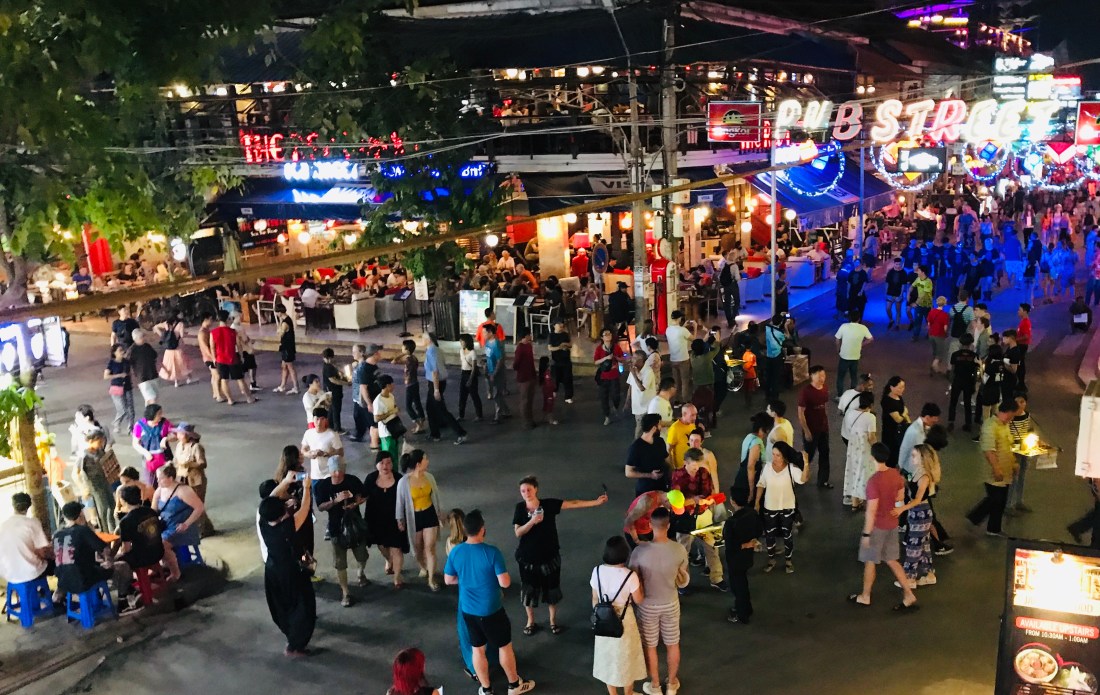
The food market was bustling. The night art market smelled like a tourist trap from even across the river, besides Evan was done walking and hungry by then. So we walked to Pub Street for a cold beer, hamburgers and wood fired pizza, all three of which were pretty good.
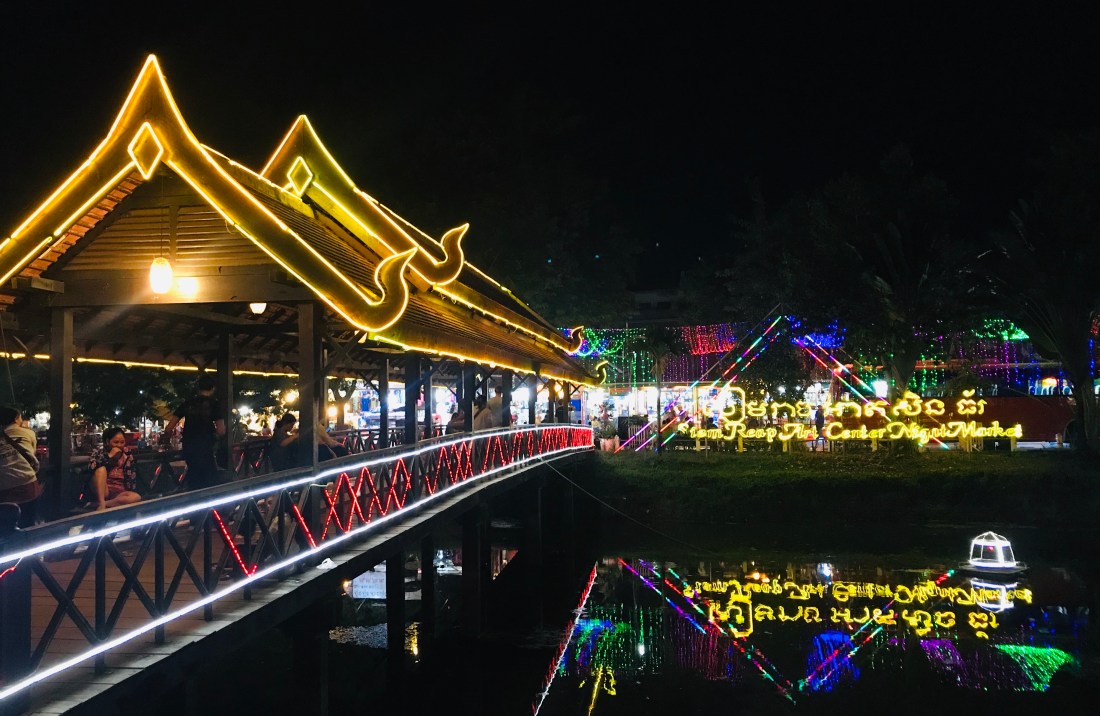
We sat on a open wooden veranda in the coolish night air above the street and watched the crowds. One group of black clad hip looking teens walked up the street rolling a giant speaker and amp. They set up shop below us at the crossroad and performed some dance moves to thumping music. A crowd assembled to watch. Then the kids distributed cards – probably invitations to a longer length event, we wondered – and rolled their act to the next intersection.

Besides Angkor, I knew of three other phrases that I associated with Cambodia – Pol Pot, Khmer Rouge, and the killing fields. During our few days in Cambodia I tried to piece together what Jack and bartenders and tuktuk drivers said about them.

The history of modern Cambodia is very complicated because of the large number of actors: French colonizers exiting stage left, the Americans in a loosing war with the Viet Cong in neighboring Vietnam, China striving to counter Soviet influence in South East Asia, the Cambodian royals, Vietnam itself post American war (as they call the Vietnam war over there), Marxist-Leninist communism, and Thailand. Everyone partnered with and (not or) fought each other in various permutations. They managed to kill millions of Cambodians over the course of two decades through civil war, coups, political purges, carpet bombing, infighting, land mines, old fashioned war, forced marches, torture, famine, and mass killings. During Pol Pot’s reign as Prime Minister in the later half of the 1970’s it is estimated that one in four Cambodians lost their lives. The population from the cities were forced to move to the countryside and work in farms. The sudden shift to agrarianism ironically led to massive food shortages. Everybody had to work very long hours in rice fields and money was abolished. Teachers, doctors and scientists were executed and every else had to undergo reprogramming. Nowhere else that we’ve travelled have we heard of such diabolical social experiments. Mugabe’s reign in Zimbabwe comes closet to the Cambodian disaster but falls well short by any misery index.

On our last morning I’ve gotten more used to hearing my name when people say good morning in Khmer. “Arun suasdey”.

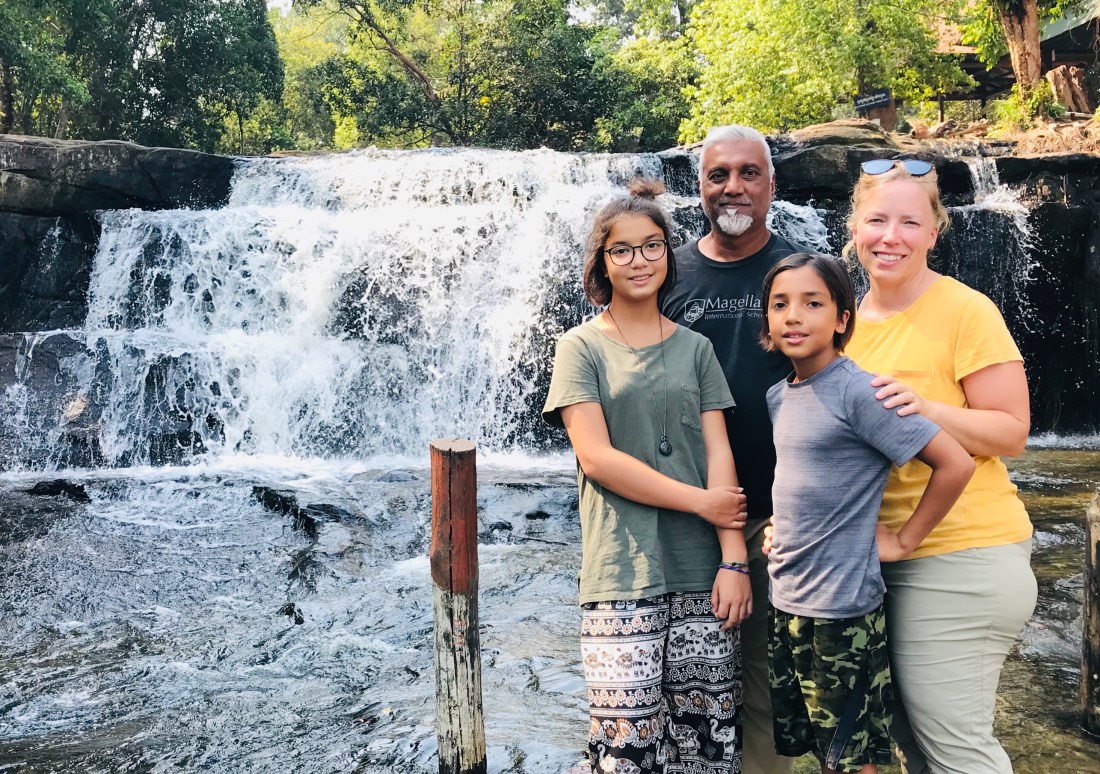
Jack is on time at the lobby, again. Three pick-ups on the dot. Whether he’s an exception or not, we now think of all Cambodians as very punctual people, which isn’t a common trait in south east or south Asia. Today Jack is taking us to a neighboring village. Our driver drove up a long winding dusty mountainous road which is one way towards the village in the morning and then at noon becomes a one way down from the village. We climbed a lot of stone steps to the top of a rock which has been sculpted into a giant reclining Buddha. Then we walked to a clear shallow mountain stream whose rock bed had been inscribed with a thousand Shiva Lingas. We saw Hindu pilgrims from India worshiping on the banks of the sacred stream. Then we walked downstream to a water falls where locals and tourists were changing into swimsuits and enjoying a swim. Vivian and Evan had enough of sightseeing and we headed back to town, but first stopped to buy some sodas and dried jack fruit. The Cambodian boy in the picture looks like he’s Evan age but he is the same age as Vivian. His mother was chatty but he blushed red and got very shy when his mother asked him to talk to Vivian.

We stopped at a nice roadside restaurant for lunch. Evan surprised the waiters by trying to eat all the rice he could get (he swears it’s the best rice he’s ever tasted). Then we headed to the airport and off to our next destination, Vietnam.

In 1978, Vietnam invaded Cambodia and toppled the terrible Pol Pot regime. They were welcomed by the people. But they stayed on as unwilling occupiers for the next ten years and soured their welcome. Add that to their historical enmity back from the times of the Cham kings invading Angkor Wat when the Khmers ruled over most of what is now Cambodia, Vietnam, Laos, and parts of Thailand. And so it appears that Cambodians don’t like their Vietnamese neighbors. They see Vietnam’s rising prosperity and tourism, and they recognize their demographic inequality (their 16 million to Vietnam’s 95 million), but almost everybody I spoke with didn’t like that we were going to Vietnam next.

Cambodia, even outside Angkor Wat is interesting. The people are super nice. Things are ridiculously cheap. We didn’t have to get any Cambodia local currency (Cambodian Riels). For transportation in tuktuks and street food, a dollar bill usually suffices, with no change offered or requested. Food is more difficult than Thai or Vietnamese cuisine with which we are more familiar. But hey, ask Evan and he’ll be happy to tell you the rice and chilly fish sauce is the best.

Cambodians seem to be at a restive peace with themselves. They have one of the longest ruling non-monarch head of state in the world – their Prime Minister has held that office since 1985, not without controversy. People, especially the young, are looking for change and opportunity. But the horror of modern Cambodia is a stark reminder to most that an unfulfilled peaceful existence is better than returning to a bloody strife.

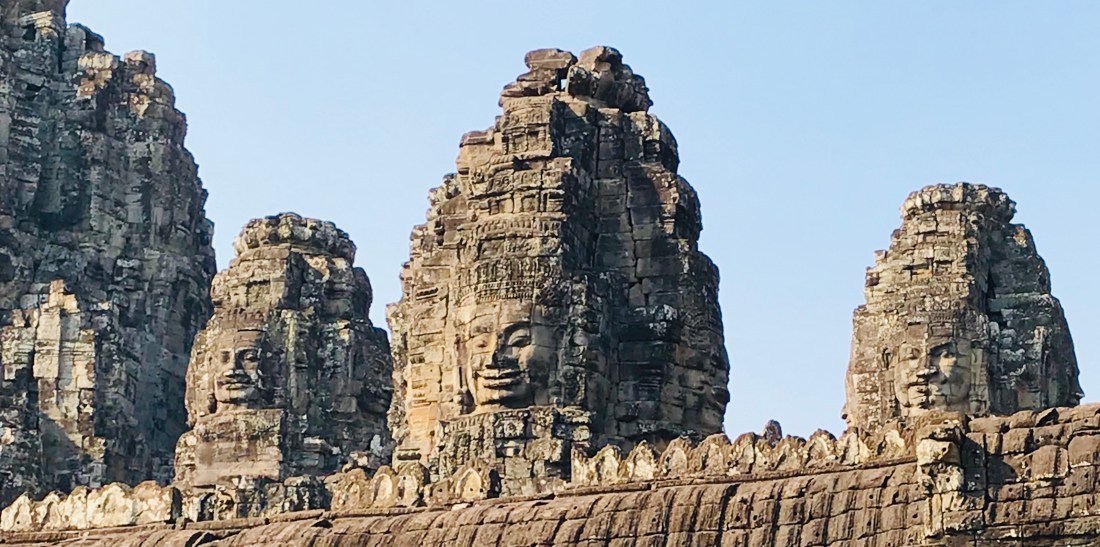
Angkor Thom

I had an inkling that my family didn’t want to spend all day looking at eight hundred year old temples. So Jack and I had an afternoon session of more sightseeing while the fam chilled back at the hotel.

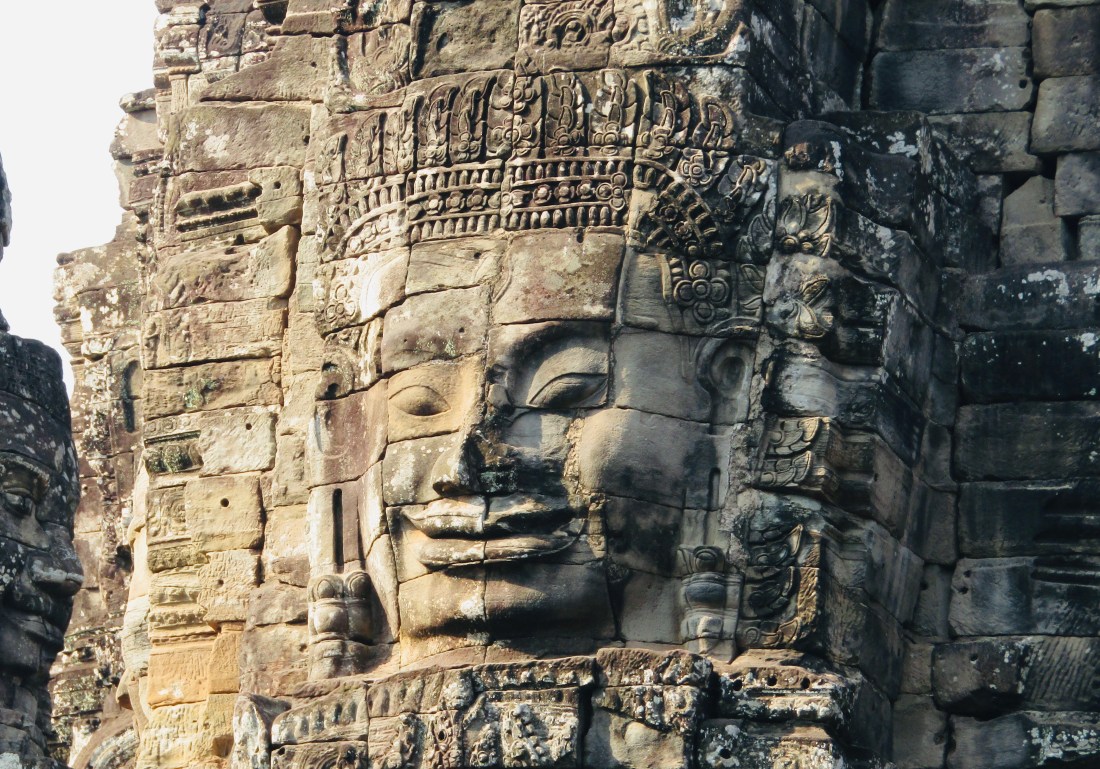
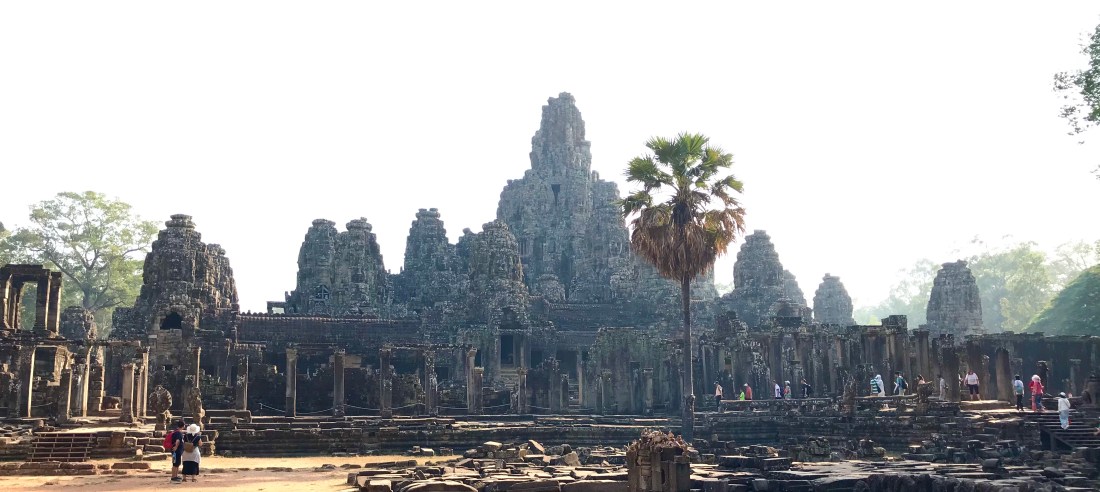
We started with Angkor Thom and it’s central temple, Bayon. This was Jayavarman VII’s answer to Angkor Wat. Bayon is a huge Buddhist temple and it’s striking feature is the 54 towers of stone, each with four serene giant faces on four sides.

There is some question about who the 216 almost identical giant faces belong to. Some think that they are an idealized version of Jayavarman VII’s face. If that were true he must have had a giant ego. He would surely have been a good friend of the Donald if they had been contemporaries. Others believe that the faces belong to the bodhisattva of compassion, Avalokitesvara.
Whatever the truth, there’s something about seeing so many serene giant faces smiling down at you. I happily smiled back.

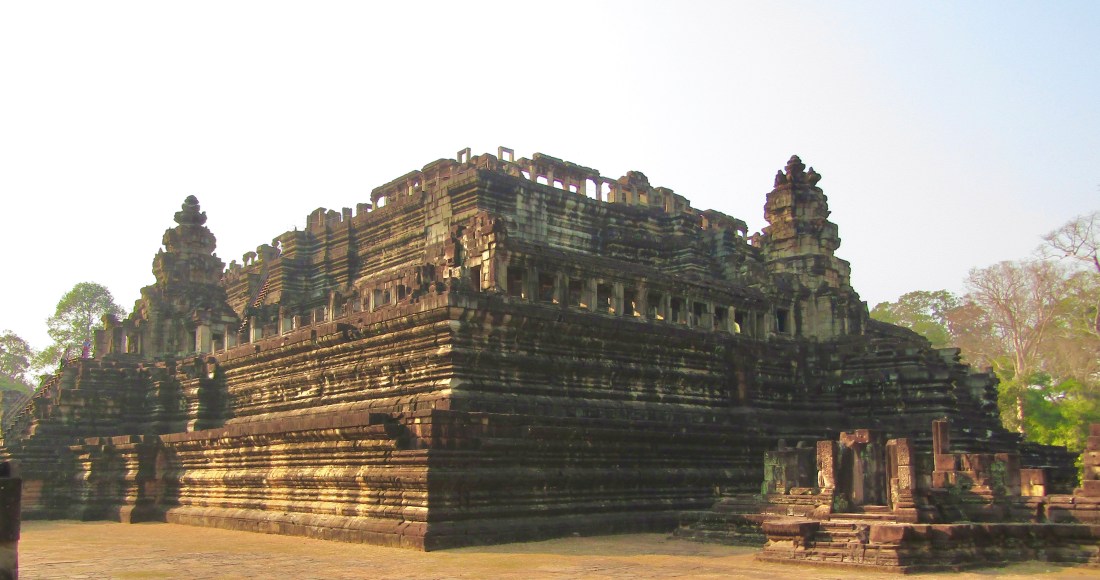
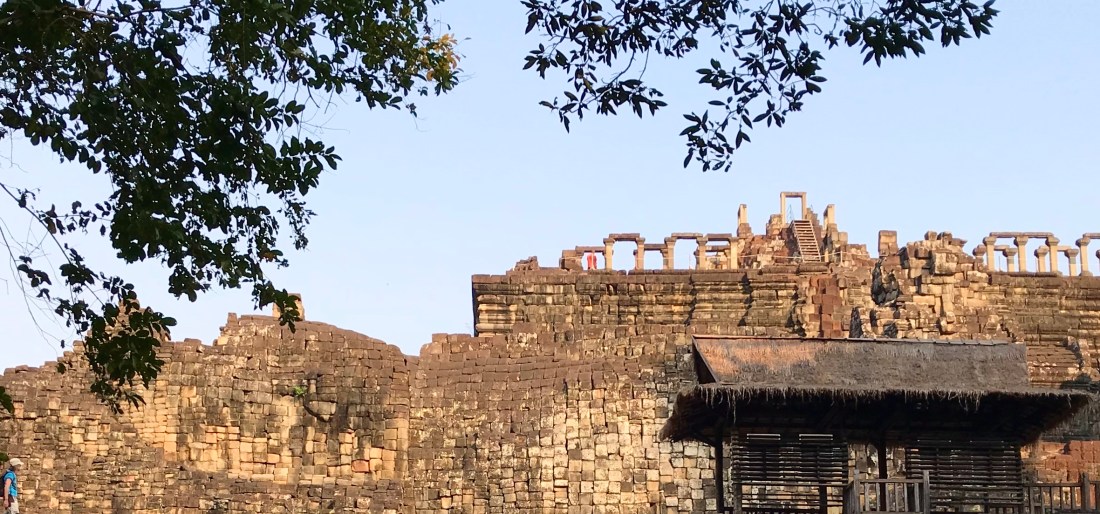
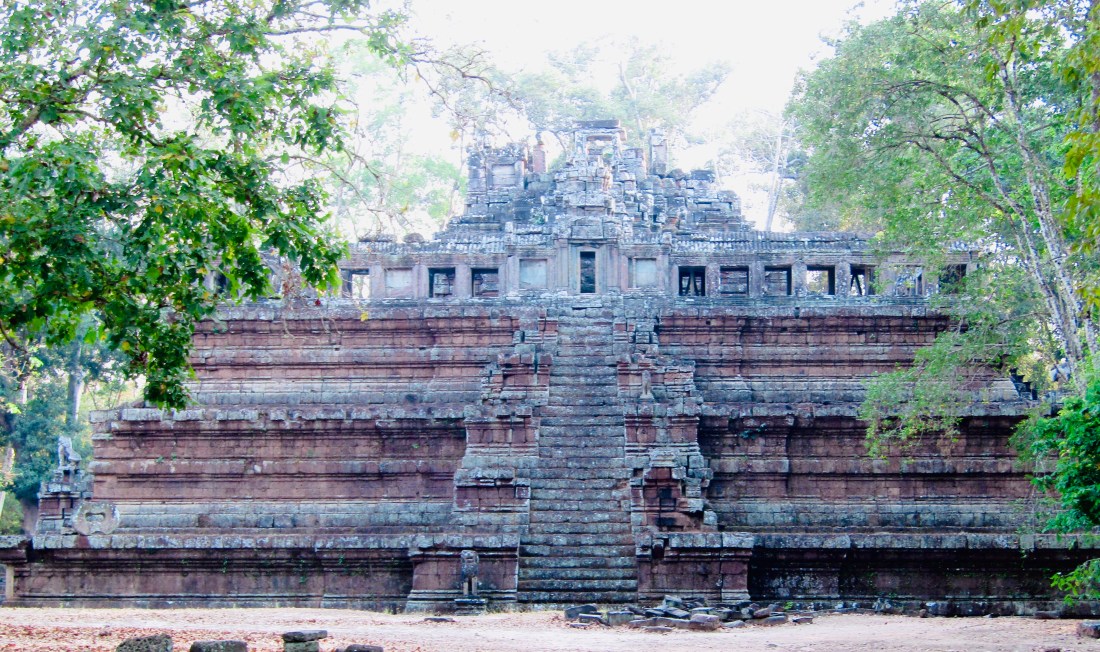
From Bayon we walked over to its older neighbor, the massive Hindu Shiva temple called Baphuon. Built to resemble the mountain home of Shiva, this man-made structure is almost as imposing as a mountain, with steep steps leading to what is the top now. An additional wood and bronze tower used to sit up here. The fashion show runway-like stone bridge leading up to the temple is the place to be photographed in Cambodia according to Jack and during our time here I saw multiple photographers and brides in spectacular wedding dresses hard at work.

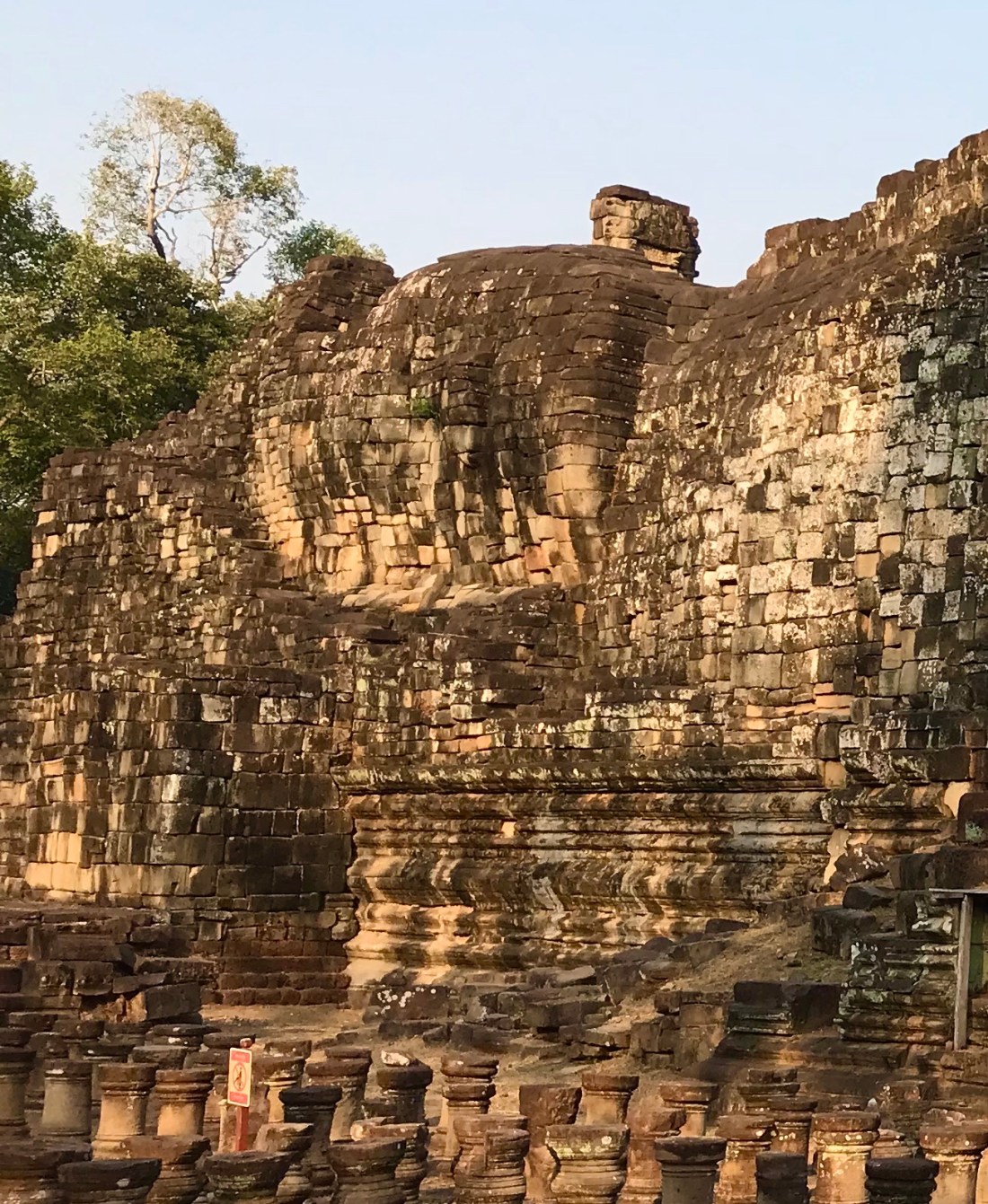
A few hundred years after it had been built, probably around the 15th century, the tides of religion turned again and the Buddhists reclaimed this Hindu temple. The whole immense northern wall was rearranged into a huge reclining Buddha. It’s hard to spot but here are a couple of photos anyway.

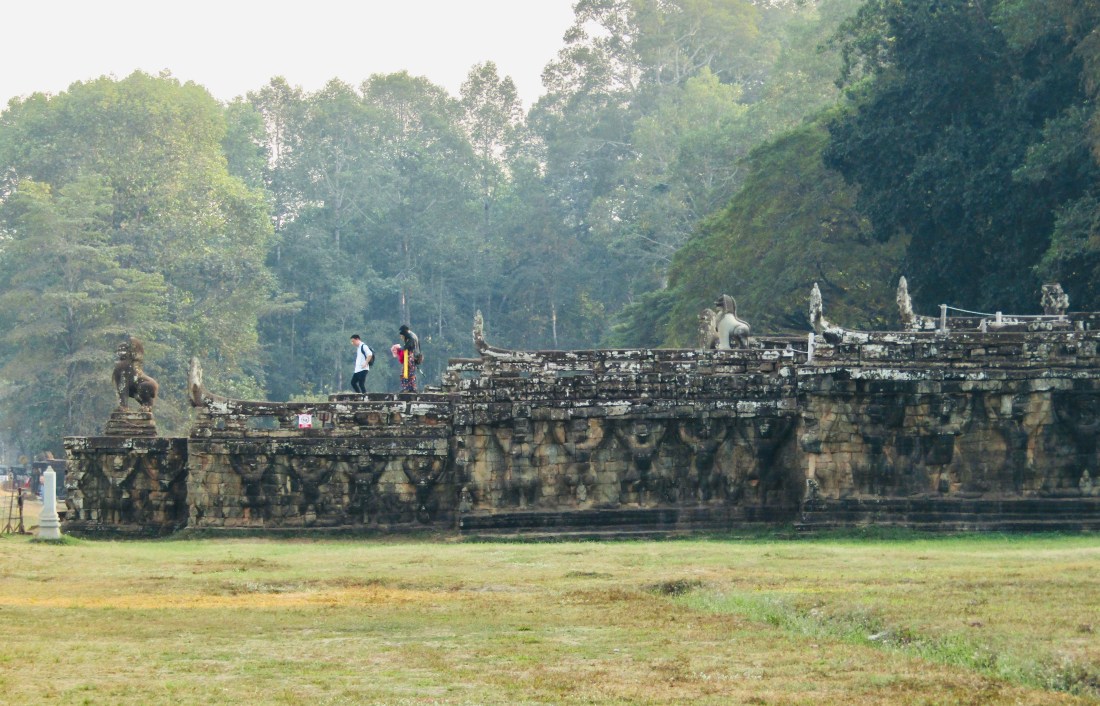
From here we walked to the next structure – the king’s palace and swimming pools and the elephant terrace overlooking a massive field from where events were witnessed by the royals.

We finished and drove out of Angkor Thom through the beautiful Tonle Om gate and over the moat.

The bridge over the moat is representative of bridges small and large and modern and ancient all over Cambodia. The rail on the sides consists of a series of humanoid figures holding a long snake between them. The head of the snake is a giant fanned and hooded multi headed thing. This is Vasuki, the king of serpents who is usually found coiled around Shiva’s neck.

The bridges memorialize one of Hinduism’s favorite stories when the gods used the snake to churn the oceans. My summary, most likely inaccurate: the gods were weak (probably due to something stupid one of them had done). They needed to drink amrit, the nectar of immortality, to regain their strength and power. But the amrit had to be churned from depths of the cosmic oceans. Only a heavenly mountain was big enough to be used as the churning rod, and only Vasuki was long and strong enough to be the rope to tie around the mountain and be pulled to and fro from both ends. But the gods were weak and couldn’t do this by themselves. Vishnu got them to ask the demons to help. The demons took the head end of Vasuki, leaving the tail end for the gods. Then Vishnu turned into an avatar, a giant turtle, on whose back the mountain could rest while it was churned back and forth. A lot of valuable things were churned up including the nectar of immortality. Along the way poisonous fumes from Vasuki’s mouth (the gods had tricked the demons into holding the head end of the snake knowing this would happen) destroyed most of the demons. More trickery was used by the gods to finish off the remaining demons. The gods got their nectar and lived happily ever after.

The moat under the bridge of gods and demons is beautiful in the evening light. In the distance amongst the lotus there are a couple of boats. I sit and look at this for a while imagining life here a thousand years ago. And just like that after a lifetime of waiting my day at Angkor Wat is over.

The Tomb Raider Temple

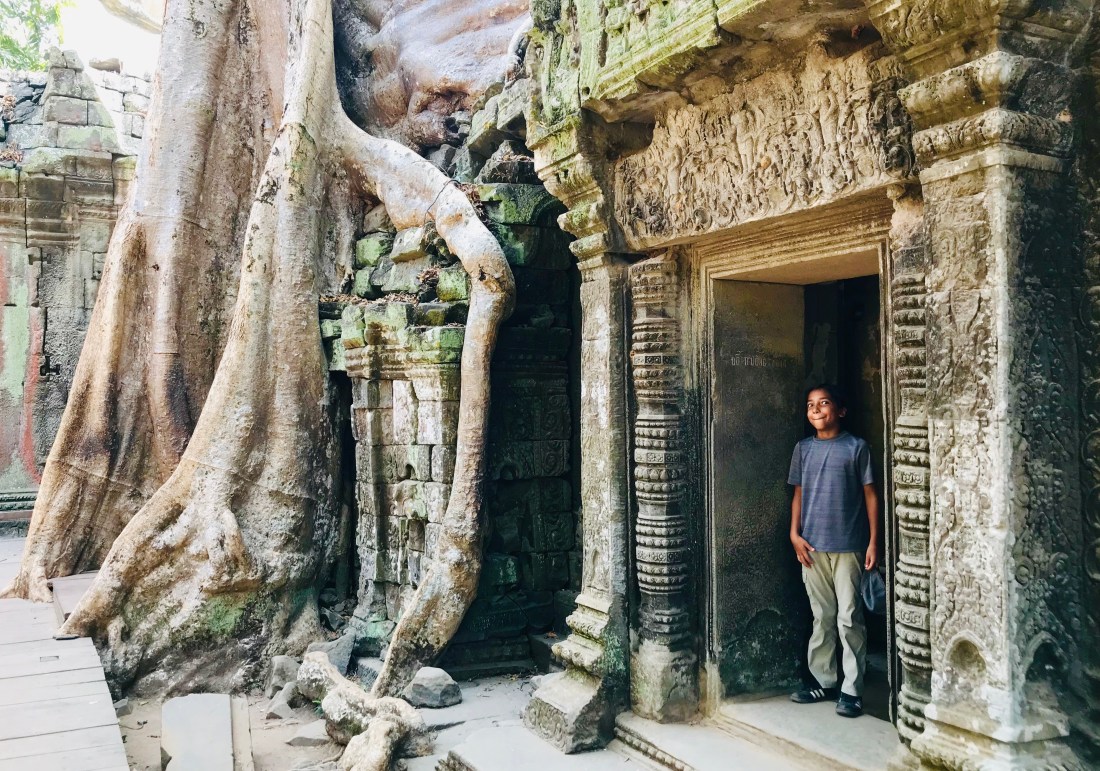
Yep. That’s what the guides call it. But the temple was very popular even before the movie. It is notable as one of the few big temples that has been left with giant spung trees sprouting out from the stonework. Early western historians had decided that the buildings were too far gone so they cleaned up around the moats but left the trees, roots and all, intact.

The modern name of the temple is Ta Prohm. Jack says that when the French man “discovered” the site there was an old Cambodian man sweeping the yard. He didn’t speak French. When asked what it was called, he told them his name, Ta Prohm.

Ta Prohm is huge. At one time, the monastery supposedly housed tens of thousands of monks. It was built by Jayavarman VII, one of the first Khmer Buddhist rulers. He beat the invading Cham who had sailed up the river from Vietnam and had defeated the Khmer army. The victorious Jayavarman became the Khmer king and went off on a building spree including 102 hospitals and other public works. Then he built the massive Bayon temple and the surrounding city of Angkor Thom, and several other temples including Rajavihara, the royal monastery, now called Ta Prohm.

The roots of the giant spung trees look like molten cake batter that has slowly oozed out of an overflowing cake pan and dripped down the sides of the ancient stonework, solidifying into graceful flowing patterns. Or I am hungry.

Jayavarman VII was Buddhist. The temple is Buddhist. But now it was the turn of the later Hindus to alter a few Buddha statues into Shiva lingas (vertical cylinders of stone with rounded tops, symbolic of Shiva’s penis).

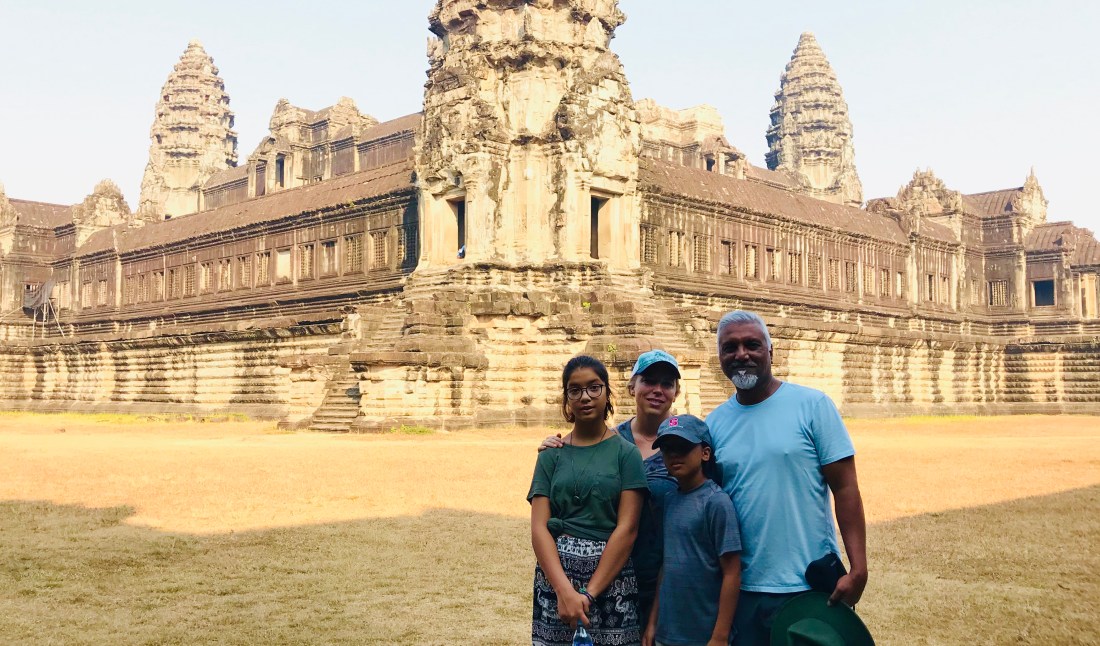
So here is where I discovered another of Jack’s qualities. He loves taking photos of his clients using their cameras. In an instagram obsessed world that is a good thing. For me and especially Jo it was at times a bit much. But I learned the art of vertical pano and trick pano from him. Jack took the vertical pano photo of us and the two hundred foot tall spung tree. I took the trick pano of Evan at two places at once! Vivian and Evan recalled that my friend Sharath had used the same vertical pano technique in Bhutan, but a bit more laboriously than Jack.

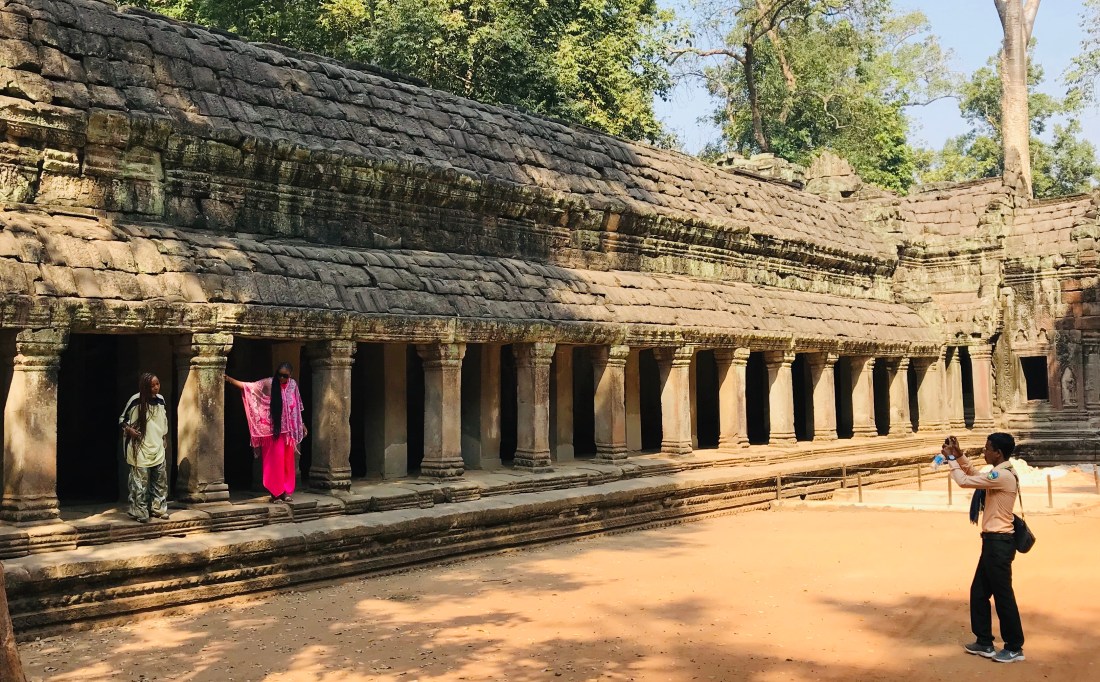
Other visitors noticed Jack’s aptitude with the camera. Here is a photo of Jack taking a photo of a couple of tourists who asked if he could photograph them. This photo shows a relatively intact portion of the temple. It has been newly reconstructed by the Archeological Survey of India who have partnered with Cambodia to help stabilize and reconstruct portions of Ta Prohm. In other spots around Angkor, we saw groups of archeologists and historians from Japan, Germany, France, and other countries hard at work putting these giant 3-D puzzles back together again.

By now Vivian was hungry and on the verge of being hangry (which also explains why she’s in fewer photos). Jack hurried us through short cuts at the temple and we walked back to the car. Along the way we found a group of Cambodian musicians playing under a tree. They had lost limbs to land mines, and had a sign that said that instead of begging they were making music and accepting donations.

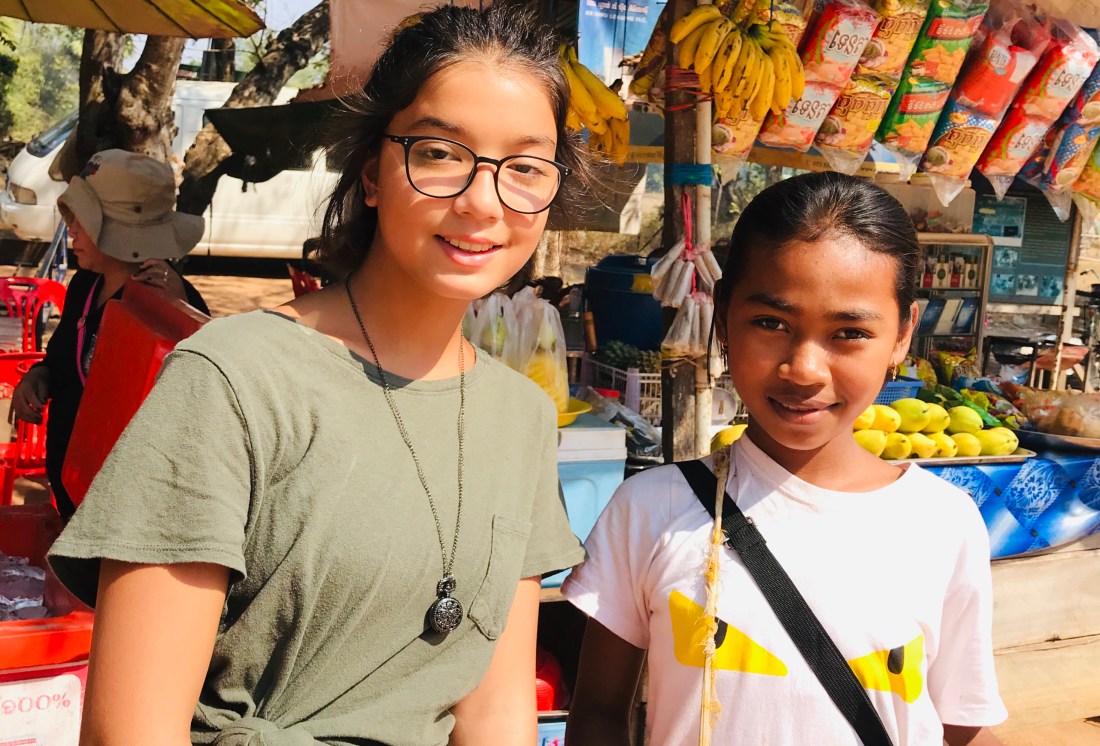
At the car park an enterprising young girl Vivian’s age helped us buy snacks and sodas, interpreting for the elderly owner who didn’t speak English. We met this girl for just a moment but she made an impression. We wondered about her life and what she’d grow up and do. In a different world would she be class president and play the lead role in the school play and then later star in a movie like the Tomb Raider set in a distant exotic land?

Angkor Wat

Angkor Wat has evoked stories in my head since I first heard those words as a kid. Now here we are, stepping out from the coolness of the Airbus on to the tarmac at Siem Reap airport. Dragging two preteens who are no more excited than if they had landed in Cleveland.

The next morning at 07:00 sharp I got a WhatsApp message from our guide, Jack (whose real name is Hun). He was at the lobby ready and waiting for us. We stopped in town to buy our tickets to Angkor Wat (they are like mini visas and even have each of our mugshots), and then we headed off to Angkor.

Jack had three qualities which make him a good guide. First, he likes to talk. That is good because I have a lot of questions. We quickly got done with the historical facts associated with Angkor Wat.

The Khmers built Angkor between the 8th and the probably up to the 15th century. During its peak, Angkor was one of the largest cities in the world with a population of one million. The temples, palaces, and monasteries are what we see. The surrounding city has been reabsorbed into the jungles. There are more than 300 temples in the complex which stretches over 400 square kilometers. Angor Thom and Angkor Wat are the bigger and more well known temples.

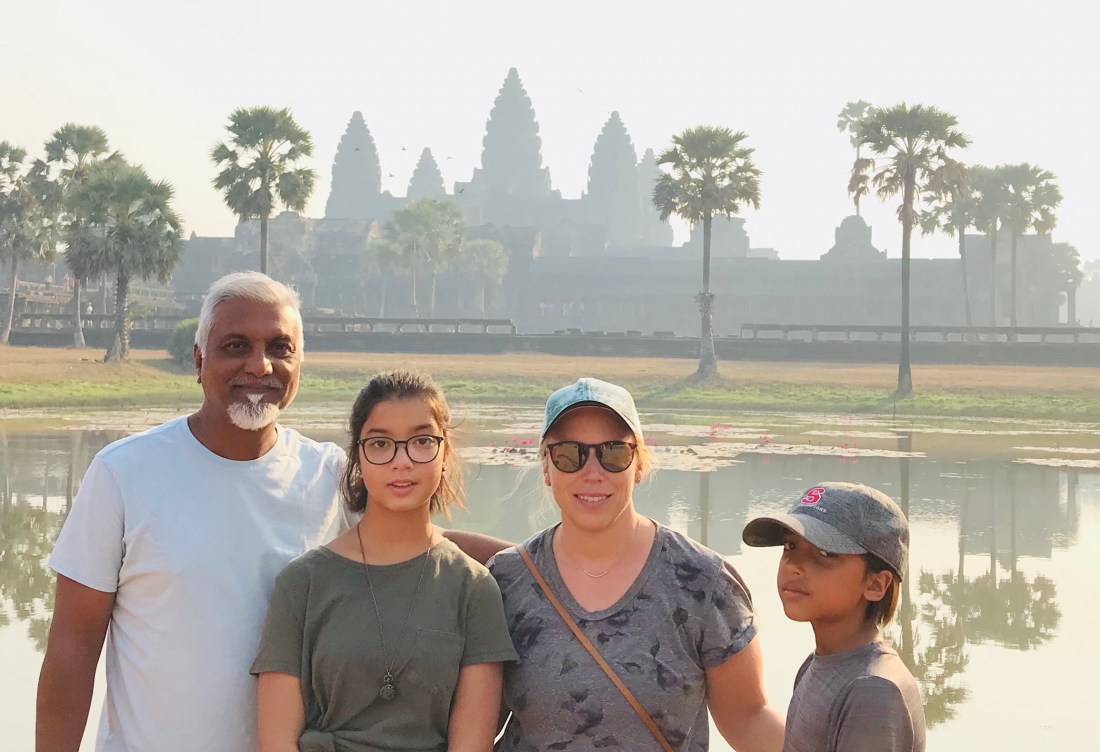
I’ve added this photo of Angkor Wat reflecting in the lotus pool. People wake up at 4:00 am to get here by the thousands at sunrise to capture the dawn sky and the sun rising from behind the temple. On equinoxes it’s even crazier because the top tower of the temple is directly lined up towards the east with the rising sun. My photo is a lazy 9:00am attempt on a random non equinox day with the light in the wrong place and a haze hanging in the air. It will have to do.

The temple of Angkor Wat was built by a Hindu king Suryavarman II. It is dedicated to Vishnu. Cambodia is almost completely Buddhist now. Over time, Hindu idols have been altered into Buddhist ones. Like the eight-armed statue of Vishnu that has a Buddha head on it and it worshipped by Buddhists today.

We enter Angkor Wat through the gate that was reserved for brahmins in the old days and Jack is excited to learn that we’d be welcome through this gate even back then. Oh, the privilege of caste!

The myth of a French man walking into a jungle and discovering the Lost Temple is apparently just that. Angkor and the Khmer Empire, probably due to floods and then droughts, disintegrated in the 15th century. The majority of the population died or left. Small groups of villagers could not maintain the vast facilities but they lived amongst the ruins and worshipped there till the said French man discovered them.

The immensity of the temple and the beauty of the sculpture are breathtaking. As we visit some of mankind’s most sublime works around the world I’m selfishly glad that through the history of our species we have been suckers for religion. Our best art and architecture are in service of our gods.

I thought it would be really crowded here with 2.5 million annual international visitors. But the temple is big enough to accommodate us all and Jack is able to steer us down almost deserted paths most of the time.

Vivian and Evan seem interested enough and the weather is comfortable – so no one complains. But I have no doubt that if they had been offered their iPads and the option to stay at the hotel instead, they would have been all over that.

We left Angkor Wat awe struck through the back gate facing east and drove to the next temple on our (Jack’s) list – the Tomb Raider Temple.

Bangkok

All roads to south-east Asia lead to Singapore. And Bangkok. So though we only plan to visit Cambodia and Vietnam, we got Bangkok as a bonus. That and because our dear friend Ami gave us her condo in Bangkok to stay at.

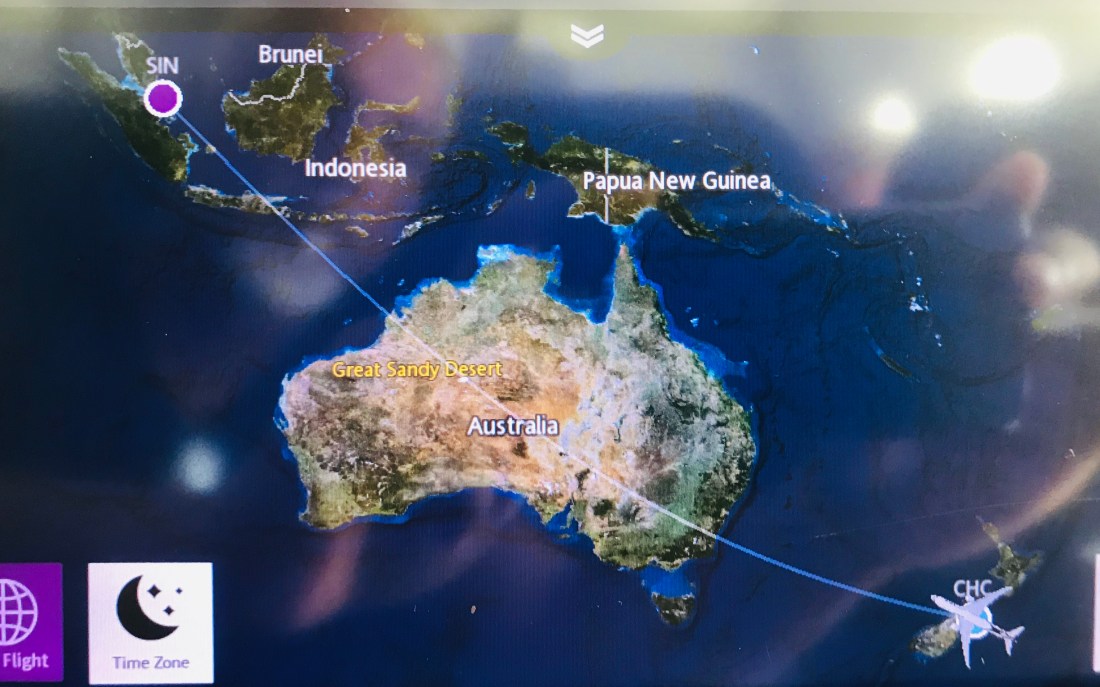
The flight from Christchurch to Singapore was long – ten plus hours – the same as Dallas to Frankfurt. But it didn’t feel bad – even the kids thought it was a breeze. At Changi airport our inter terminal train gave us an opportunity to gawk at the circular waterfall from the ceiling into the domed rainforest. Then, a short flight and we stepped out into the stifling steamy humidity and heat of Bangkok. It was a bit of a shock after New Zealand.

It took us several minutes to get signed in at Ami’s condo. But by the end of the process my thumbprint was registered to let us in. How cool is that! Here’s a pano view from the 25th floor balcony at dusk.

Bangkok feels like an in between city. It has good roads, an underground metro, an above street train system, a river transit system on the Chao Praya river, and is much cleaner than Cairo or Kolkata. The taxis are good. You don’t feel like you’ve got to look over your shoulder. But it isn’t an sanitized as first world cities usually are. It’s no Singapore.

Food, especially street food is cheap. Foot massages even at nice places are very reasonable and professional. Traffic is awful. One evening while returning from a dinner date night with Jo we saw someone who could be a prostitute. That’s the extent of what we saw of the sleazy side of Bangkok that you hear about.

The next morning we went to see the palace. It was crowded and hot and Vivian and I had to buy MC Hammer style pants to cover our unsightly knees. The pants were conveniently sold right there at the palace and they were cheap, but they only made us less cooler (in all possible ways).

The palace and the surrounding temples especially the Temple of the Emerald Buddha were beautiful in a pretty gilded gold mosaic way. Our entry tickets entitled us to a free traditional dance performance at the National Theater and after finishing our palace tour unexpectedly (we took an exit without knowing) we hopped on a free shuttle to the theater.

We saw a dance enacting a portion of the Ramayana, the epic from ancient India. The rulers of Thailand going back several centuries were Hindu. Their capital city was named Ayutthaya after Ayodhya, Rama’s kingdom in India. Though modern Thailand is predominantly Buddhist, the current king of the country is Rama X, the tenth consecutive Rama. In the Ramayana, Rama is the son of the king of Ayodhya. His scheming stepmother (the king had three wives) gets him exiled from Ayodhya for 14 years and her own son on the throne. Another one of Rama’s step brothers, Laxman, and Rama’s wife, Sita join him in exile. At one point Sita is abducted by Ravana, the ten headed demon king of Lanka (Sri Lanka). Hanuman, the monkey prince joins forces with Rama. His army builds a land bridge to Lanka by tossing boulders into the sea. Sita is rescued, Ravana is killed. Rama returns victorious to a welcoming Ayodhya and becomes king. Incidentally that day is celebrated as Diwali, the festival of lights. Here you see Rama and company from the left approaching Ravana and his demon army who are on the right. Our kids got a free cultural class.

The day after that we flew to Cambodia. Two short days in Bangkok – just enough to give us a flavor of this ancient and modern metropolis.

Christchurch

Christchurch hasn’t recovered from the big earthquake of 2011. Jo and I remember the beautiful square in front of Christchurch Cathedral vibrant with life from our last visit that was pre-earthquake. Now the square is dominated by the fence that surrounds the damaged and partially demolished cathedral. Downtown or CBD as they call it still has a lot of buildings are boarded up and there are many empty lots where buildings once stood before the quake. One afternoon we walked along the shores of a volcanic crater that opens out into the sea near the town of Lyttelton. We tried to rent kayaks but they weren’t any rentals anywhere close. It was the weekend and families were coming in with grills and coolers and watermelons, ready to spend some quality outdoor time.
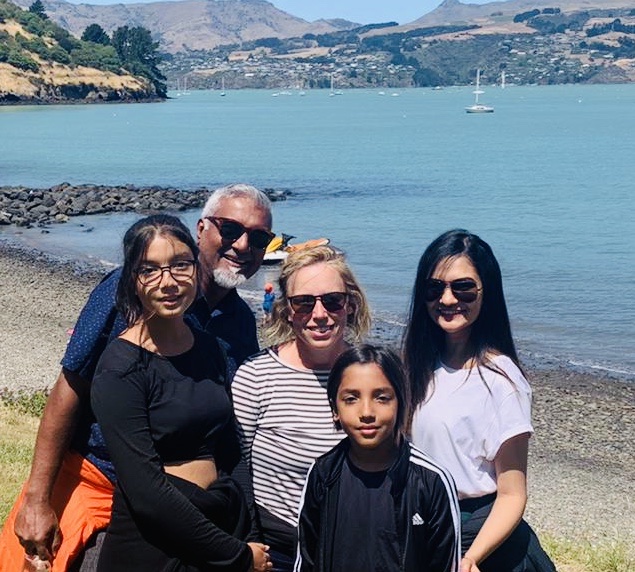
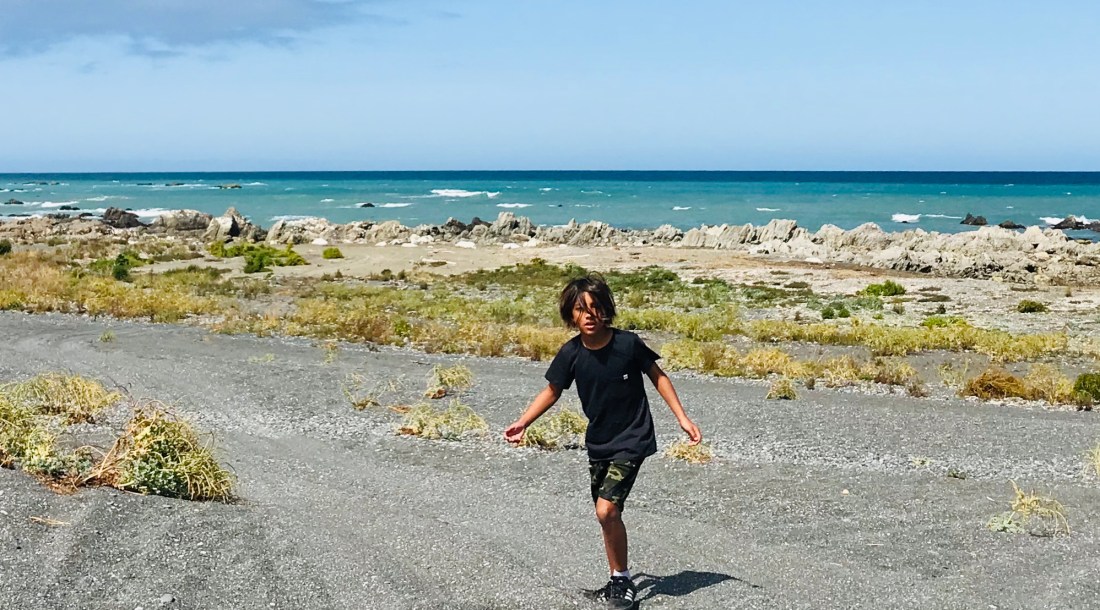
Utsa flew back to Wellington. We enjoyed her short visit. In a few days we will go to Bangkok, and onwards to Cambodia, Vietnam, and Japan from there. We are excited but we will miss so many things about New Zealand. Of all the places we’ve visited I think the Long White Cloud may be the hardest to say good bye to.

Marlborough

From Abel Tasman we first went to Nelson and then took a longer less mountainous route and quite suddenly found ourselves in Marlborough Valley and had to stop for drinks. We liked the Moa (named after the giant extinct Moa bird) brewery which served a range of ciders and stocked Allen Scott wines from next door. Which suited Jo and me!

We stayed at the town of Picton in a hundred year old house built and owned by an Italian family (so I learned to make a nice cup of latte). The house had a great view of the sea front which is the gateway to the lovely Marlborough Sounds.

We explored trails and walked along the sea and Evan accidentally turned over a rock to discover the fascinating ecosystems of tidal basins. Then it was hard to get Gunaraj and Evan away from the tidal pools. They must have turned over a hundred rocks between them.

I savored the two prized products of the Marlborough Sounds and the Marlborough Valley – green lipped mussels and Cabernet Sauvignon – at every meal, and eventually combined them to cook a nice dish of steamed mussels in wine broth.

We said good bye to Rajeeta and Gunaraj and they headed back to Austin. We enjoyed our time with them. Lucky for us along with farewells came hellos and Utsa, my cousin, dropped in for a few days from Wellington where she lives.

We stopped at the St. Clair family estate with Utsa, enjoyed some great wine and food among the vines, and then set off on a seven hour drive to Christchurch.

Abel Tasman

Abel Tasman was the first white man to find New Zealand. He was Dutch. The Dutch were like the Xerox PARC of the 16th and 17th centuries. If they could have held on to what they found, New Yorkers (New Amsterdamers), Australians (New Hollanders), South Africans, and New Zealanders would be all speaking Dutch today (many Capetonians do speak Afrikaans, a version of Dutch, but you get the idea).

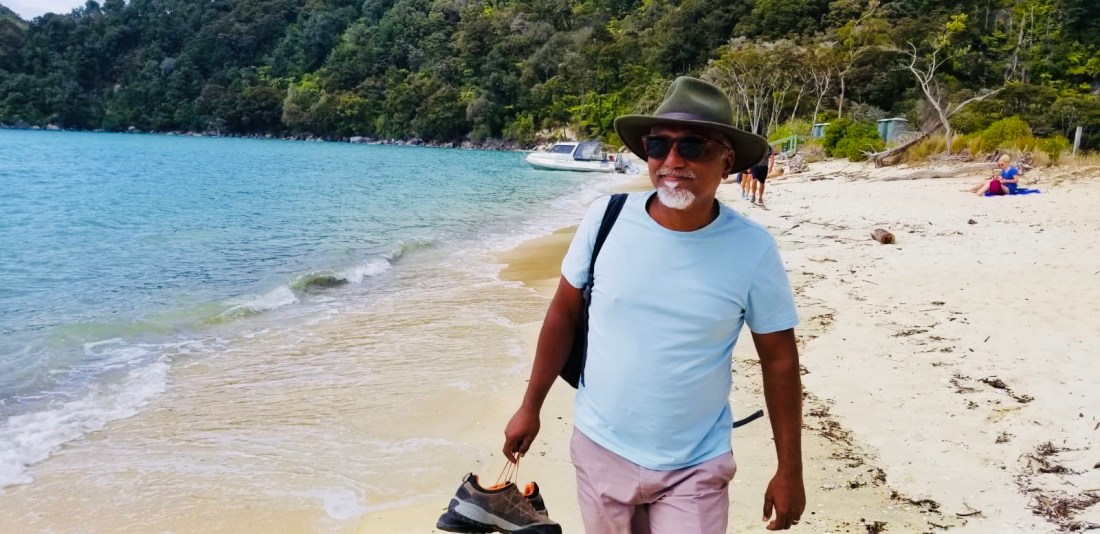
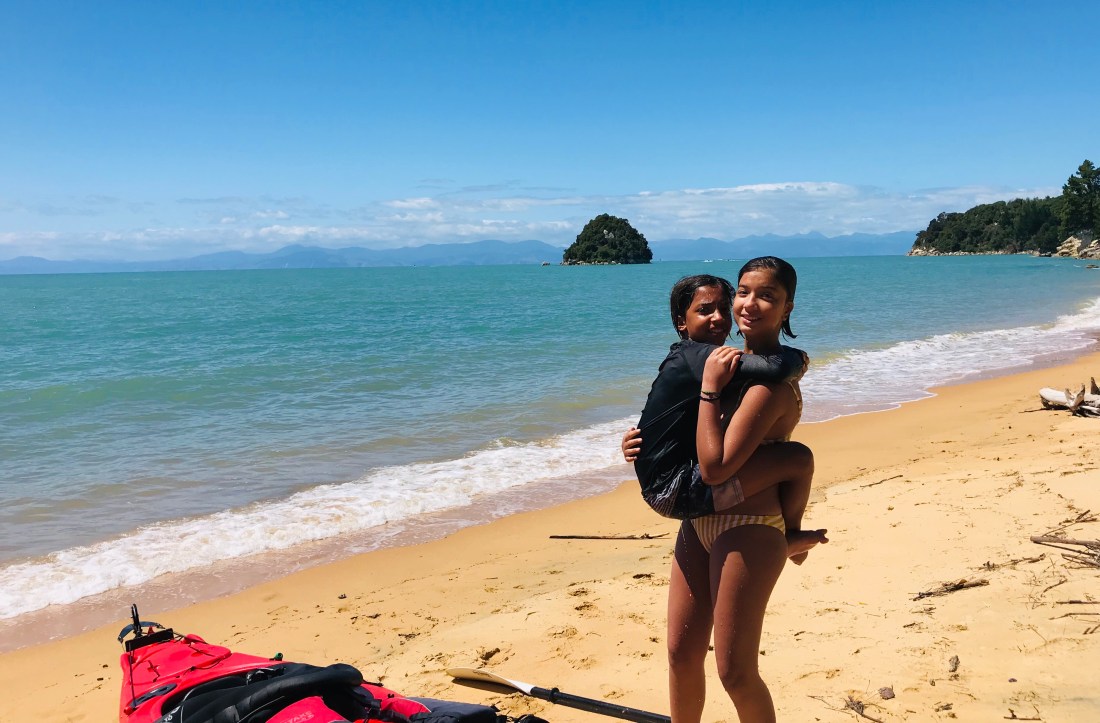
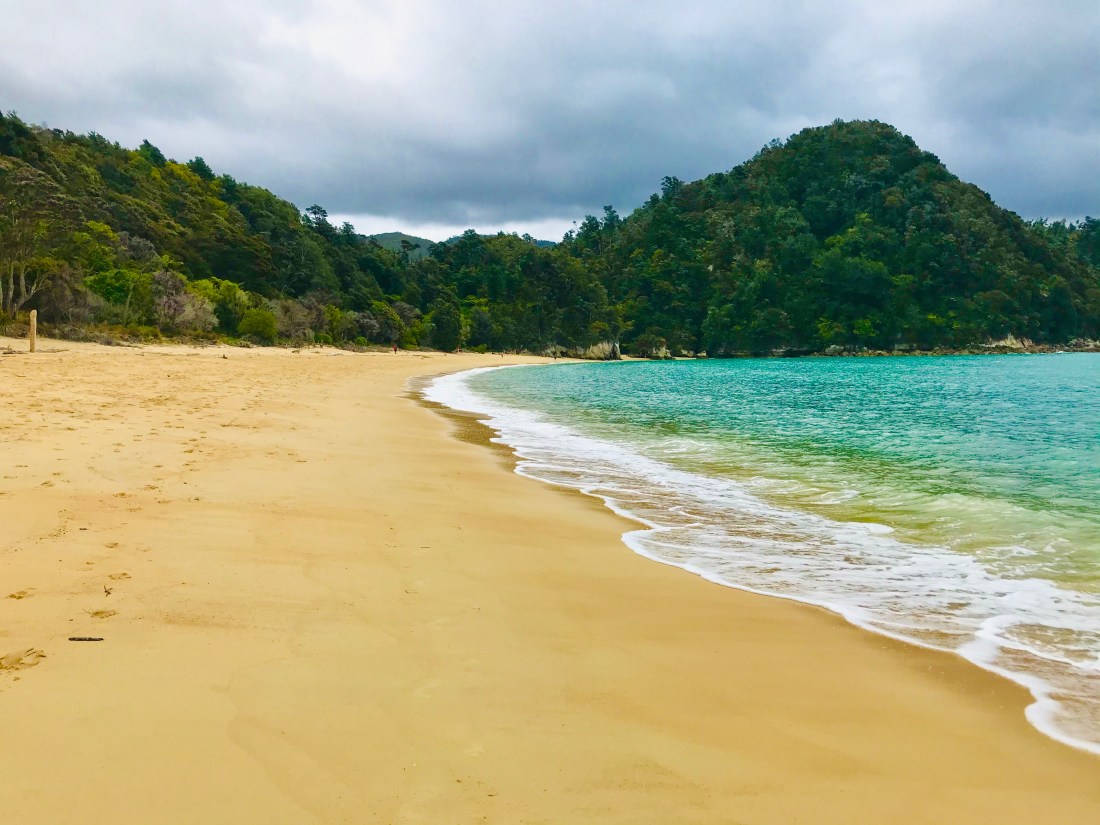
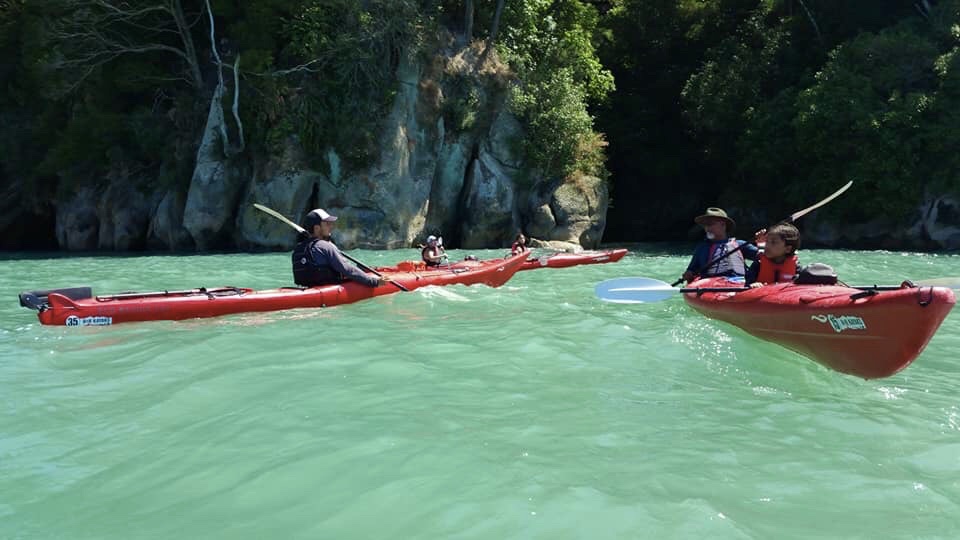
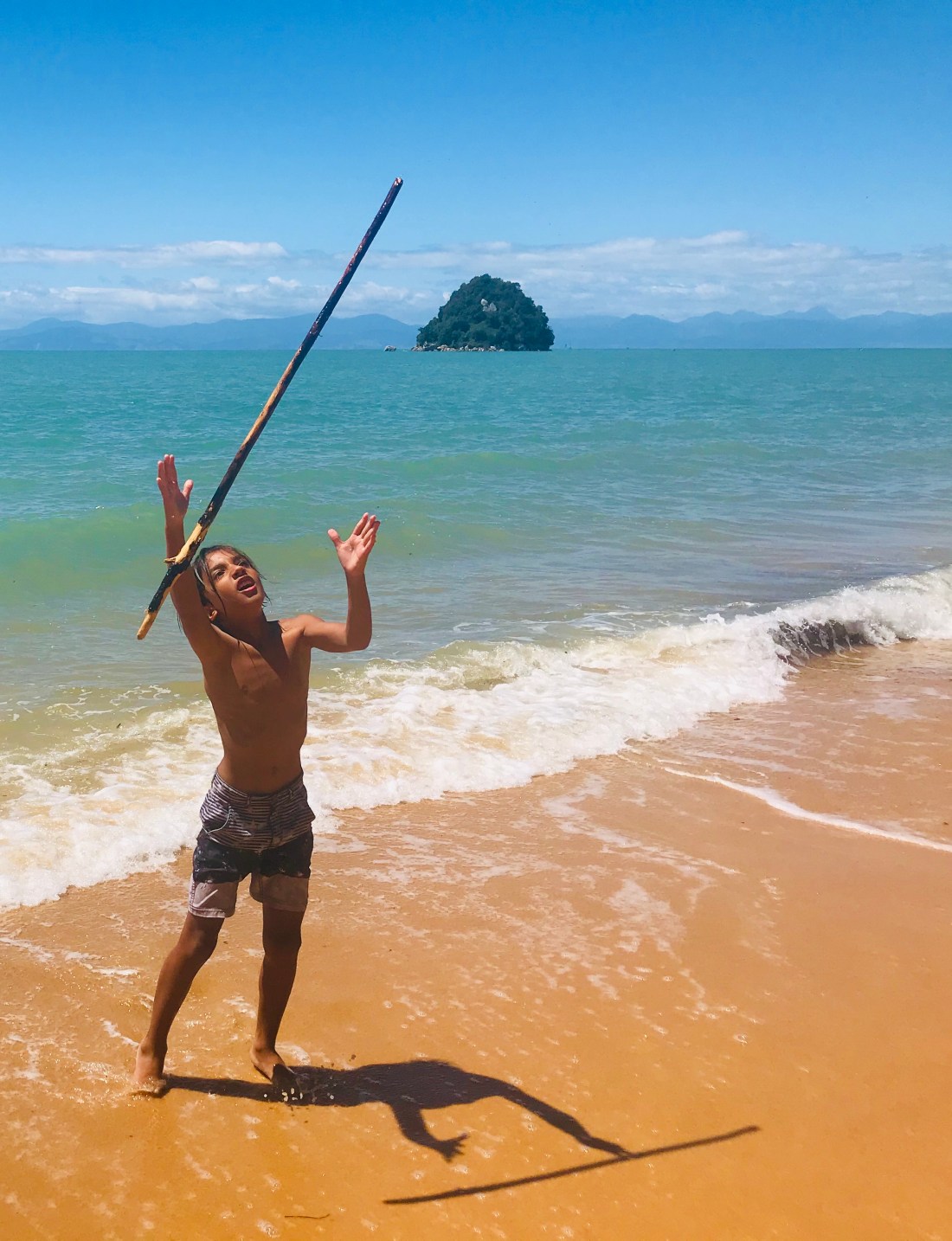
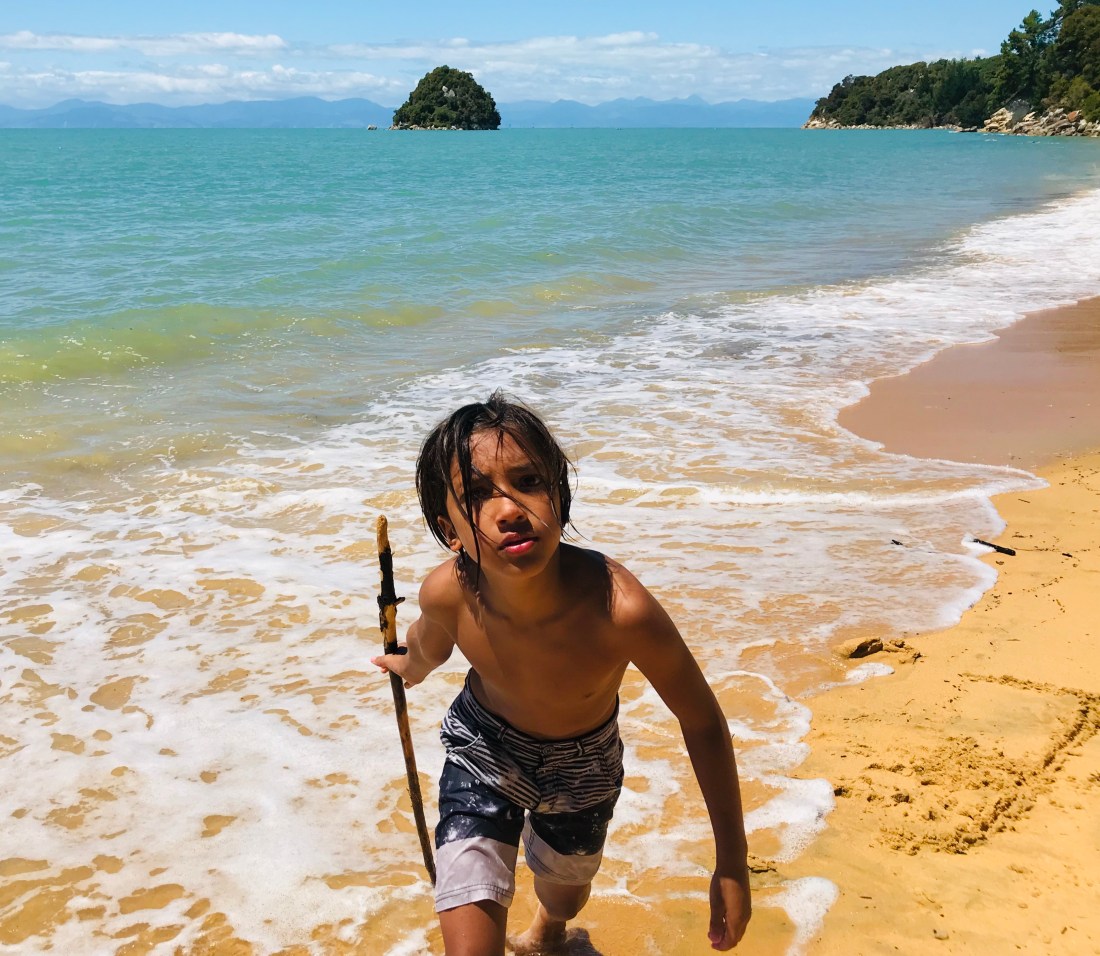
The bit of land protruding out between Golden Bay and Tasman Bay along the north coast of New Zealand’s South Island is a national park named after Abel Tasman. And this was my destination. Because it’s where a lush rain forest descend from green mountains to meet the aquamarine seas on golden beaches.

Golden Bay

We reluctantly left our beach house and drove off towards our next destination – the Abel Tasman National Park. Along the way we stopped and zip lined over the Buller River and then at a small town called Murchison in the middle of nowhere we ran into Rajeeta and Gunaraj while we were filling up on petrol.

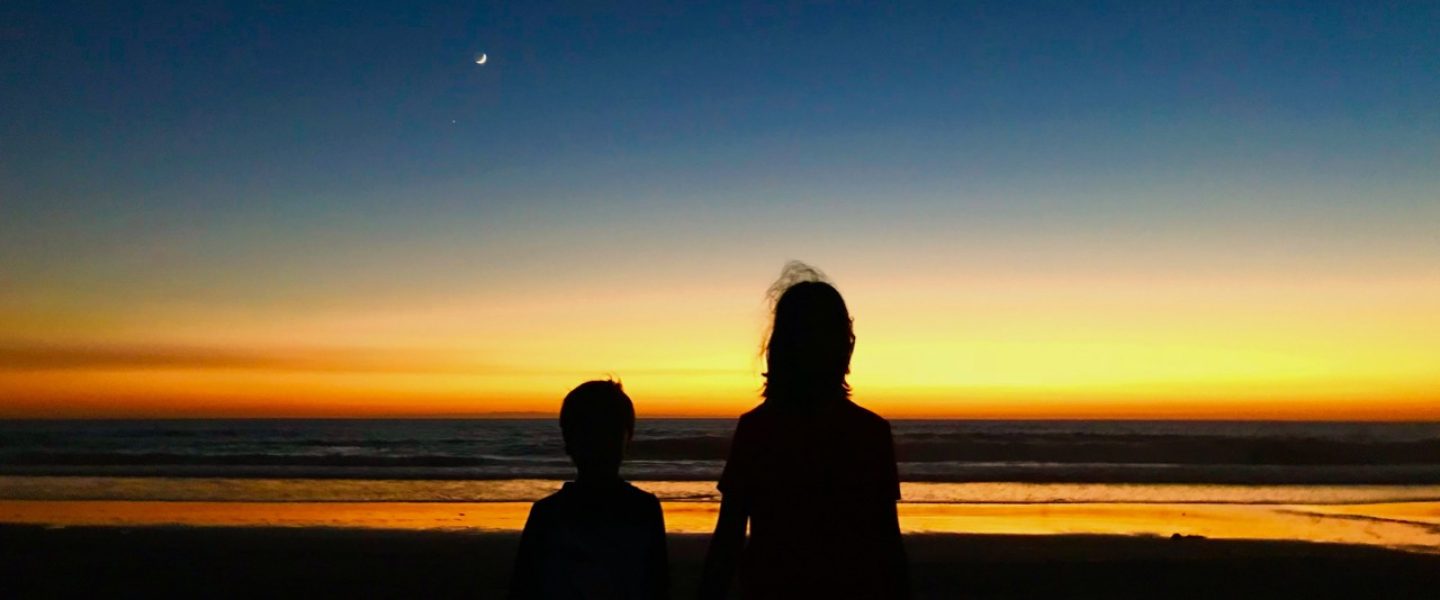
We set up camp at a nice newish Airbnb house on top of a hill near the town of Motueka with great views of Nelson bay and the town of Nelson on the other side. The mountains above Nelson and the constantly changing colors of the bay provided foregrounds for dramatic sunsets and moonrises (and I guess sunrises and moon sets too but I wasn’t up early enough for those).

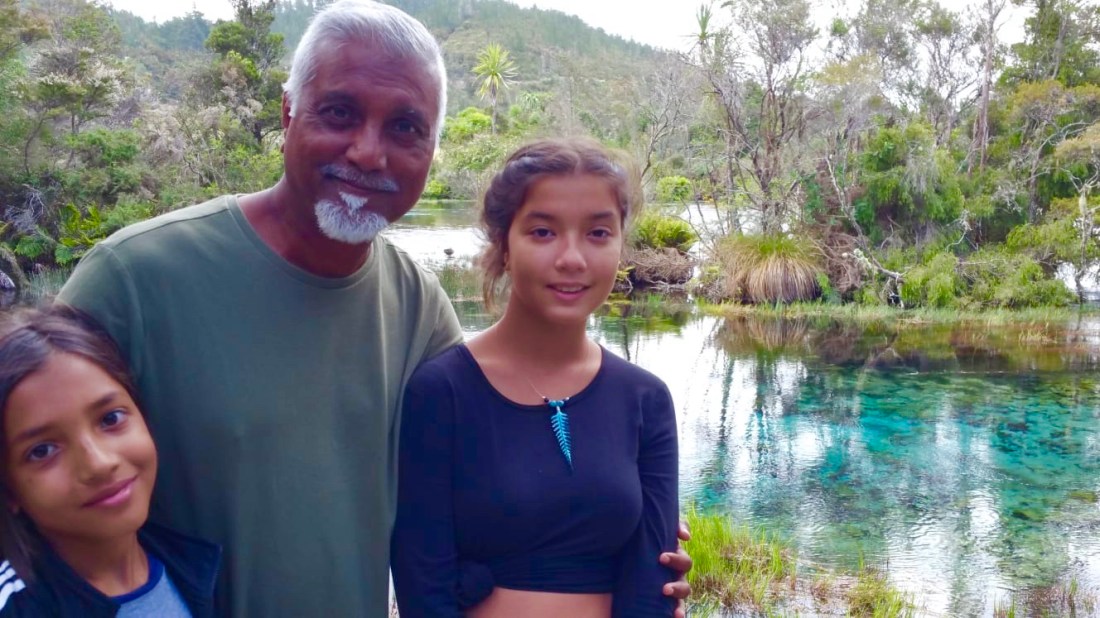
One day we visited Te Waikoropupu, a spring popularly called just Pupu. Contrary to the name, this spring produces some of the cleanest water on earth. When scientists tested how clear this water is, they found that the only water optically clearer is in a deep well in Antarctica. Pupu spews up 14,000 liters of this ultra pure water per second. Back when white people first came here they discovered gold. At that time they used the spring water to separate gold from the ore. Today’s environmentally smart Kiwis value the clean water more and you aren’t allowed to swim, boat, wade, touch, or dip a container into the springs.

New Zealand in recent years has tried more than any other colonizing white people to try and keep the indigenous culture alive. Maori is an official language and towns, mountains, rivers, and lakes often have Maori names. But it’s hard to say if it’s a token gesture or the real thing. Kia Ora is used often and is the NZ version of Aloha, and says just about as much or as little about New Zealand’s Maoriness. Maoris are hard to spot in places where tourists go. Someone told me that at their hotel the night porters are Maori. We could tell from government messaging that drugs and alcohol were issues in the Maori population. Which are probably all indications that, as much as New Zealand respects Maori culture and the All Blacks do the haka before international rugby tests, the Maori are still a ways from being masters of their own fate in their own lands.

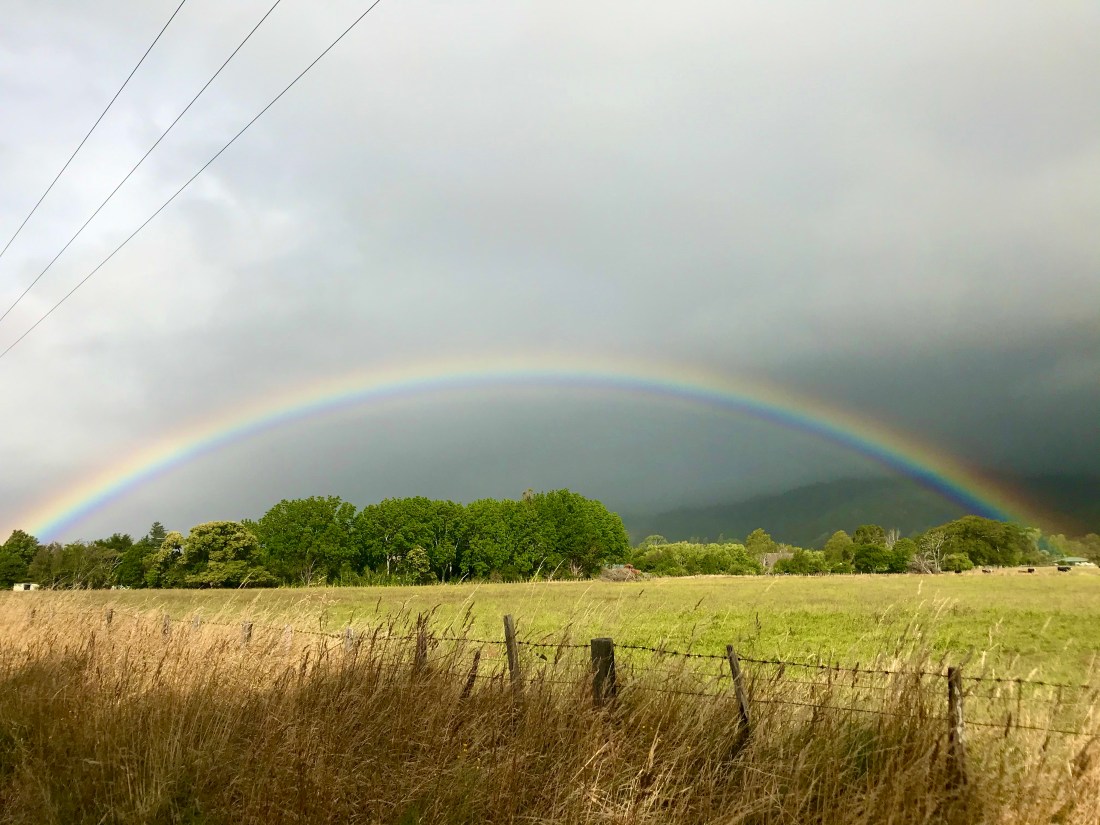
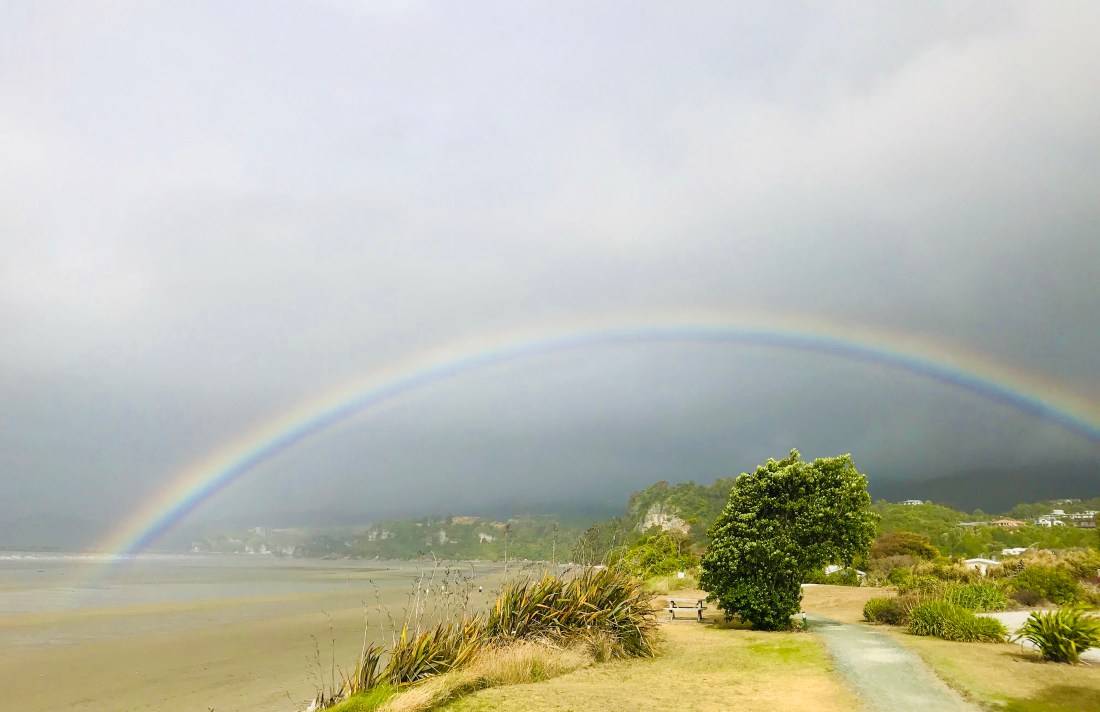
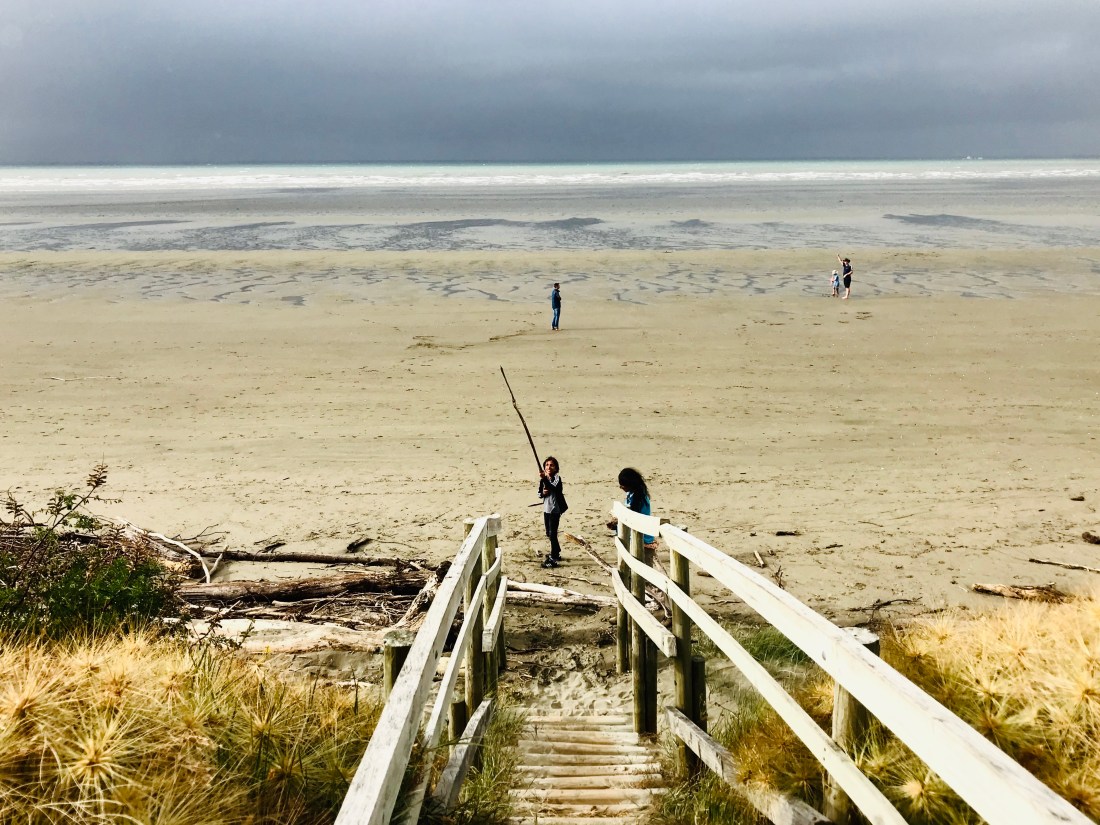
We continued northwards from Pupu and ended up at Golden Bay in a small town with a beach and we saw the most amazing rainbow. Rainbows usually seem so distant. This one was right there. One end looked as if it had plopped down on cows in a pasture. You could literally see cows walking through rainbow light. The other end was on the beach. Evan ran through it (from our perspective, though for him the rainbow would appear to keep moving further away).

We get our kicks where we can. An unexpected rainbow is just the kind of thing you can’t plan for. As our year goes on, I believe that as long as the big things are okay, it’s the little things that brings a smile on our faces.

Beach House

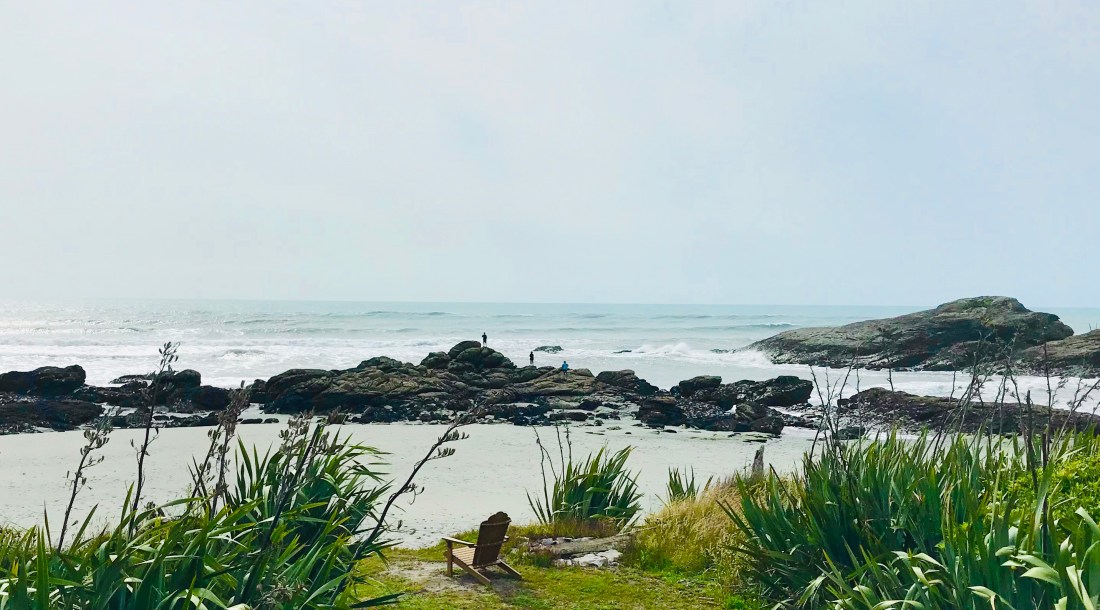
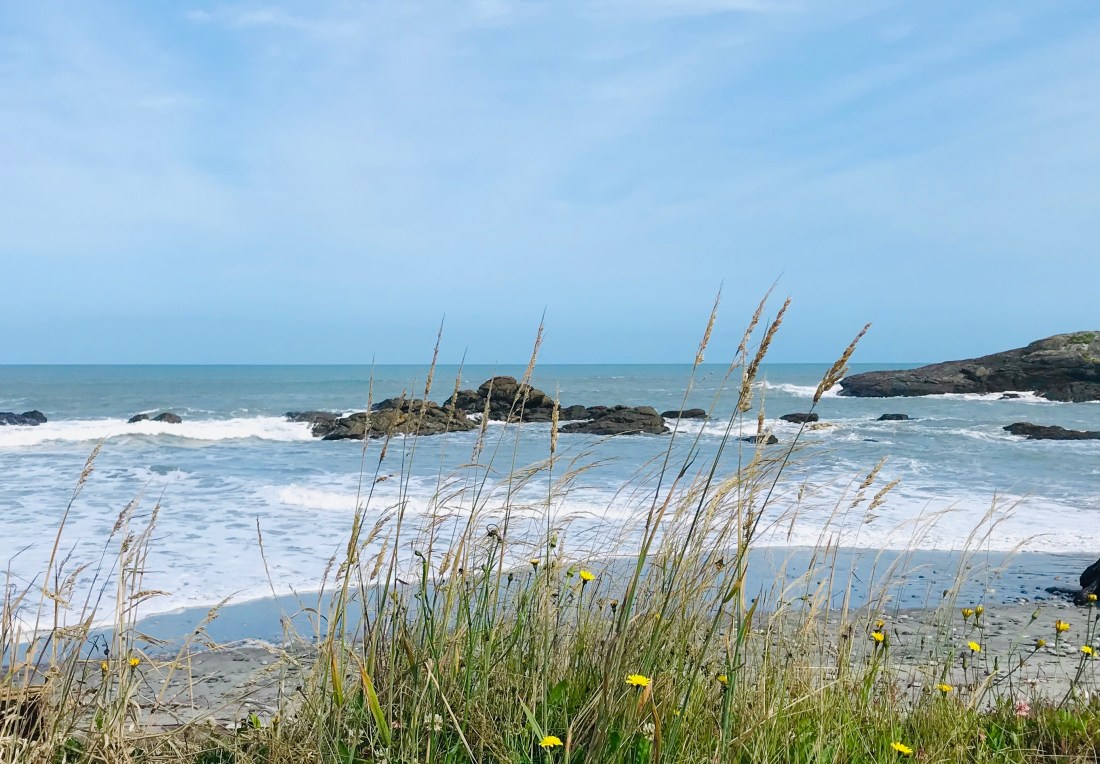
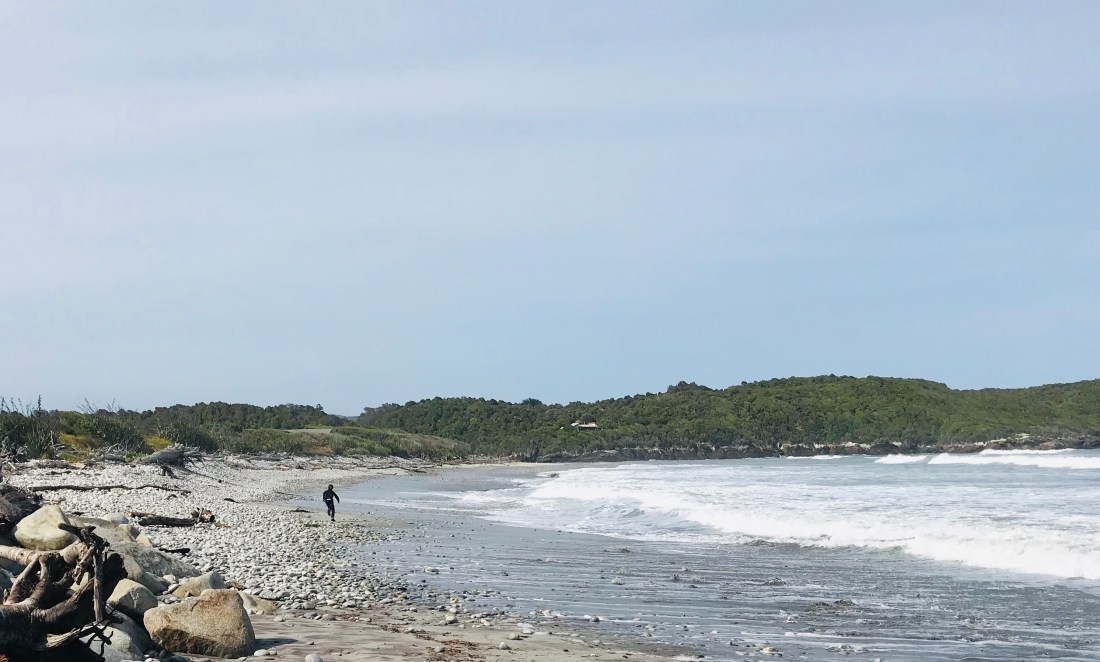
For our last two days on the Wildcoast, we stayed put by the beach in a remote house, an old timber-frame building with hand hewn beams in the middle of nowhere with a small lawn and a bay all to ourselves.

We cooked (luckily, no grabby odors this time), ate, drank wine, read, explored, sketched, studied, and rested by the thundering waves crashing on black rocks, the sound of the ocean, and the rise and fall of the tides. I could have stayed here for a week or a month.