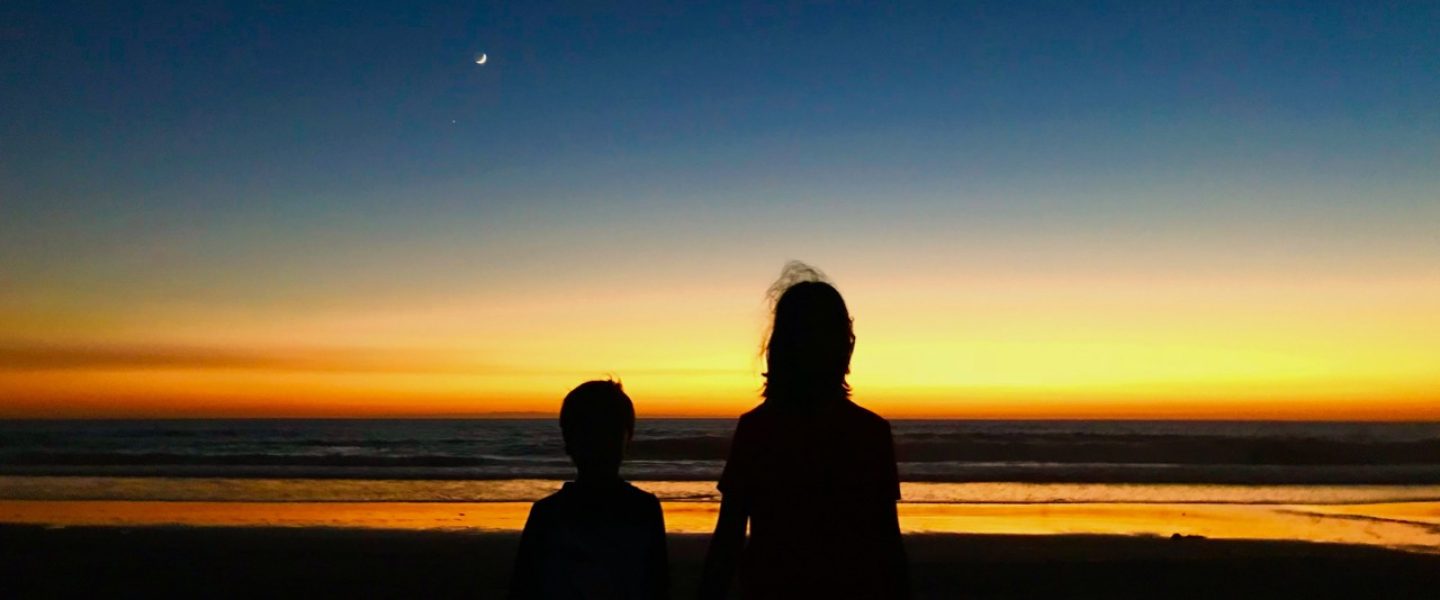
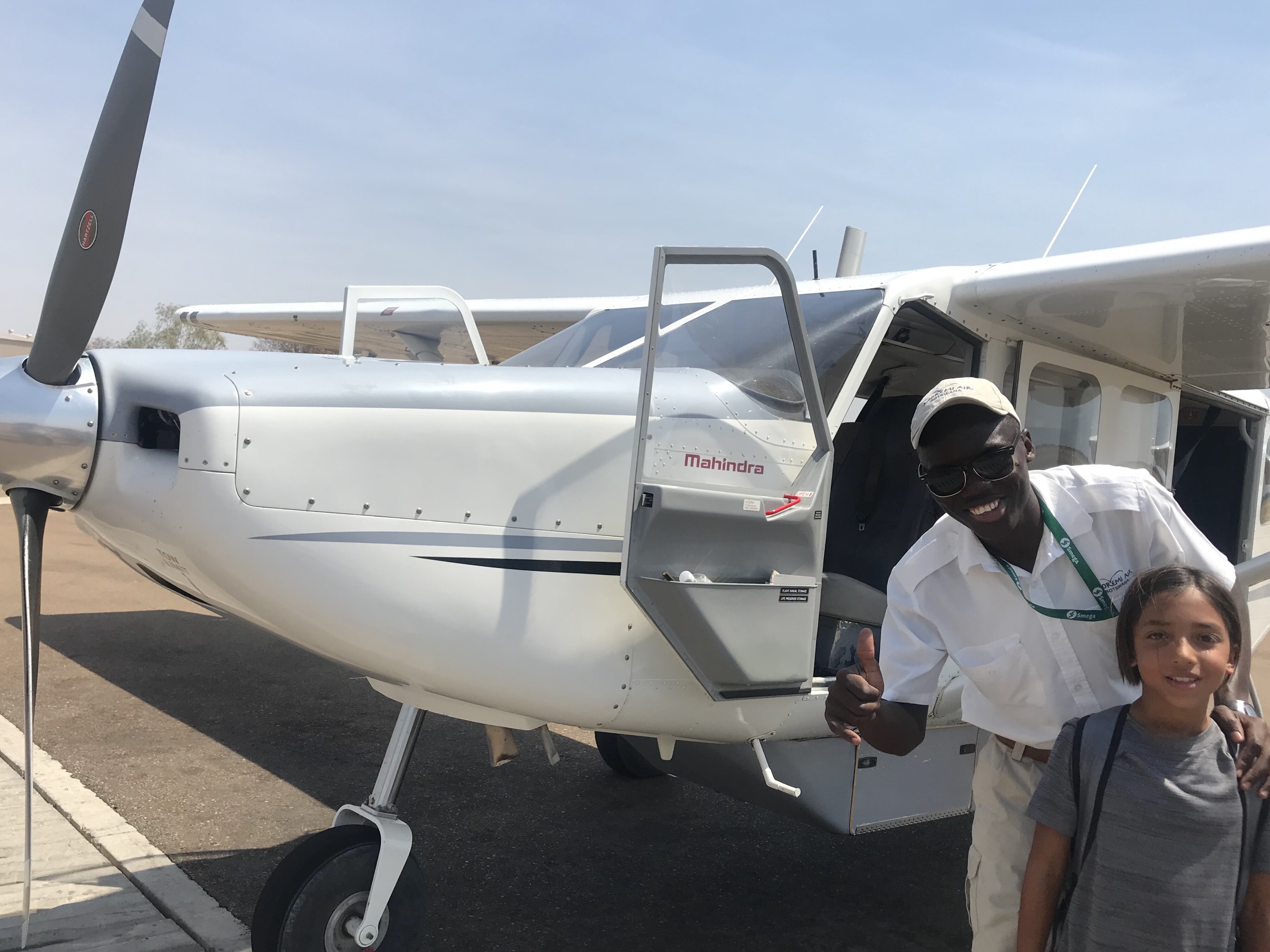
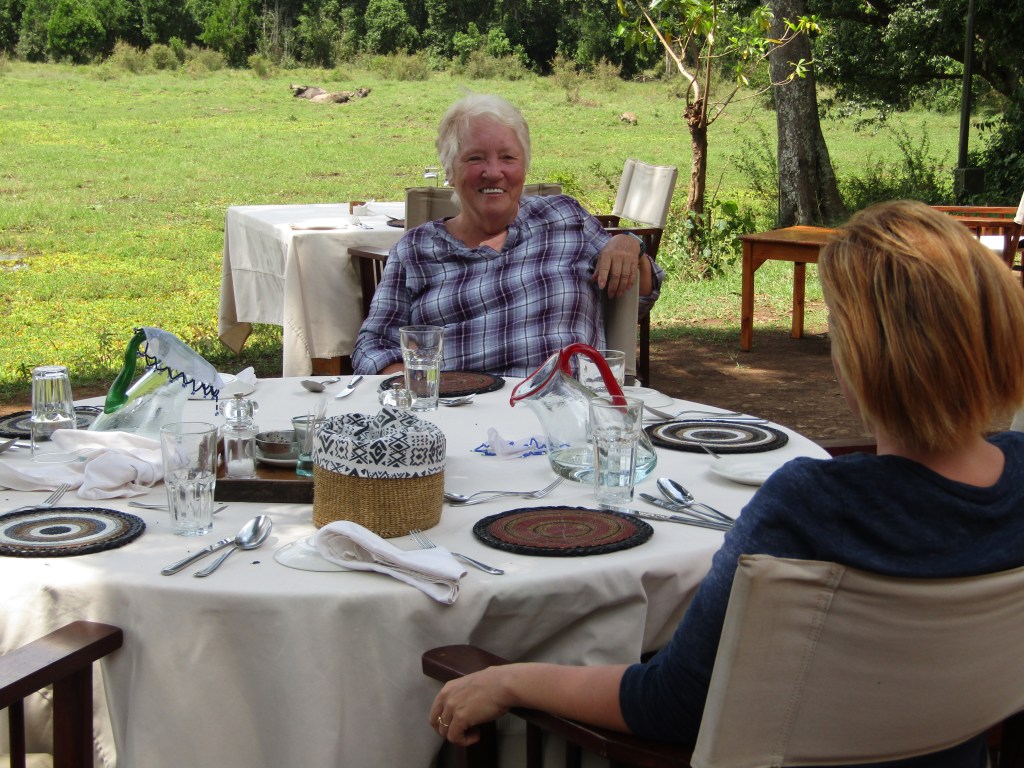
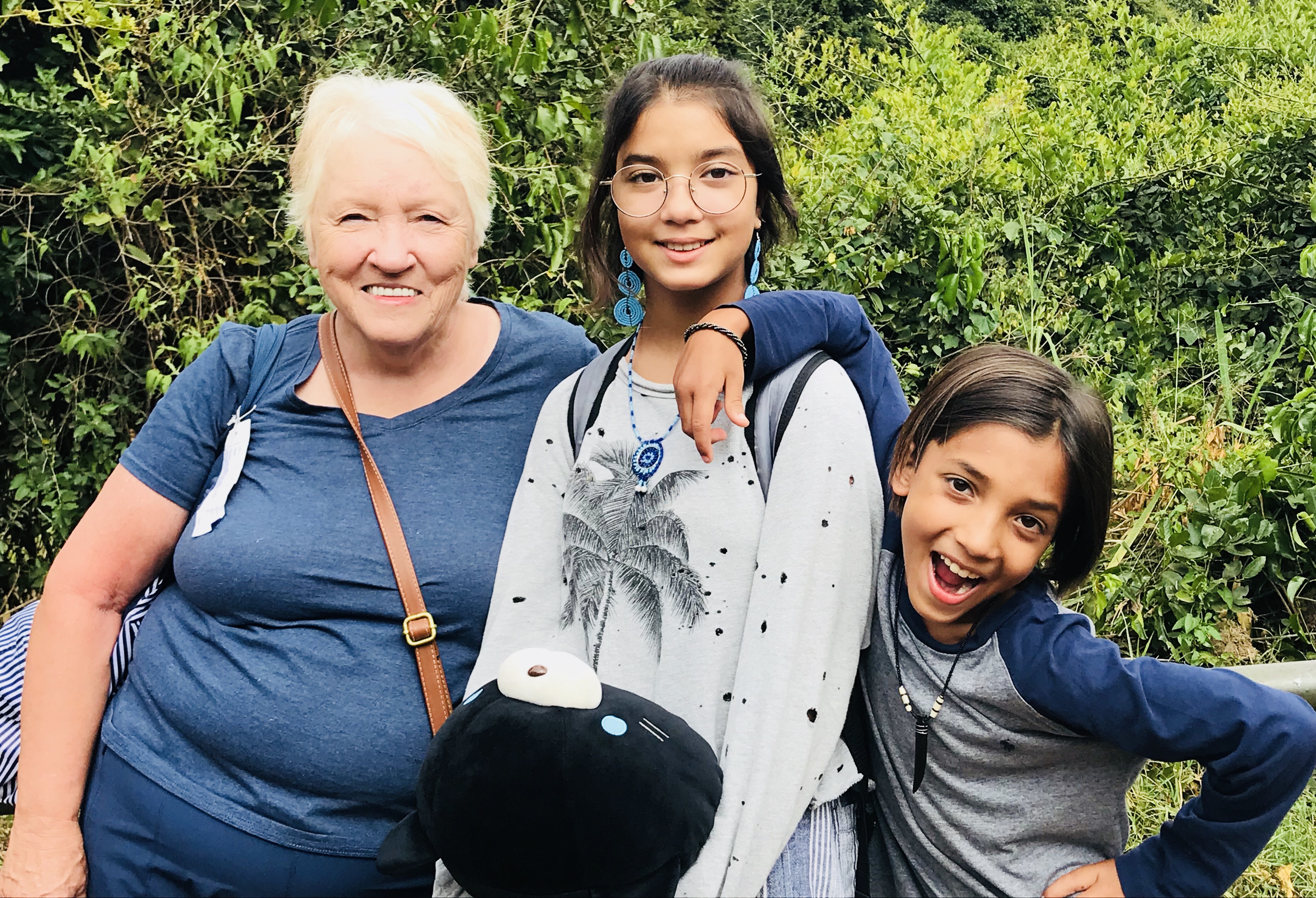
Jo and the kids complained and I thought I had perhaps booked too many safaris. Too much time bouncing in 4x4s getting lashed across the face by spiny desert trees. Too many elephants and zebras and impalas. But in the end when it was time to leave Moremi Crossing, it seemed too hurried. We said goodbye to Tiny, our gregarious manager who had been to Hyderabad, Sheraan, the nineteen year relief manager who was shy at first, Action, our tracker who can read the desert dirt like an open book, and Four Four who drove the the 4×4 with an unusual gentleness and said sorry every time he hit an unexpected bump. And we said our personal goodbyes quietly to the bush and all that we would miss. The daily rhythm of waking up early and going on drives. Spectacular African sunrises and sunsets. Elephants and hippos seemingly destroying the camp at night. The poor buffalo with the broken front leg who had escaped from the lions and the hyenas and still somehow was alive every morning on the bank of the river. The chance encounters with mongoose ripping the baby python to shreds by the lounge.
A pilot and small plane took us to Maun where we transferred to a larger schedule flight to Cape Town. And then an Uber to a jewel of an AirBnb halfway up Table Mountain. We walked down for dinner to a cozy Italian restaurant in the hip Kloof Street neighborhood and sat at a table in a building with stone walls and glass windows and complete strangers and suddenly the bush is a distant memory, a dream that is slipping away.
When we arrived in Maasai Mara we were more than a bit complacent. After all we had recently finished 10 days at Tanzania’s three top game parks with some of the best guides in the business. We had even seen leopard – one of the rarest of the predators of Africa. All that remained was rhino.
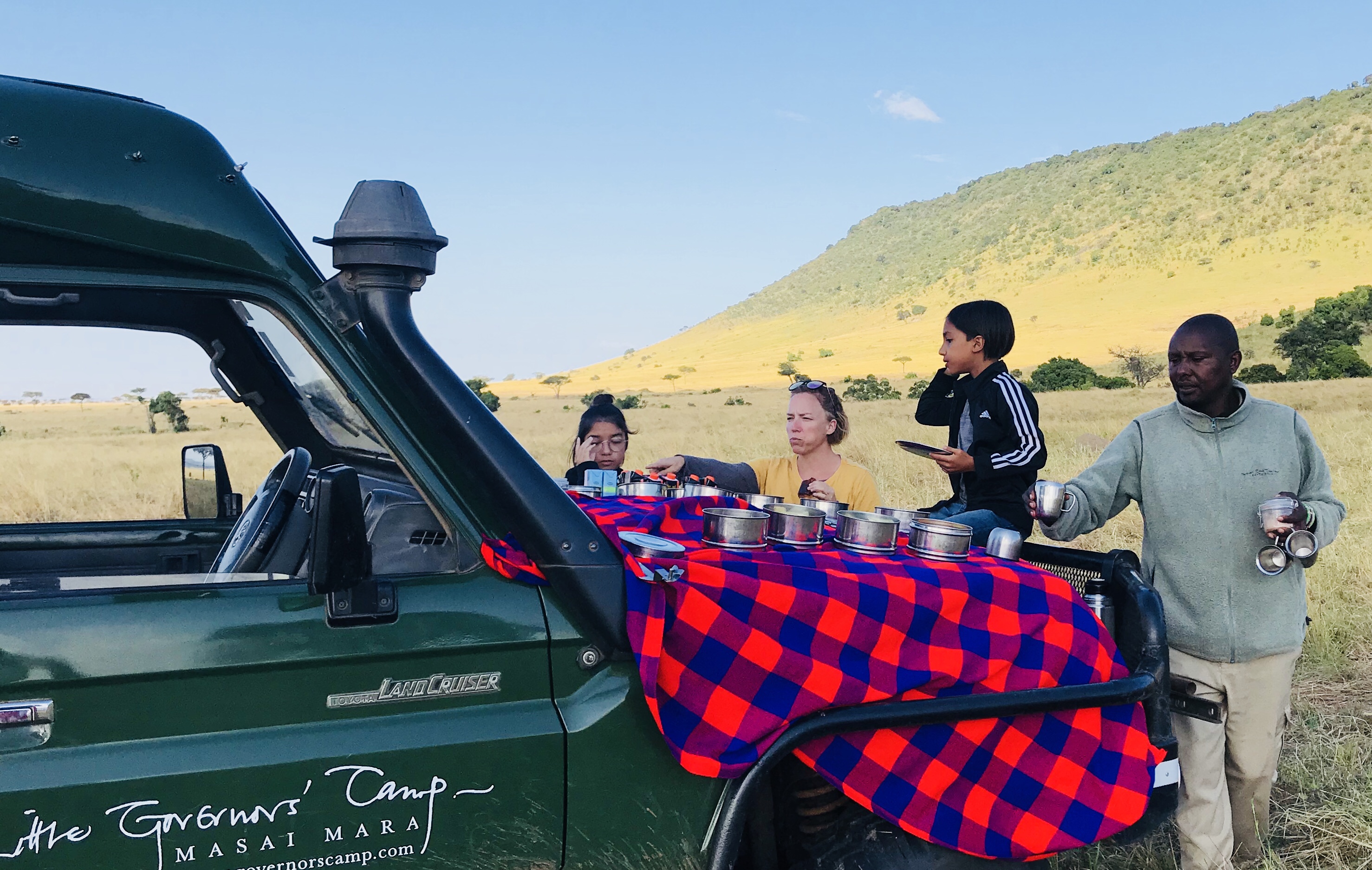
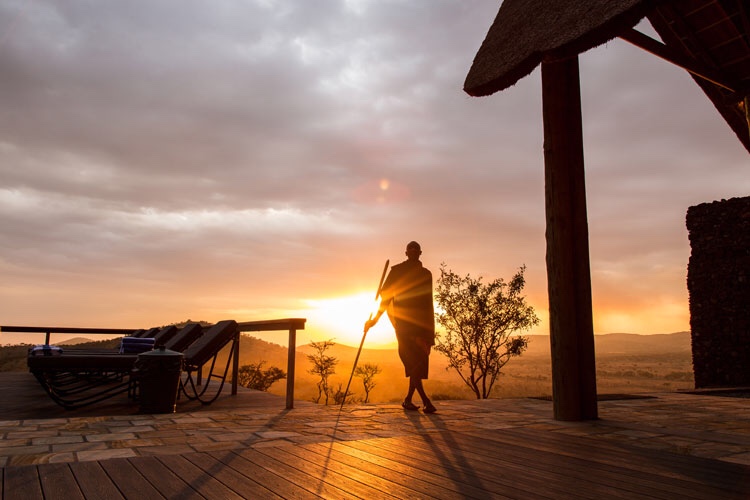
The Little Governor’s Camp is a hangover from the British days if there ever is one. Our manager is George, an elderly Scotsman who has lived in interesting places most of his life. The camp is a collection of a dozen tents around the edge of an escarpment that went three quarters of the way around a wetland down below. There is a bar / lounge tent, a dining tent, and an shaded area in front of the escarpment. It is a short walk down to the Mara river where a boat and boatman await to take you across to the safari 4x4s on the other bank. The daily regimen isn’t easy – wake up call with a hot drink of your choice at your tent at about six in the morning (in a tea cozy, with biscuits). First game drive from 6:30am to 11ish with an option of taking a picnic breakfast (which was an elaborate affair with thermoses and tiffin boxes) or returning for a quick breakfast and going back out again. Lunch under the trees till about 1:30pm. The second (or third, if you came back for breakfast) game drive starts at 3:00 pm and runs till sunset. Back home for hot showers in wood-trimmed bathrooms attached to the tents, drinks outside around a brazier of glowing charcoal at sunset, followed by dinner in the mess tent.
Our guide was Berard, who on the last day told me that his name was (pronounced) Cashew (I’m not sure what the spelling of his name is) and that he had taken to calling himself Bernard after coming across the name in a book. He was a self educated Maasai.
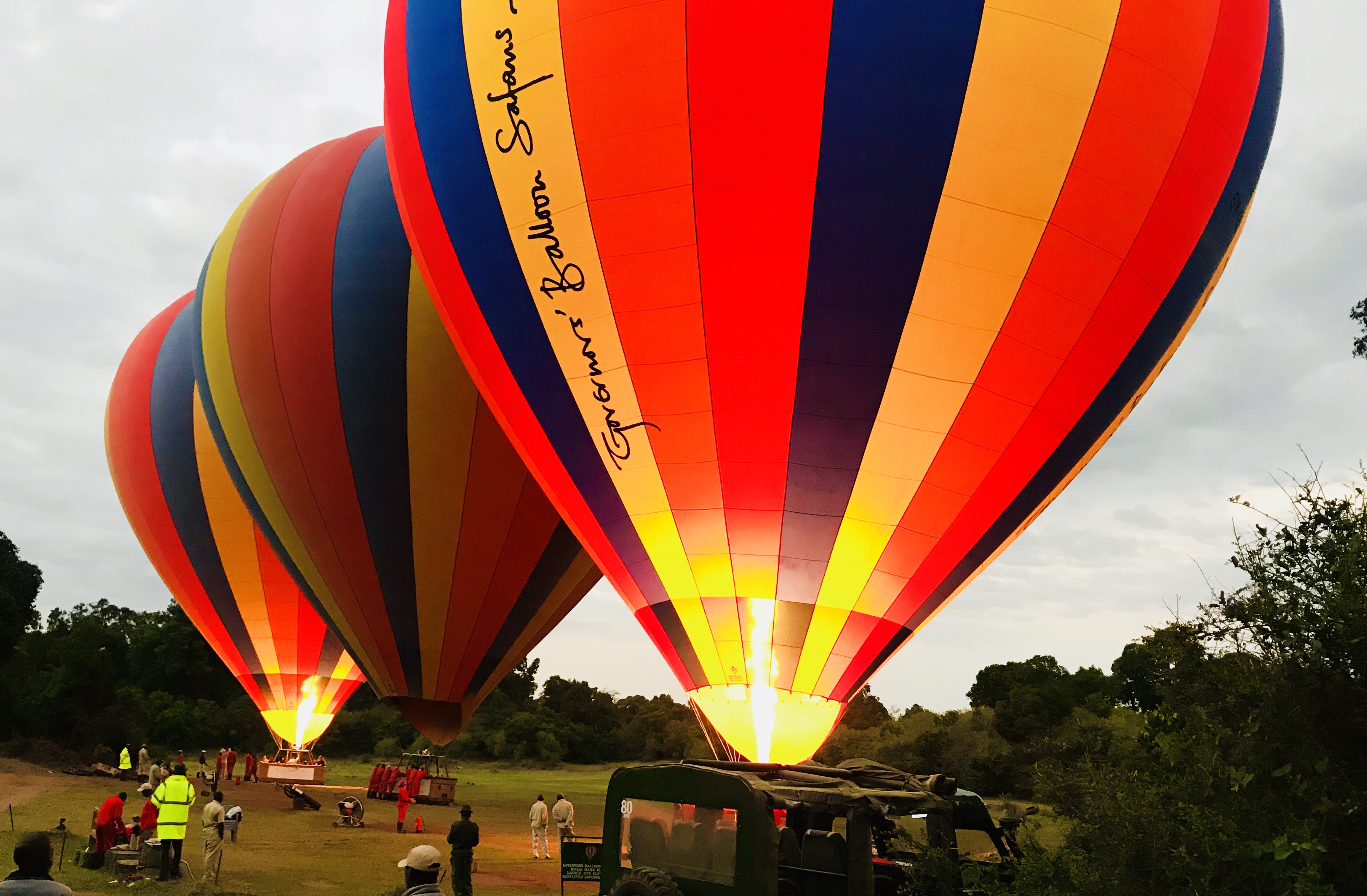
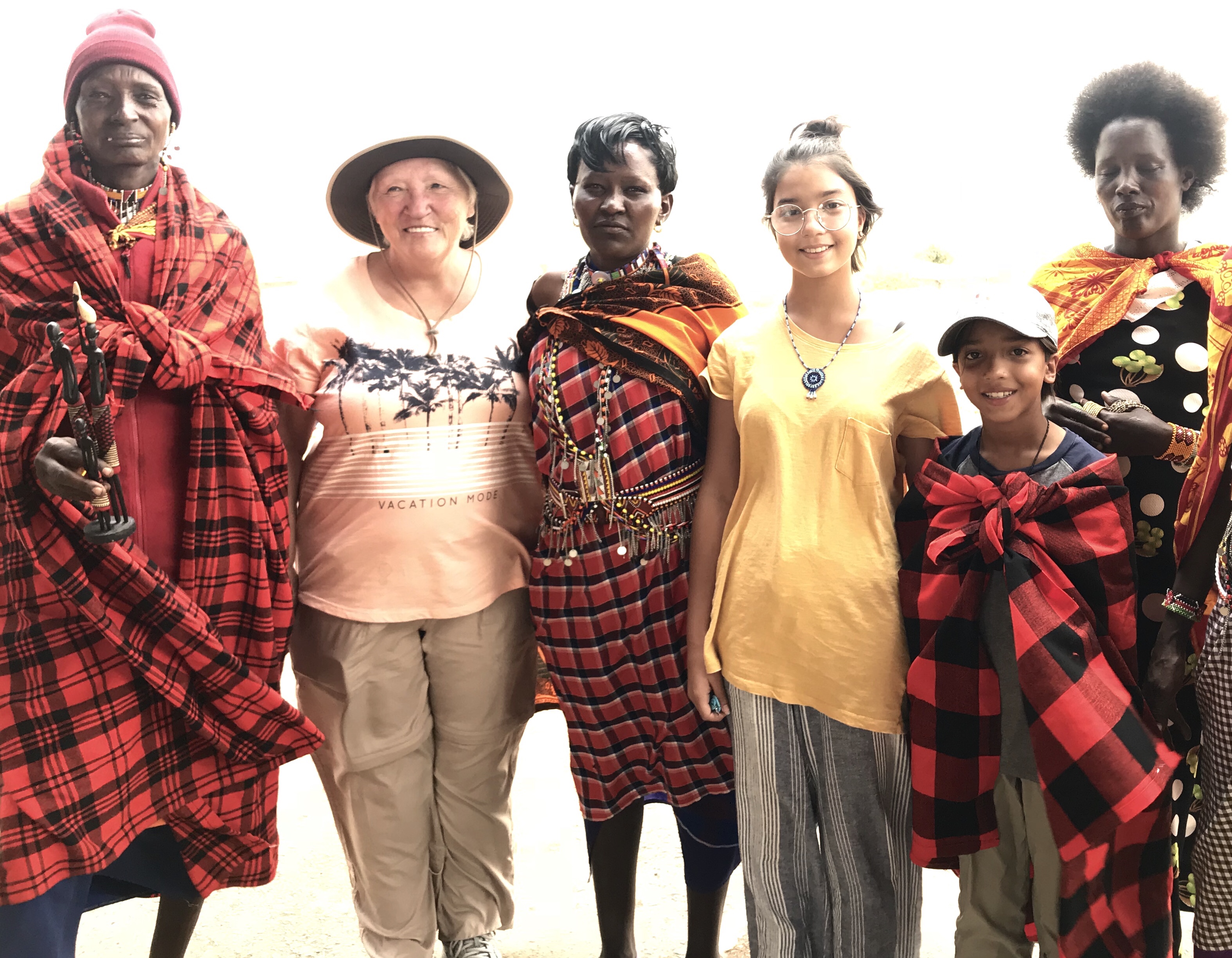
In the first few hours out we saw a rhino. Over the next three days we witnessed amazing wildlife close up. We got to learn a good deal about the Maasai firsthand from Bernard, and drove out of the park to meet a few Maasai ladies who were making and selling jewelry outside the park gates. I’ve picked out the highlight photo reel from our time in Maasai Mara.
That’s not our airplane. It was a much bigger aircraft at another landing strip we passed. Apparently about three weeks ago it had hit a wildebeest while landing and lost it’s landing gear on the port side.
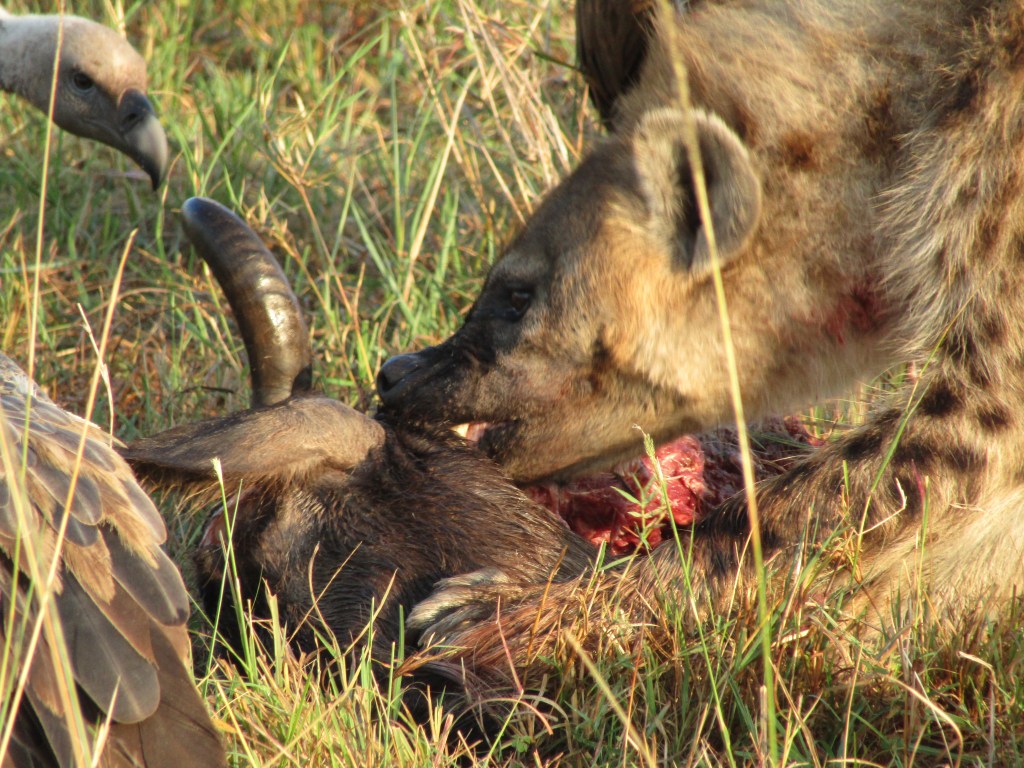
Of all the memorable things in Maasai Mara, it’s easy to tell you which one stands out. One morning we were out following a hyena. He found a carcass of a wildebeest and proceeded to eat from it very noisily while a wake of vultures circled and jumped in for a mouthful when they saw an opportunity.
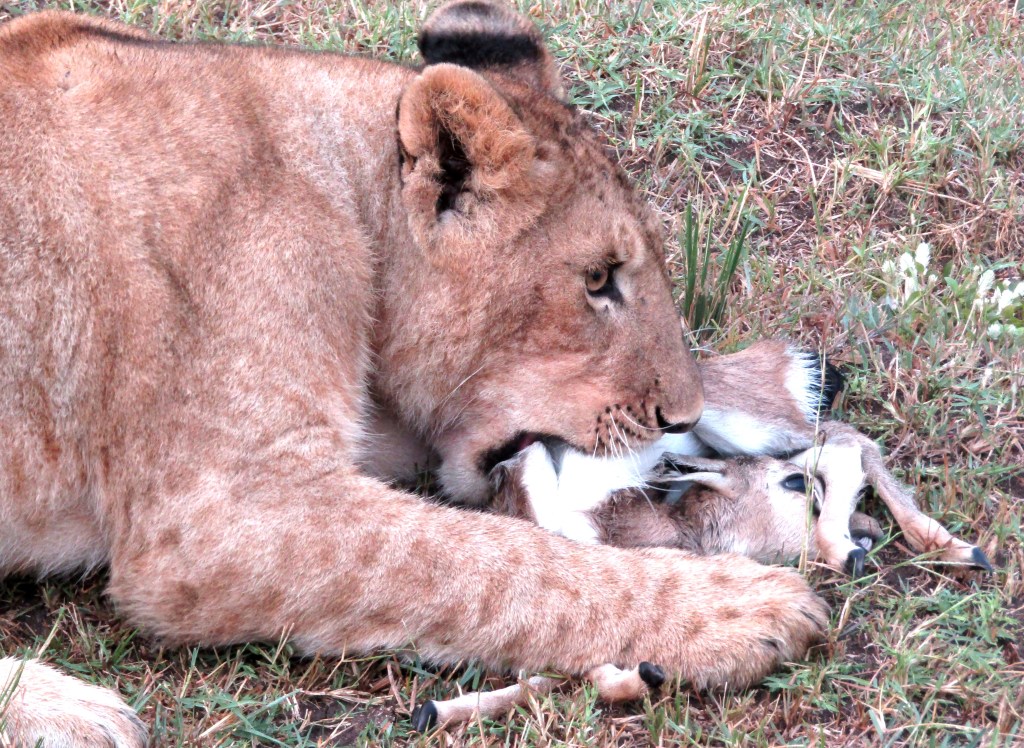
Then we saw a large pride of well fed lions a short distance from the carcass. One big lioness walked up to within two feet of the front of our 4×4. Jo took out her iPhone and started videoing the lioness. When the lioness got right in front of the 4×4, just as she was walking over a shallow gully, she suddenly looked down, and dipped her head into the gully. Just as Jo wondered why a lioness would stick her mouth in the dirt, the lioness raised her head, holding a tiny squirming baby gazelle in her jaws. It looked like she just picked it up instinctively though she had just eaten and had a full belly. As soon was the rest of the pride saw her with the fresh prey, they started running towards her. She took off. Eventually she gave the gazelle to one of her male cubs who ran around with it proudly, fending off his siblings. The mother lioness did not help him, but she did keep the two other adult lionesses from approaching her cub, though it wasn’t done aggressively. The pride played and jumped on each other and rolled over and ran around while the young lion cub ate and licked on the baby gazelle. We watched for at least an hour and Vivian and Evan commented on how similar the big cats were to their distant domesticated cousins. And Jo wanted to take one home. All the while we also left terrible for the baby gazelle and an adult female who watched from a distance who we assumed was the poor mother. Cuteness and deadliness in the same beasts. Birth and death next to each other. Sometimes horror. But no evil.
We like beaches. So I’ve worked a few into our travel plans. Our very first are the famed beaches on the Kenyan coast. We started at the Baobab Resort in Diani Beach for a few days. It is a nice place with good rooms, huge buffets, three swimming pools, a beautiful beach of fine white sand, and it’s all inclusive, including alcohol : ). But eventually we don’t want to be in a hotel.
Sometimes I surprise myself by my planning. Or may be it is dumb shit luck. Turns out that for the next few days we were booked at a “self-catering” cottage on a beach about 15 km north of Baobab. We drove up to Sand Island and all five of us took a collective deep breath and let it out slowly.
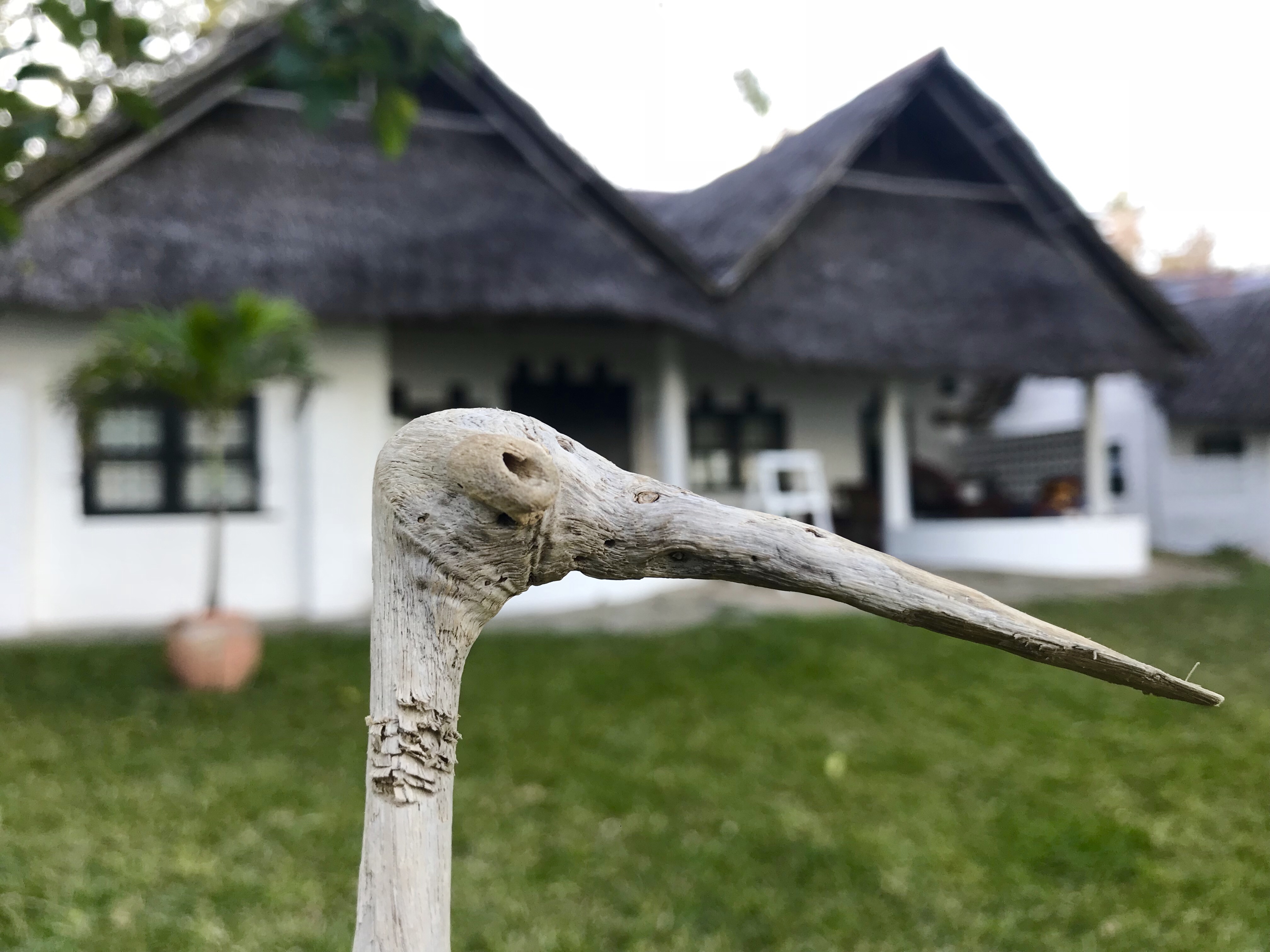
Simple thatched whitewashed cottages. Rustic furnishings. Ancient baobabs. Palm trees heavy with coconuts swaying in the breeze. A rolling open lawn leading down to a beautiful empty stretch of sand. A tranquil turquoise lagoon with a sand island! Rollers crashing on the reef.
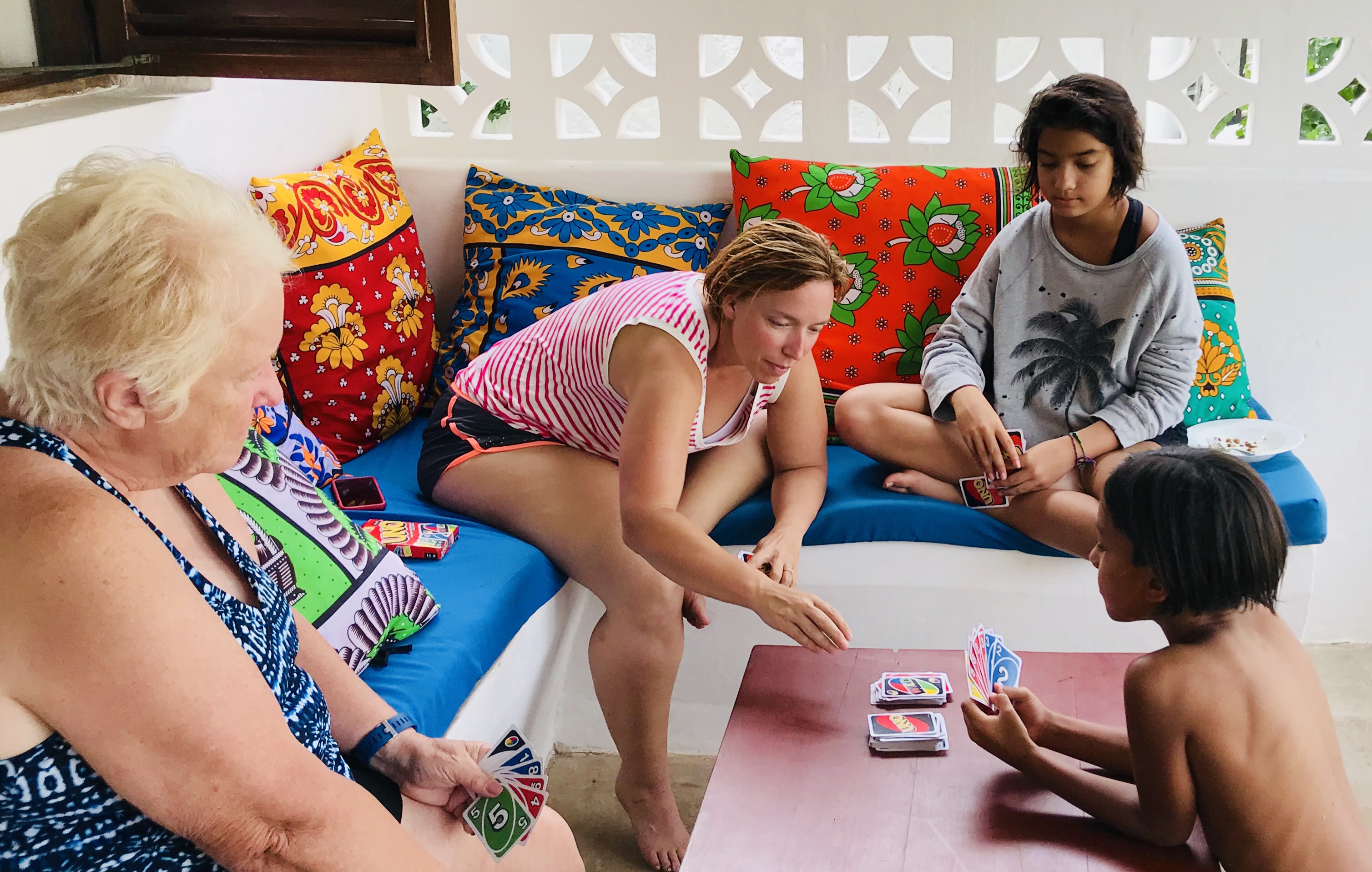
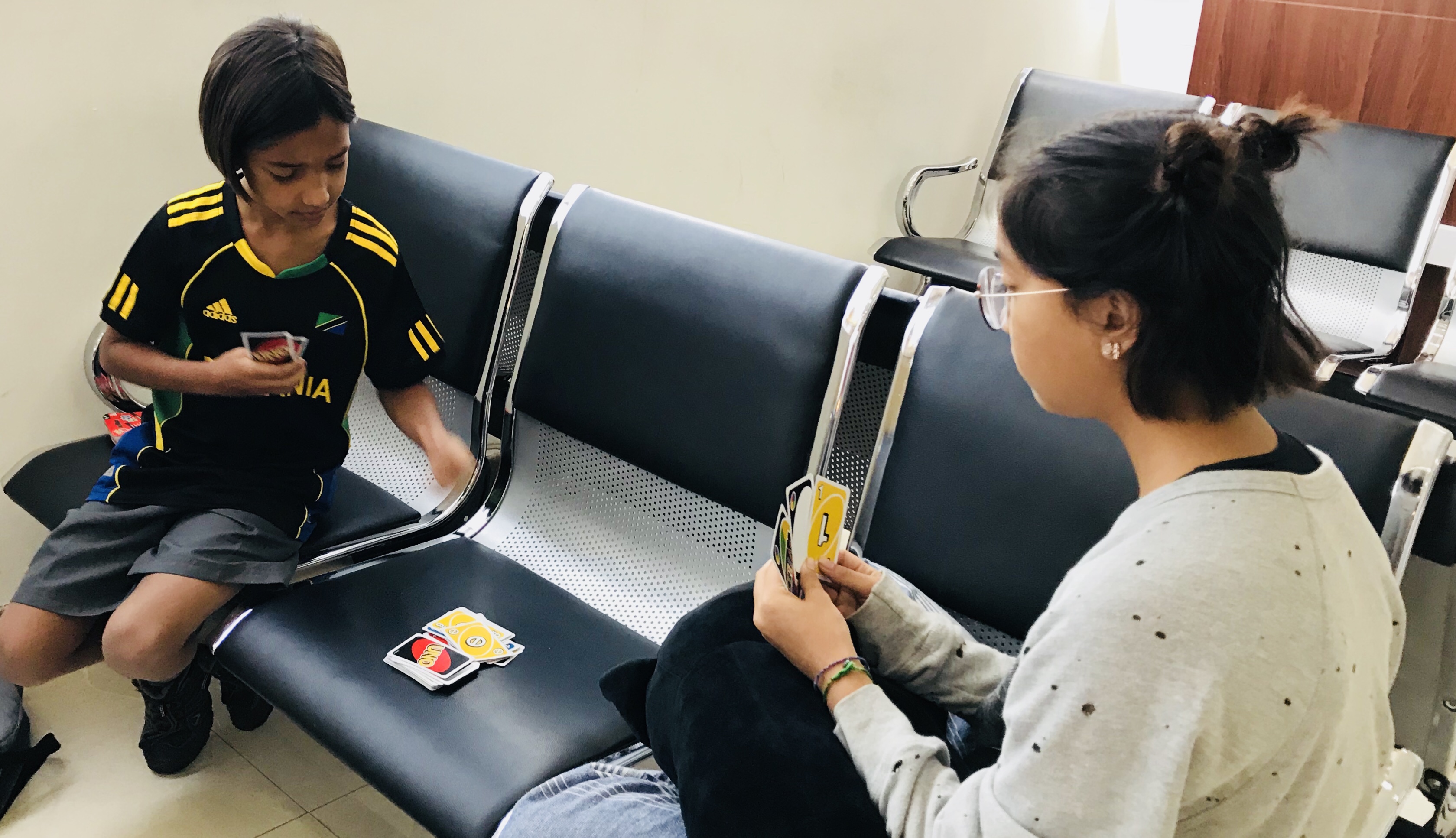
Next morning Jo and I sat on a palm log bench at the beach at sunrise and did nothing for a long time. A lone fisherman walked into the lagoon and up to the sand island. The kids woke up slowly and read in bed for a while. We made eggs and bacon and toast and oatmeal for breakfast and sat outside at the dining table and ate. And read some more and played Uno. And enjoyed the sights and sounds of the ocean.
We got samosas from a lady who they call Mama Samosa. And Binty, our cook, helped me buy fresh fish from the fisherman who told us he would bring back fresh squid for us tomorrow. And we got some fruit from the fruit guy. And four fresh green coconuts with their tops cut from the coconut guy. And I made arrangements with someone called Amos for a guided snorkeling trip to “starfish village” at noon. There are lots of brightly colored starfish right there in the sand, he said. Sure, I thought.
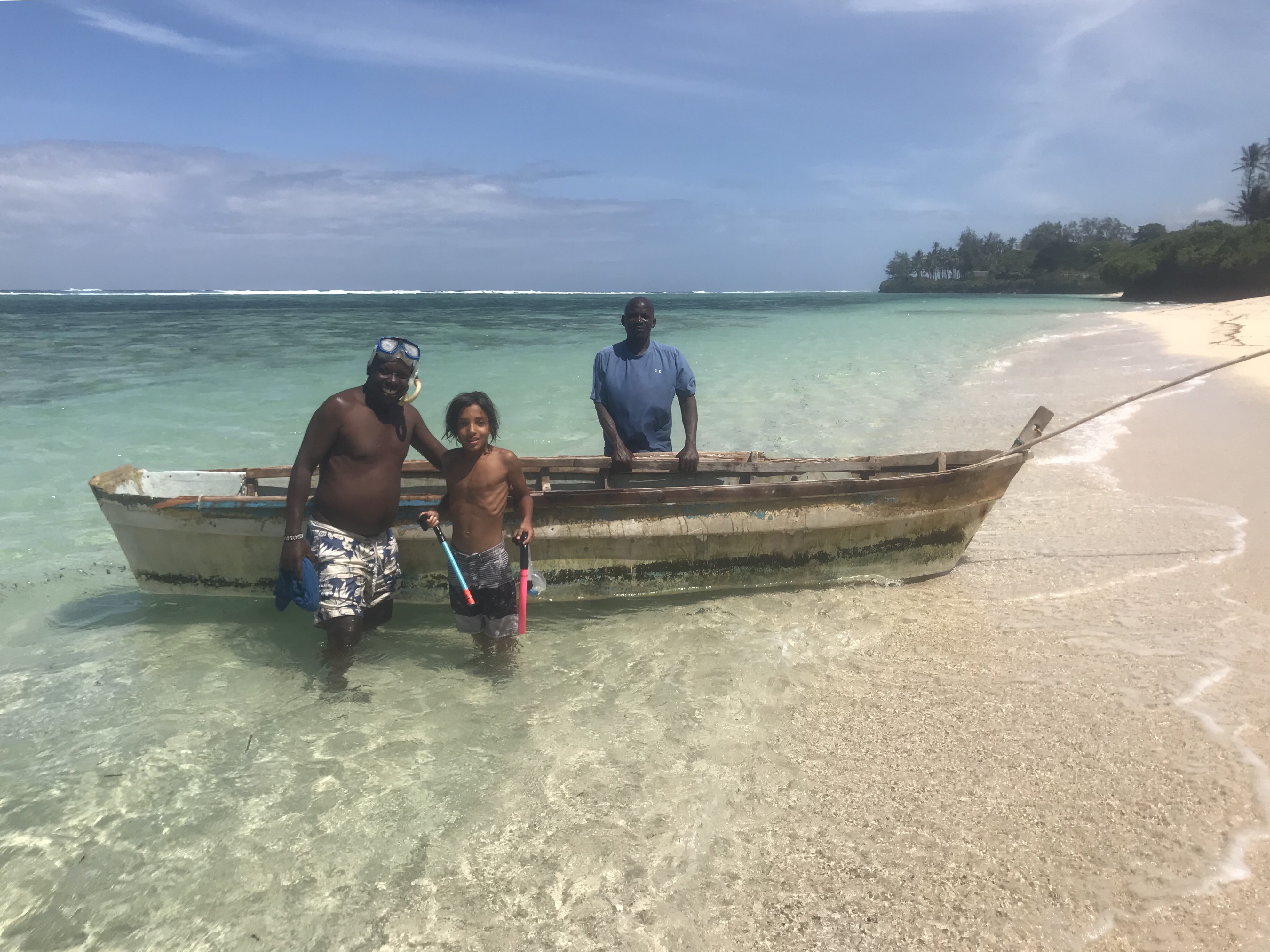
We rode out to the starfish village in an aging bleached fiberglass and wooden boat poled by Amos over the shallow waters of the lagoon. Soon Amos was pointing out large colorful starfish on the sandy bottom and in the sea grass. We jumped off onto a sand bank in a couple of feet of water and Amos returned a moment later with a pile of starfish. They looked like plastic fakes. But Amos handed them out and we turned them over and their suckers were waving out of the five slits along their bottom side. One tried to attach itself to Evan’s hand. Definitely not fake. Amos was a bit of a naturalist and told us about starfish. Then he explained that locals used to collect the starfish to sell to tourists and the population was depleted. So the fishermen and Sand Island cottages formed a coalition to protect the starfish. Now the fishermen make some money by taking tourists out to see the starfish. We marveled at how quickly starfish move. One climbed up to and over Jo’s reef shoe in minutes. Then we got ready to snorkel back. But there was a problemo. Sea urchins. Thousands of them covering the bottom of the shallow lagoon just a few feet down. Stick your knee or hand or elbow in the wrong place and you’ll get a painful reminder. We were wearing reef boots borrowed from the Sand Island office so our feet were safe. After a couple of attempts Evan didn’t want to snorkel. Jo and Vivian were doing an amazing job – it was Vivian’s first attempt and Jo’s second (her first hadn’t gone so well, 14 years ago during our honeymoon in Hawaii but that was also when I hit a giant sea urchin and got a dozen foot long spikes in my knee).
Back to Kenya. By this time, the old boat had gone to give another group of tourists a tour. Just as Jo and I were wondering how a non-snorkeling Evan would get back to the beach about half a kilometer away, Amos asked if he could carry Evan back. Evan readily agreed. And so the three of us carefully snorkeled back and looked at reefs and fish and other marine life while Amos carried Evan and walked back bare feet through fields of sea urchins. The kids will remember this adventure!
The next day the fisherman did return with a kilo of fresh prawns and four largish squid. Binty cleaned the seafood and taught me how to make coconut fish curry. I watched how she extracted milk from the coconut. She brought in a big folding wooden contraption with a small circular metal grating blade on one end, sat astride it and grated the insides of two fresh green coconuts. Here’s a photo I have borrowed from a blog on African cooking. The grating contraption is called a mbuzi, which is the Swahili word for goat.
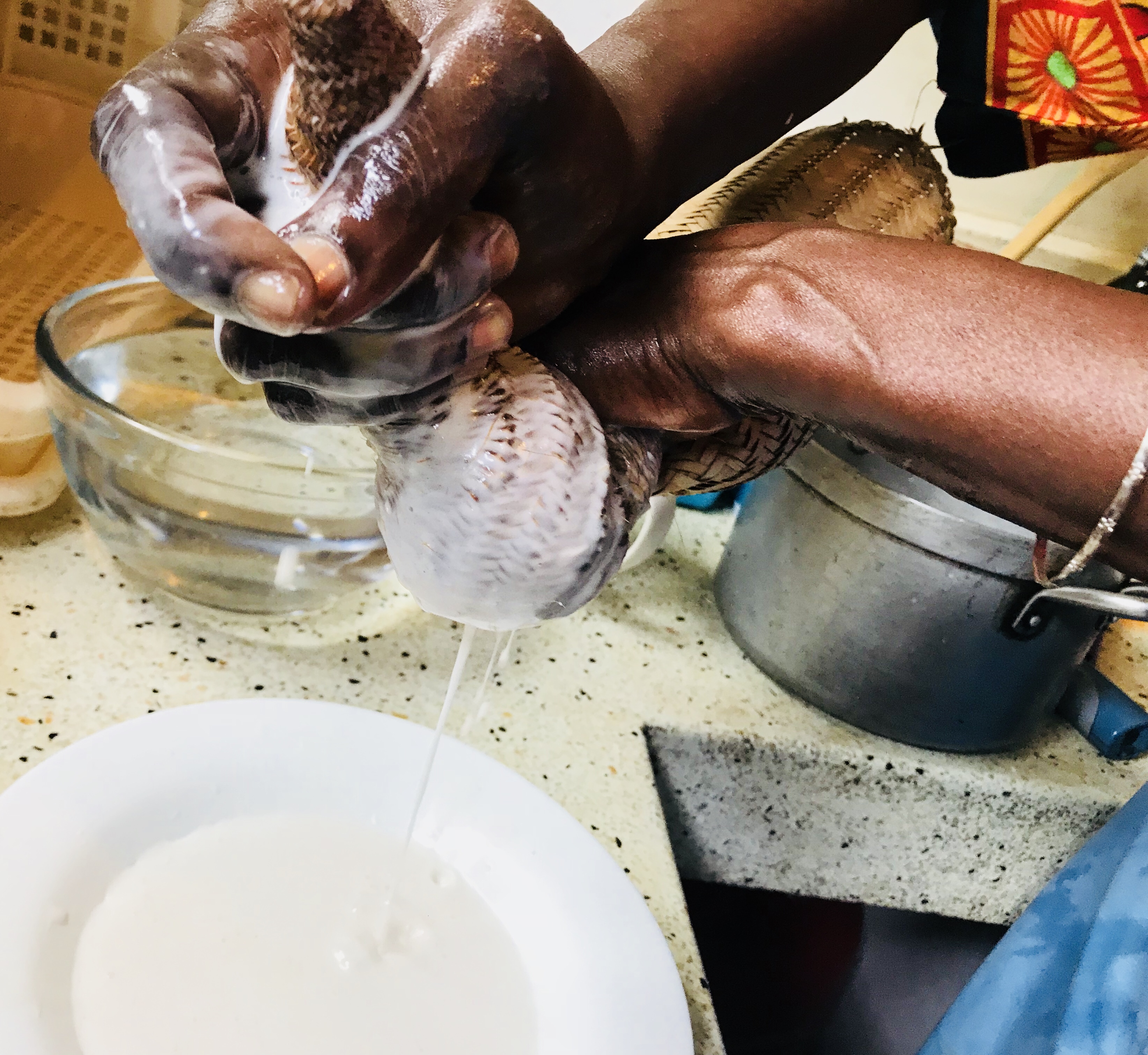
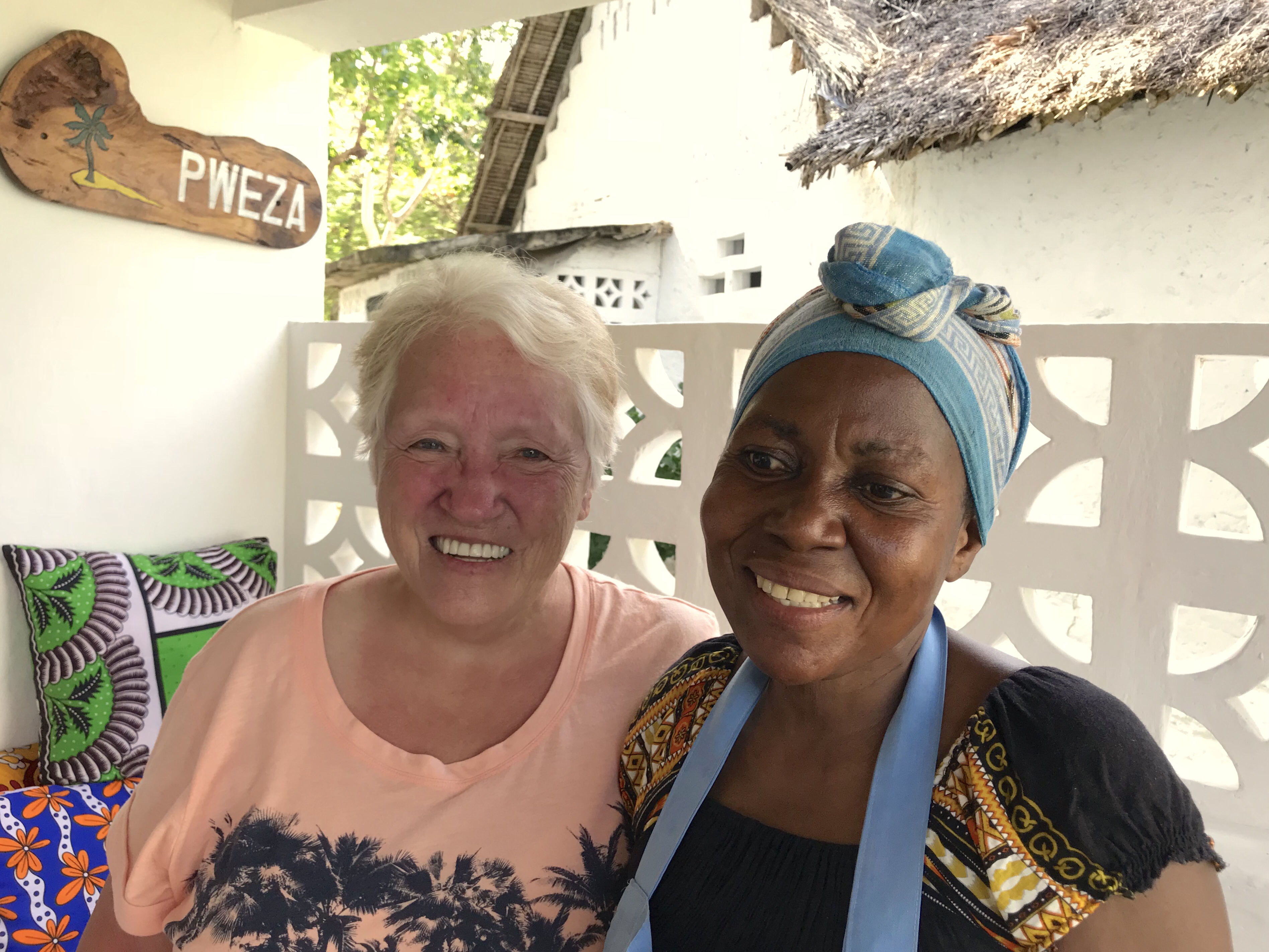
Then Binty poured the finely grated coconut into a long tightly woven tube closed at one end. I had seen it hanging in the kitchen the evening before and wondered about it. It’s called a kifumbu and it is alternately wrung and fluffed to squeeze the milk from the coconut. I got three drops when I tried. Here’s a photo of Binty’s hands working the kifumbu. And a photo of Carol and Binty. Along with excellent coconut prawn curry, Binty made us fresh hand battered calamari rings. Yum. Evan’s favorite food in the whole wide world. The next day we had fresh charcoal grilled snapper and calamari.
Evan asked Amos if he could keep the mask and snorkel a bit longer and mastered snorkeling by himself. We spent many a lazy hour wading over to Sand Island in low tide or walking along the beach and watching the ghost crabs scuttle away from us. One afternoon we got back in the boat and went to Africa Pool – an African shaped indentation in the lagoon a couple of miles south. Carol gamely joined us didn’t complain even when we almost tipped the boat over multiple times. Both Vivian and Evan enjoyed snorkeling at Africa Pool and there were a lot fewer sea urchins.
It takes a few days to settle into a slower rhythm of life. You wake up with the sunrise and look at the tides. Games of Uno on the sun drenched patio punctuate hours of reading and silence. We find different places in the house and property where we go off to, reuniting at meal times. Gringo, the white cat, and Kimmel, the old black lab, show up when we eat. We go to bed with ocean breezes coming in through open windows and the music of rollers breaking on the reef in our ears. Just when we think we can do this for ever it is over and we are off to Ukunda airstrip for our flight back to Nairobi and the world outside.
(This post is out of chronological order. I should have posted it around Aug 20th). After ten amazing days of safari in the Serengeti we finally drove up to the Kogatende airstrip on the edge of the Mara river after breakfast for our airplane trip back to Arusha.
The “departure lounge” of the airstrip is a melee of 4x4s. Here’s what it looks like.
An airplane taking off had to abort because some wildebeest wandered on to the airstrip. Two of the 4x4s had to drive down the dirt runway to shoo them off. There isn’t a control tower or any thing else besides the dirt strip and a guy with a clipboard. Just the basics.
I got to sit in the copilot’s seat. The pilot seemed only slightly older than Vivian. Unfortunately I can’t fly. Fortunately my expertise wasn’t needed.
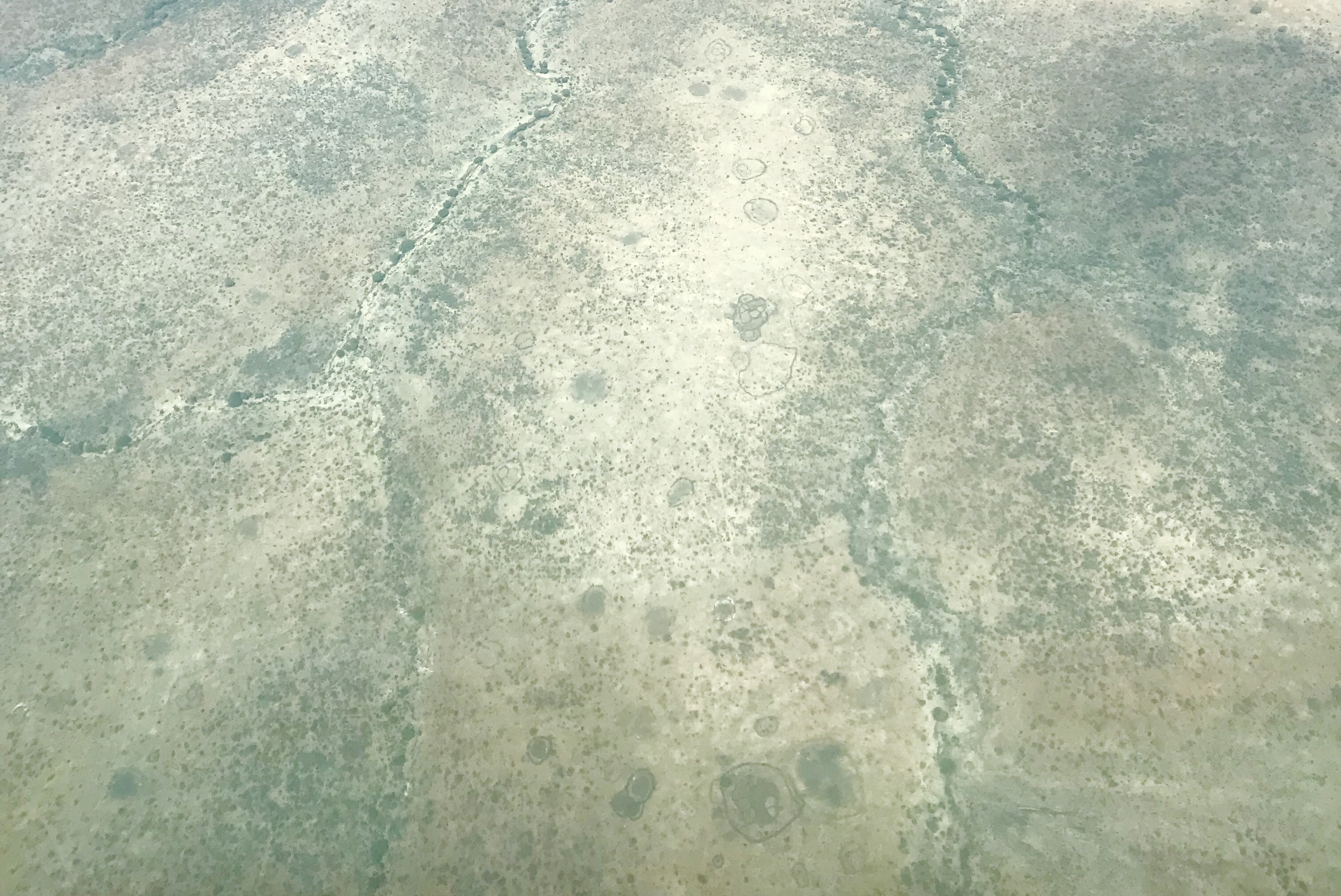
We flew over the Serengeti and then portions of the Ngorongoro Conservation Area. From about 8,000 feet up you can see the rounded fences made up of dried acacia branches that the Maasai use to corral their sheep and cattle. The land looks barren and moon-like from up here. But it’s teaming with life.
Here’s us landing at Arusha. The view from the cockpit (insert Bevis and Butthead style laughter heehee hee).
Tomorrow we are going to visit a school in Mathare – one of the largest “slums” in Nairobi with a population of over 600,000. The kids that attend this school are poor. Many have not been able to pay their tuition for years. The founder of the school, Vincent Enos, is a young man who had trouble going to school and college himself because he didn’t have money to pay his tuition, and is now giving back. The school year has just started – today is the first day.
This evening I am working with Evan so that he is prepared to say a few things about himself and ask the 4th graders at the school some questions if the opportunity to do so presents itself. If he isn’t prepared in advance, the chances of him ad libbing are close to zero. I really want him to have some interaction with the students at the school. Opportunities like this are rare. When Evan doesn’t make much progress by himself I decide it’s time to get more involved. I ask him to write down 5 points about himself, his school, and his life, so he can speak for about one minute. He really doesn’t want to. There are tears. It takes us an hour. I am impatient. He is miserable. I am rethinking the wisdom of dragging two ungrateful privileged turds around the world.
Next morning we both feel better. The family grabs a quick breakfast and we Uber to a cafe at a posh development next to Mathare where we meet Vincent. He drives us to the school in Mathare. It looks like a hole in the wall. We walk into the first class which is probably 10 x 10 feet and has more than 15 kids and two teachers. These are the littlest ones and are in pre-k. The kids burst into a song about welcoming us to their school. We look down at their desks and see tiny letters made from play dough. This is how they learn their letters. The teacher tells us that by the end of the year the kids will be able to read. The medium of instruction is English. They kids also learn Swahili at school. And they speak their mother tongue at home. They will be tri-lingual, like most Kenyans we meet, with almost first language proficiency in three languages. When it’s time to say thank you and move on to the next class, I shake hands with this beautiful bright faced student in front of me. Then we quickly realize that all four of us are going to have to shake hands with every kid in class : – ). I worry that Jo is going to never leave. Everyone is shyly smiling and electricity is passing around the room.
Vivian talks to the 7th graders a bit. She shows them how she draws amine faces and eyes. The class only has eight kids. Two say they want to be doctors. Two pilots. One engineer. One football player. They are quiet and shy.
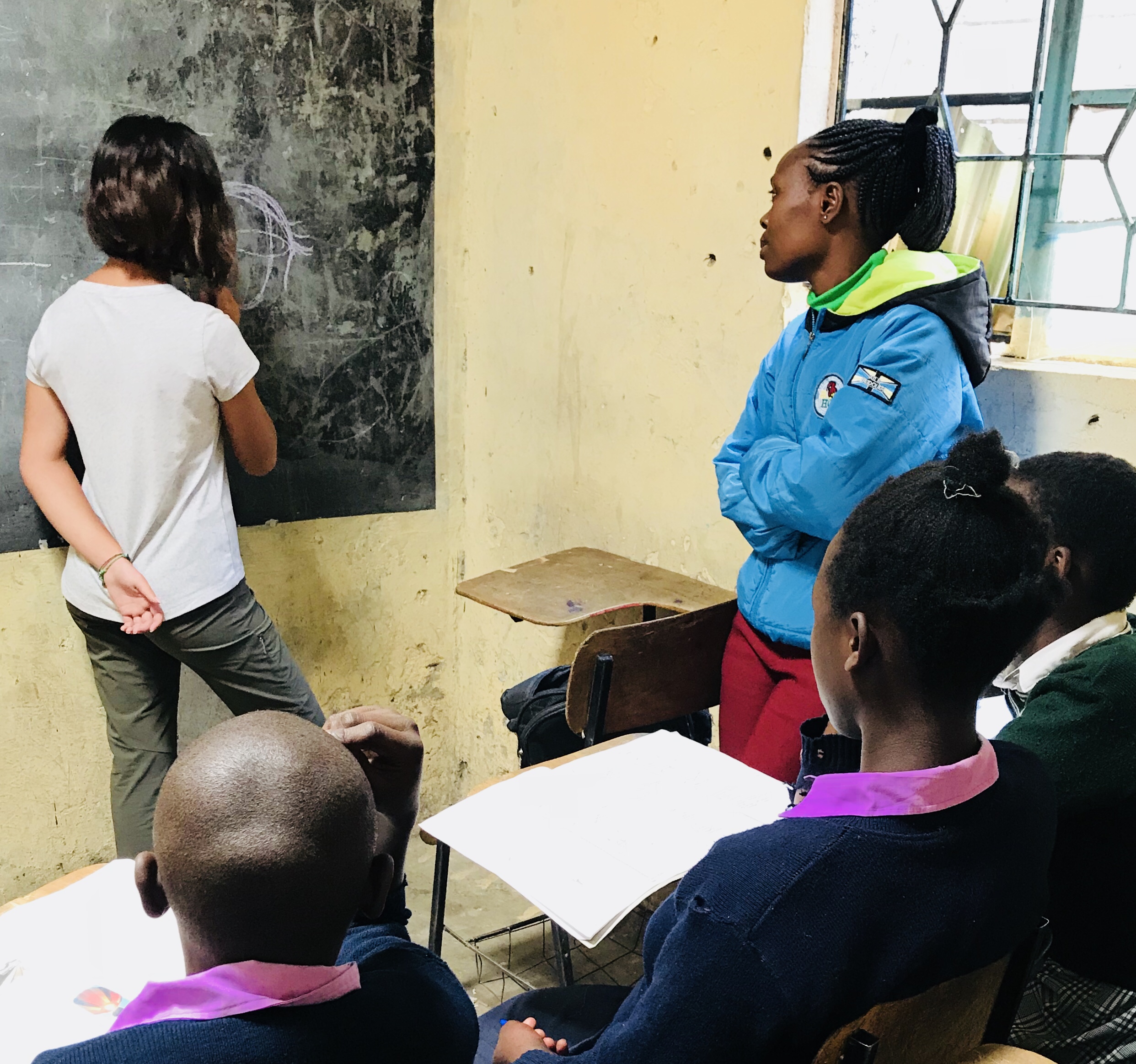
Vincent shows me the bathrooms. They are clean but I have to try hard to not gag from the smell of the sewers. Infrastructure and slums don’t go together. Across from the bathrooms is one long room that houses four classes next to each other. Blackboard are painted on to the walls. There are four teachers. We spend quite a bit of time here. Vivian and Jo chat with the kids and the teachers.
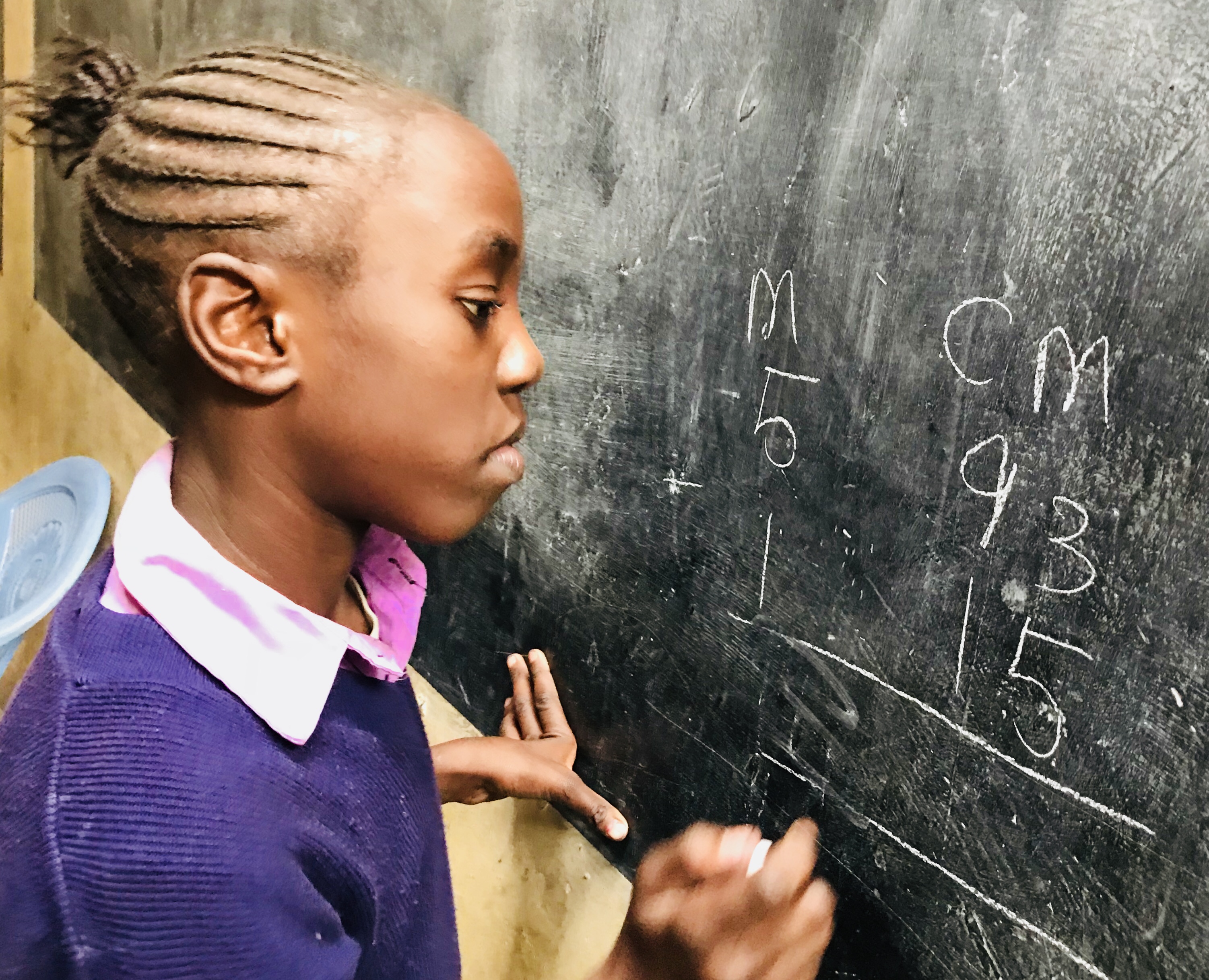
I pick up a text book and ask the student in the front row is she’d come up to the blackboard and solve the problem on the open page in her textbook. She is very serious and with a little help gets the problem right. The teacher, Mr. Edwin, gentle, smiling, tall and bony is his threadbare suit jacket, reminds me that it is only the second day of the school year. Later we find out that Edwin is related to Obama.
Vivian shows the kids some of her sketches on an iPhone. They are intrigued. I am amazed by how easily Vivian gets into discussions with them – even when she’s having to lead and do most of the talking. She discusses school and volleyball and art with the kids. She asks if they have hobbies. One boy about her age gets up from the back and walks over to the blackboard. He’s got a grin on his face. He hikes up his torn shorts and does something between a dance and a strut. Everyone chuckles.
Jo and I occasionally try to get Evan involved. He loosens up and chats a bit here and there. We coax him into saying a few words in Spanish and Mandarin. We discuss what everyone’s favorite subject is (a reliable ice-breaker). Evan says his is recess. Not everyone understand. Then Evan adds that his second favorite subject is lunch. The class erupts into laughter. Jo asks him if he wants to show them how he does the floss. He does a quick demo. Then another kid walks up beside him and they do the floss together.
And just like that it could be Evan and a friend at Magellan back in Austin. Thousands of miles apart in every way, yet so similar in an unguarded moment.
Later we go chat with the staff. They tell us many students live with one adult, often an older sibling. A lot of them come to the school hungry and rely on the school lunch for their one meal of the day. They can’t afford text books. The principal explains that when you are reading from a passage, it’s hard when there are only two textbooks in the classroom. He says that there are very limited options for showing the kids experiments and doing any practical learning. I think back at Magellan and how Evan and his classmates do a couple of hands-on project for every unit of inquiry. But he says that kids do well after they graduate. The teachers help to get the students placed at high schools and find funds for their continuing tuition. The biggest challenge? Money. This week there isn’t enough for the all important lunch. The school is behind on its payroll and teachers haven’t got paid. “At the end of the day we have to go back to our homes and our families.” adds a teacher. I find out that the school has about 280 students from pre-k to 8th grade. Its annual budget is about $75,000.
Later that day we meet some Kenyan entrepreneurs. When they hear about our morning adventures they are curious to know what Vivian and Evan thought about the school. Vivian says that she was impressed about how badly the students want to learn. Back home we have everything and we aren’t really serious about school or learning, she adds. Evan nods in agreement. That realization may be the most interesting and important thing our kids have deduced during our travels so far.
I don’t often use god quotes, being an atheist and all, but here is a fitting one from Karen Blixen, author of “Out of Africa”. God made the world round so we would never be able to see too far down the road.
We’ve been on the road for month and it is already further down then I had been able to see from Austin or even last night.
One day around 6 days into the safari I asked the kids to do something for me. It was pretty easy and it required one of them to walk back to our tent about 200 yards away from the lounge tent. They both refused. I explained there would be consequences. Still firm “no’s”. So I took their iPads and kindles away for 3 days. I thought they would be despondent and mad and depressed the whole time. I was willing to put up with that.
They were upset for 5 minutes. Then I heard laughter from the tent. Peals of laughter. This continued for the next several days. They horsed around with each other. They played endless hours of Uno. The interacted with us. They were bloody human again.
Northern Serengeti has a lot of flies. Between noon and about 4 pm, especially in areas near water, they are thick as wildebeests. Not to take anything away from the raw beauty of the place and its animals, but you can’t hold a camera steady when you’re swatting at a hundred flies. These are the garden variety flies. Then there are the tsetse flies that can give you sleeping sickness. They are bigger, like horse flies, and they take a chunk out of you when they bite. Most tsetse flies in northern Serengeti don’t carry the sleeping sickness parasite so your chances of getting the disease are low. Bug repellent doesn’t really help. Avoid wearing blue or black – they are attracted to those colors.
Flies and wildebeests aside, northern Serengeti is teeming with animal life. After we witnessed multiple wildebeest river crossings, Joshua and Philip took us on drives in search of some of these other inhabitants.
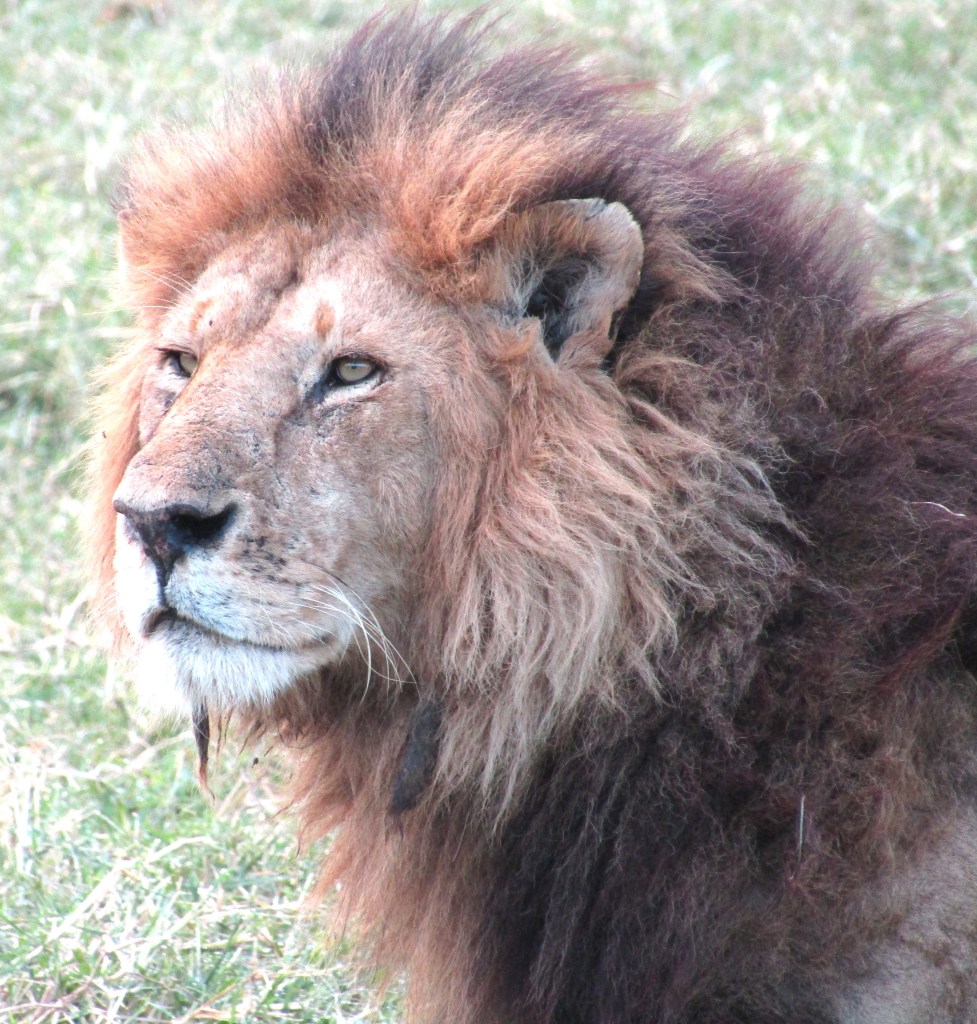
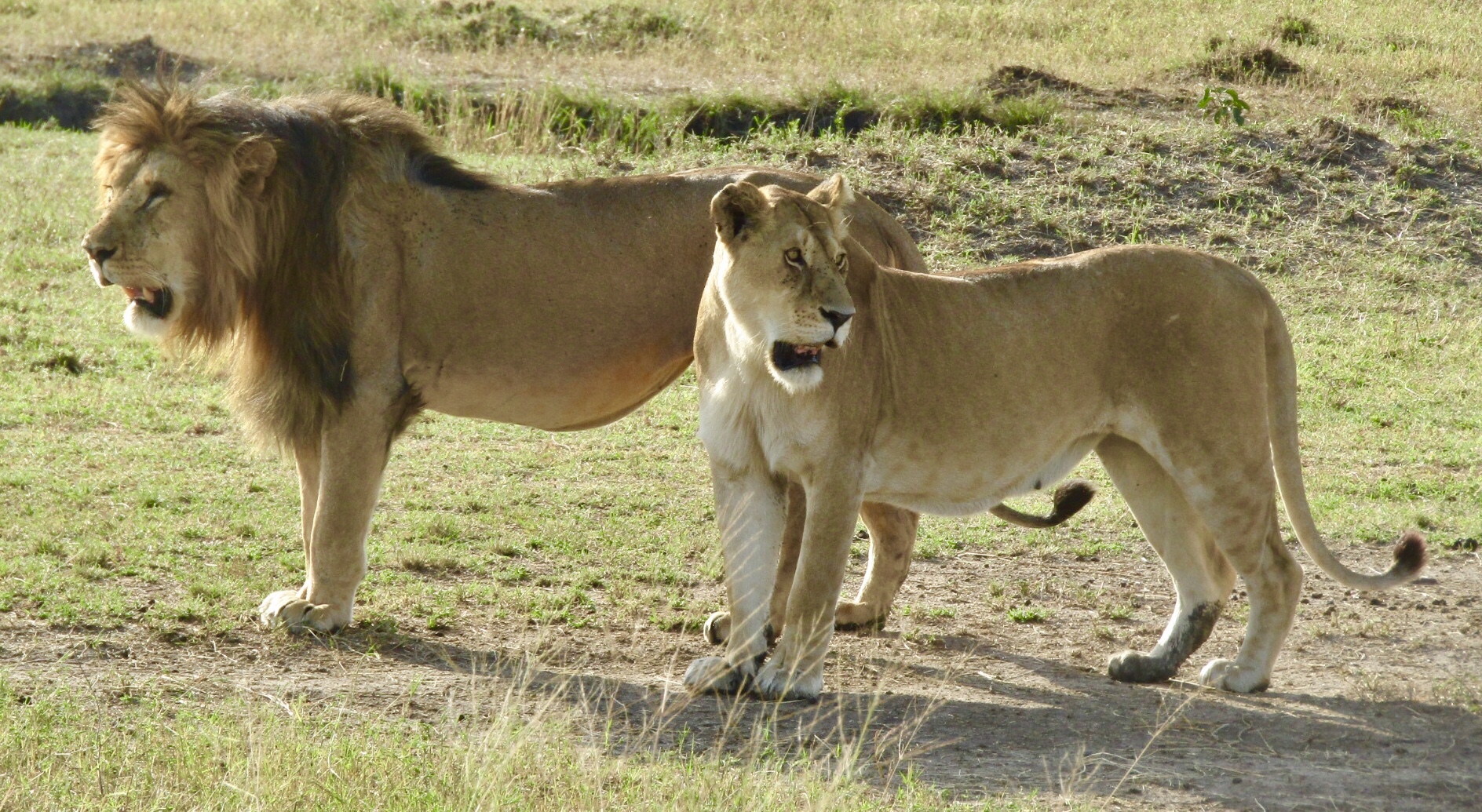
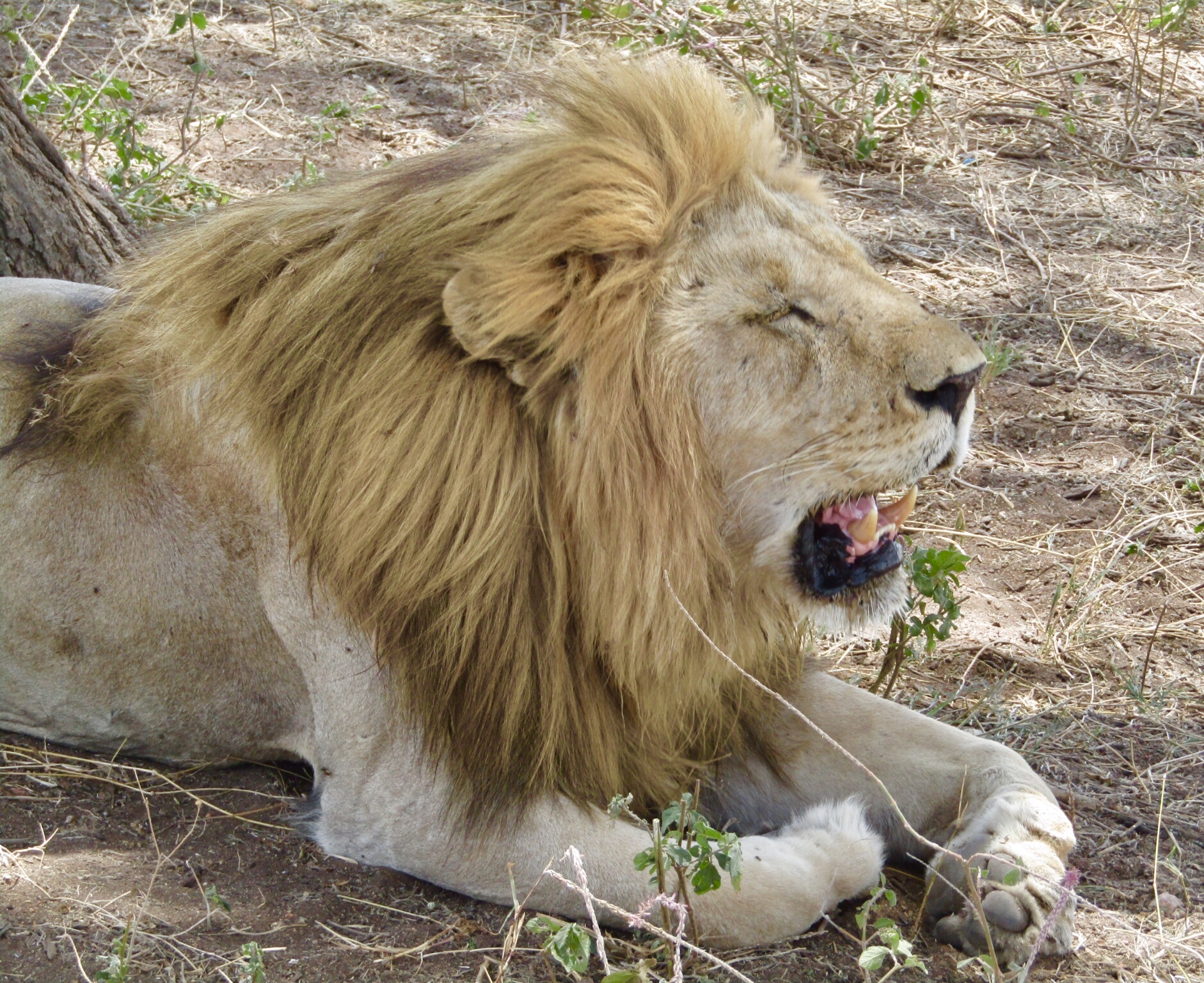
This lovely couple emerged from a korongo (Swahili for gorge). Joshua called them a honeymoon couple. The male lion and one female lioness from the pride wander off together for a few days of serious copulation. We’re talking 20-40 times a day though each go only lasts 10-20 seconds. They did look pretty happy and confident – all that sex and being on top of the food chain.
Speaking of food chains, the number of dying or dead wildebeest is able to support a healthy population of hyenas, jackals, and vultures. We saw groups of over 20 vultures, sometimes with a couple of jackals mixed in feeding on dead wildebeest.
One evening we spotted two male cheetahs hunting together. They wandered up to a herd of wildebeest who scattered around the cheetahs. The wildebeest looked totally confused but Joshua explained that their semi-random zigzagging movements were actually designed to confuse the cheetahs.
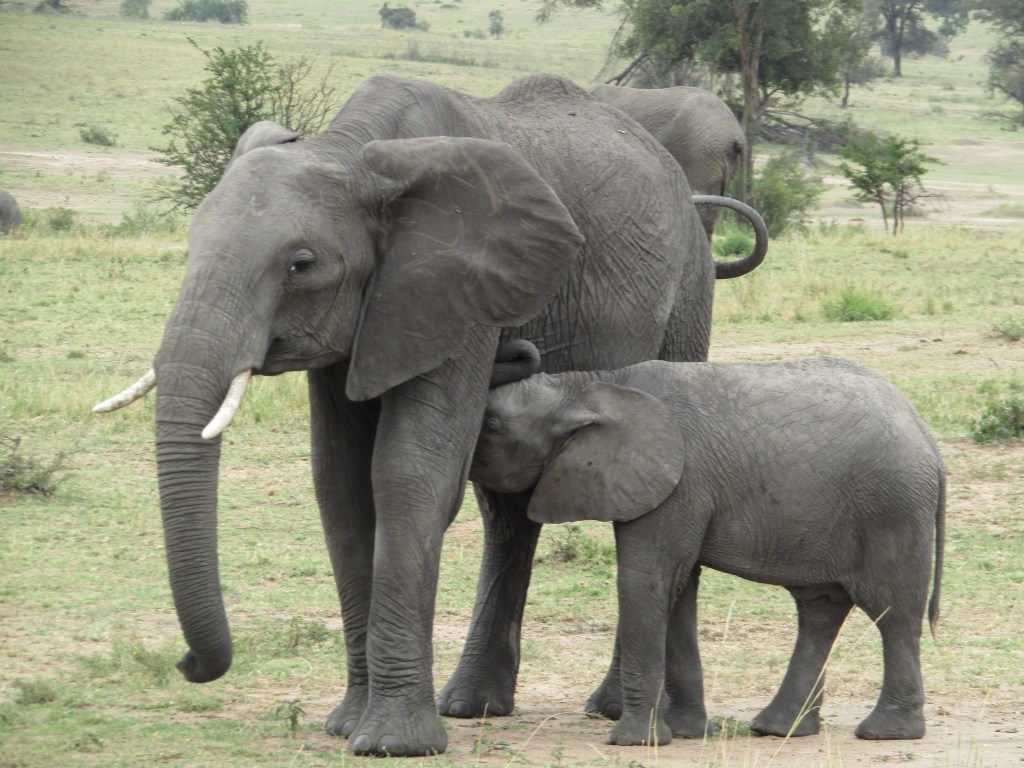
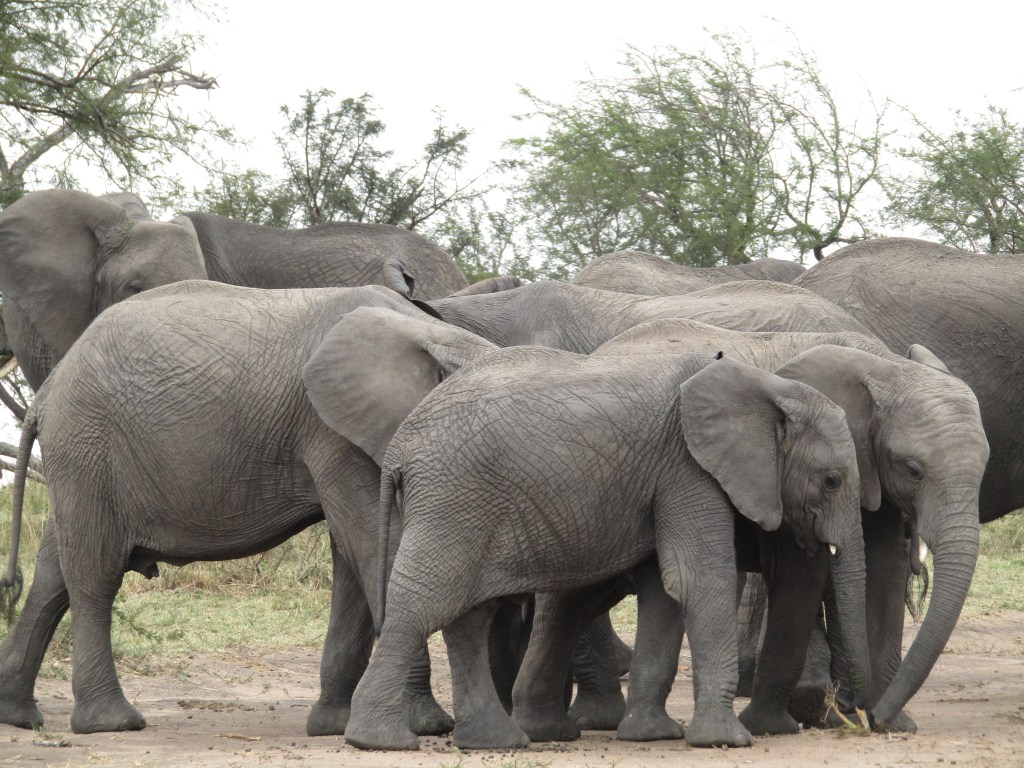
We found many large herd of elephants. One had several females and juveniles, one stately matriarch, and three small baby elephants that were still nursing.
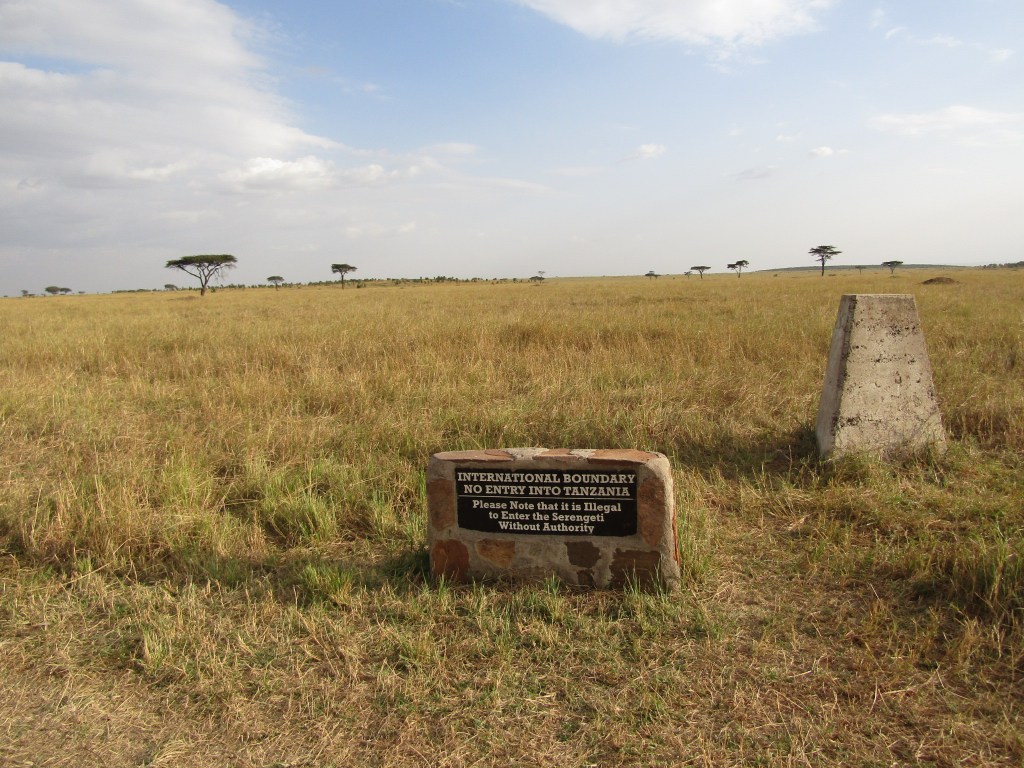
We crossed the international border between Tanzania and Kenya which was marked by a signs on the Tanzanian side. The land as far as the eye can see is gently rolling grassy plains with occasional hills. The animals don’t pay any heed to man-made invisible international boundaries.
There was at least one joke in our 4×4 about how the Kenyans were going to build a wall to stop the massive migration crisis and that they had convinced their voters that the wildebeest would pay for the wall.
Wildebeest are funny aminals. Even their name is wierd in English, though the etymology is straightfoward in Afrikaans (“wild cattle”). There are almost twice as many wildebeest in Serengeti as there are people in Austin. If you’re stuck on Mopac or the interstate at rush hour, you know that’s a lot of wildebeest. Wildebeest are migratory. They love short green grass so they follow it in a giant 2,800 km circuit every year. In February and March they have about half a million babies in the flat endless plains in south-eastern Serengeti. It rains from March to May here so they are assured an abundance of short green grass. The herds graze here till the rains end in May when they start moving in large numbers to the area near the Grumeti river in north west Serengeti. By July and August they start moving further north and cross the Mara river into northern Serengeti and across the Kenyan border into the adjoining Maasai Mara National Park. They stay here through the dry season and then with the short November rains they start moving south east back to the short grass plains, arriving by December. Then the cycle starts all over again. By migrating and following the food, the wildebeets swell to larger numbers than the ecosystem would have been able to support if they had been non-migratory. Though they probably don’t know that.
The herd population is fairly stable. That means there are a lot of dead wildebeest every year. They die from thirst, starvation, exhaustion, and predation by hyenas, lions, crocodiles, and other beasts of prey. About half a million gazelles and a quarter million zebras travel portions of the migration route with the wildebeest. The zebras particularly can been seen moving alongside the wildebeest. Incidentally, the zebra eat long grass. So they don’t compete for the same food as the wildebeest. Zebras a better at sensing prey animals, and wildebeest have learned to be very skittish, reacting quickly to a zebra who has detected a lion. In fact, wildebeest react to the safari 4x4s much more skittishly than any other animal we saw. All the animals are familiar with the 4x4s since birth. Beside wildebeests, other animals do not to fear the 4x4s. Most of them completely ignore you even if you are only a few feet from them as long as you are inside the ubiquitous 4x4s. But not the wildebeest. They buck and jump every which way and then they gallop away till then get turned around and realize that they are headed straight back at you and then chaotically gallop away again, in the process scattering a few dozen other wildebeest into panic.
As we drew closer to the Mara river we noticed huge herds of wildebeest. In the early morning or evening hours they move in long almost single file. Occasionally they gallop to catch up with the ones in front of them, but just as randomly they stop, turn around completely, and sometimes stampede in the opposite direction. In the heat of the afternoon they collect in tens or twenties under the scant shade of whatever trees there might be, motionless like statues. But the emergent trend through all this was a movement in the northen direction towards the Mara river, genetically driven to cross the river and head to the short green grass of Maasai Mara at this time of the year.
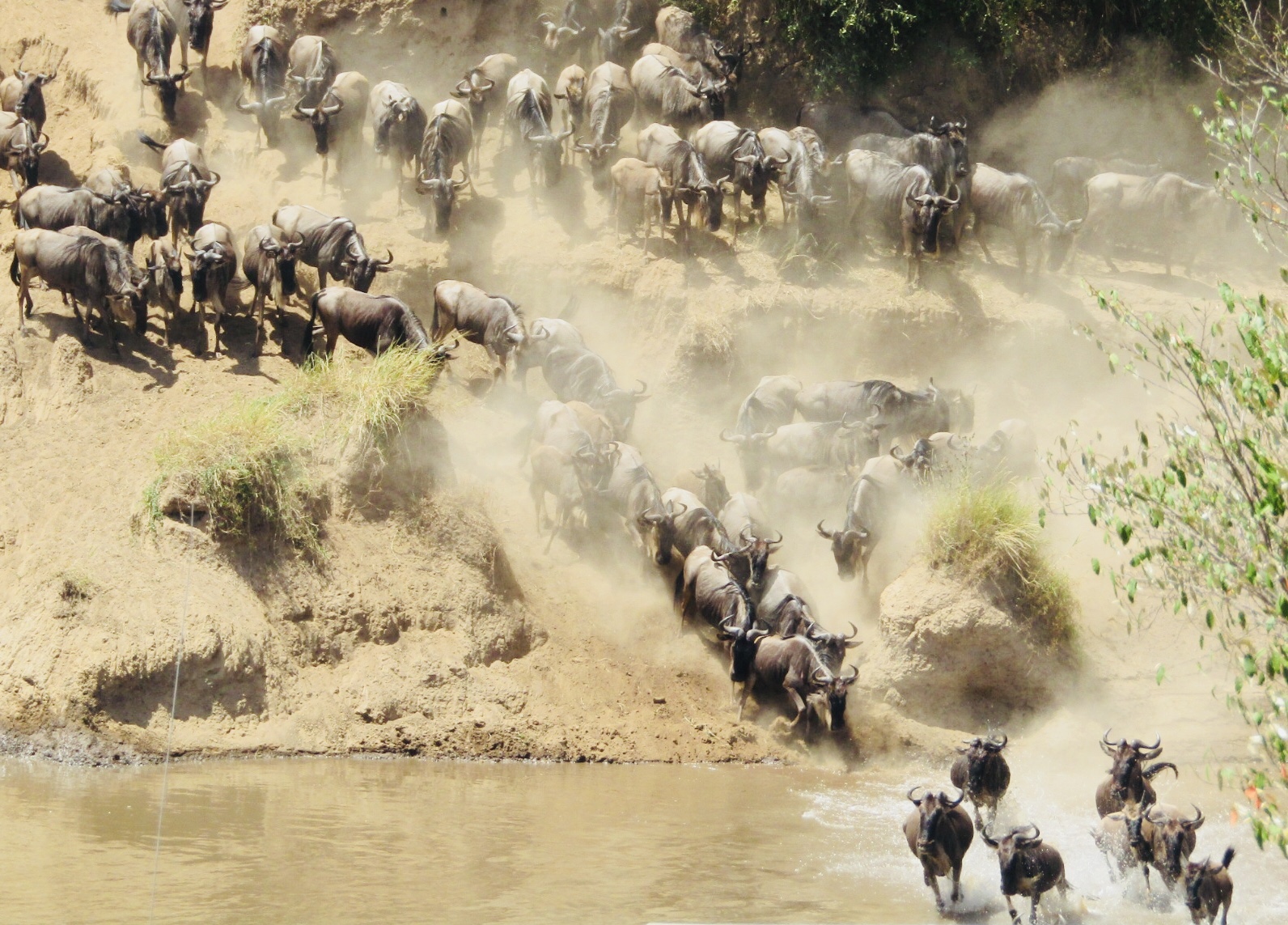
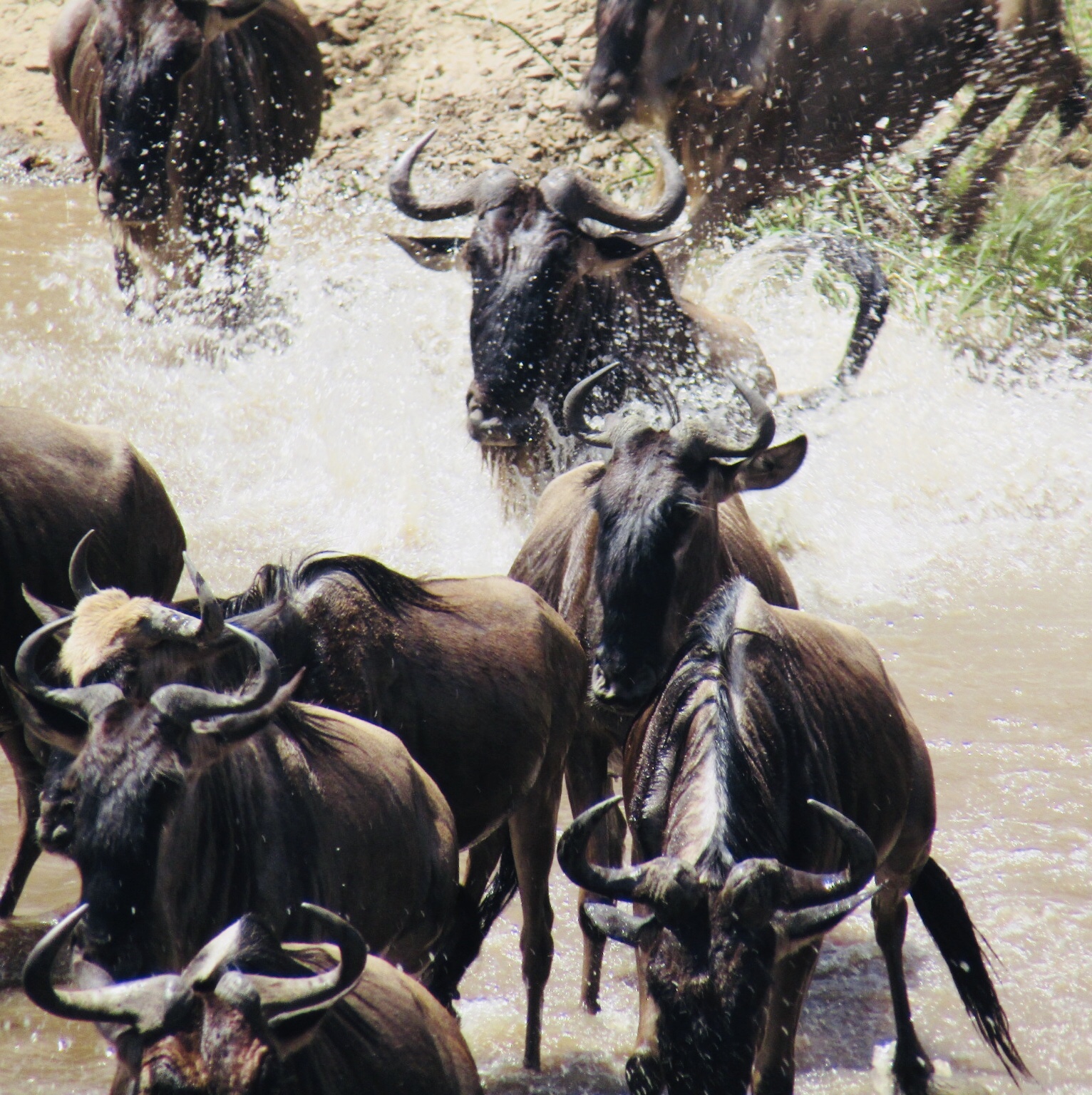
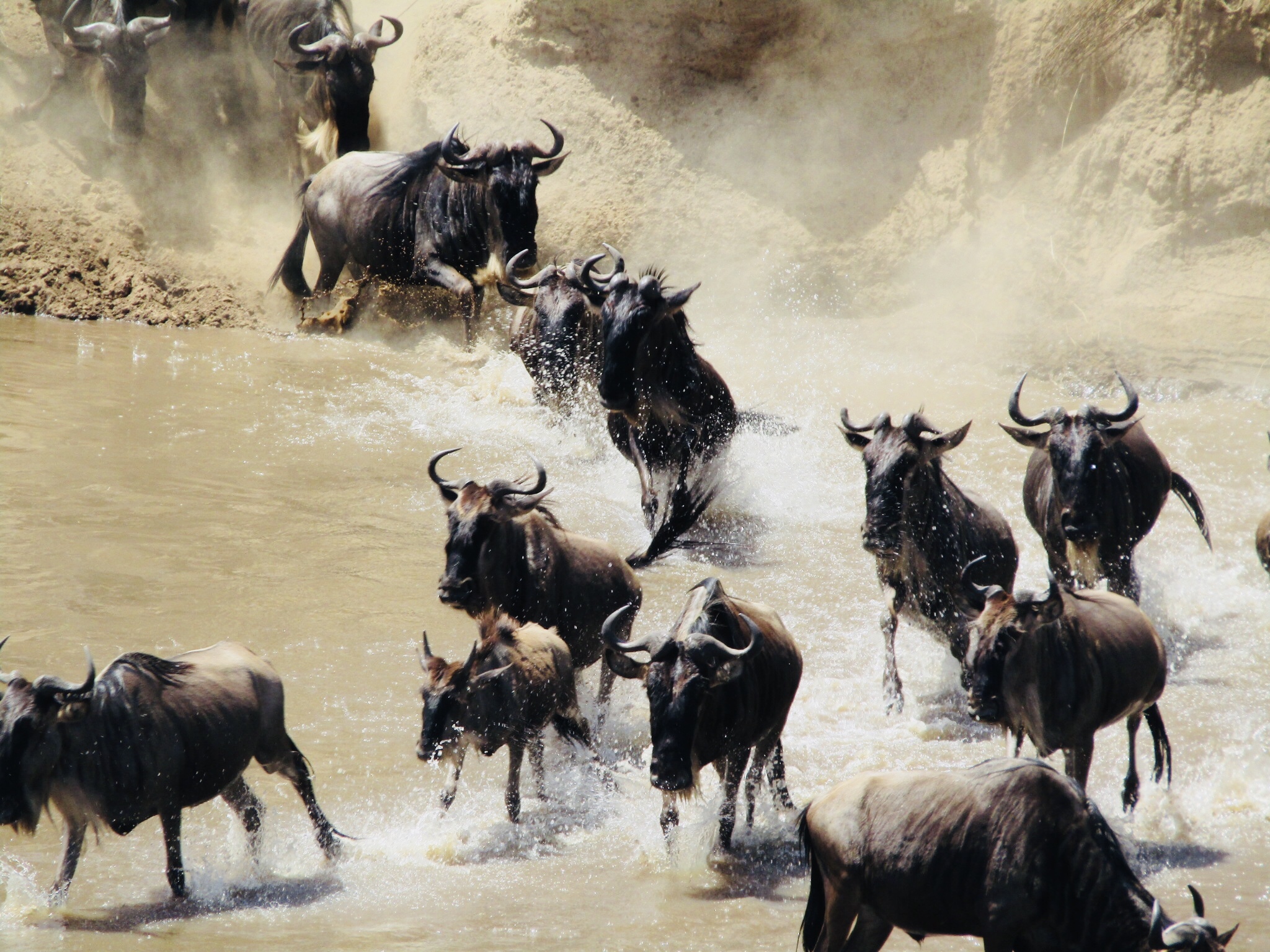
The first river crossing that we saw was pretty dramatic. They all are. Including dry washes and smaller creeks, we witnessed at least 6 crossings in three days. A herd had collected on a bluff overlooking the river. There was a wooded area in the middle. The way down to the river was via a steeply inclined path. The rest of the bluff was too tall to climb down. We were positioned on the other side of the river, back from the edge and hidden from view. When we got there, we joined about 20 safari 4x4s. But they must have been waiting for a long time because they slowly drove away till we were the only ones left. Meanwhile, the wildebeest milled around but made no move. Once a while one or two would walk purposefully towards the steep path down, but they always changed their mind and wandered away. Joshua told us that one animal needed to take the first step. It isn’t a leader. Wildebeest don’t have leaders. Just someone to trigger something in the brains of a dozen wildebeest around it, and the rest follow in a classic example of a herd or mob.
We passed the halfway point in the safari today but we again have a long drive. From our haven on the western side of central Serengeti near where we saw so much wildlife on and around the banks of the Grumeti River, it’s time to drive to the Mara River at the northern end of the park. Serengeti is big. For my fellow Texans who like the Big Bend National Park, the distance from the Persimmon Gap entrance in the north to the Rio Grande Village at the Mexican border on the south east is about 75 km. Today we are going to drive from the middle of Serengeti to its northern edge, a distance of more than 170 km.
Our first stop after a couple of hours is a hippo pit. The river is choked with hundreds of hippos laying in mud and their oozing excrement. They periodically grunt, swish their short little tails, climb on top of each other, bite a couple of butts, and go back to sleep. At first sight it is disgusting. But being vegetarians, their shit isn’t particularly smelly though we are a mere couple of feet above them on the river bank. And after a while the entire communal slothiness of the thing grows on you. You start picking out a baby here and a mother there or a couple of playful juveniles in the middle or a bad tempered butt biter who farts a lot. Vivian and Evan get quite engrossed in hippo watching like the rest of us. Eventually we all have to tear ourselves from the spectacle when our short break is over and we have to get back to our 4x4s.
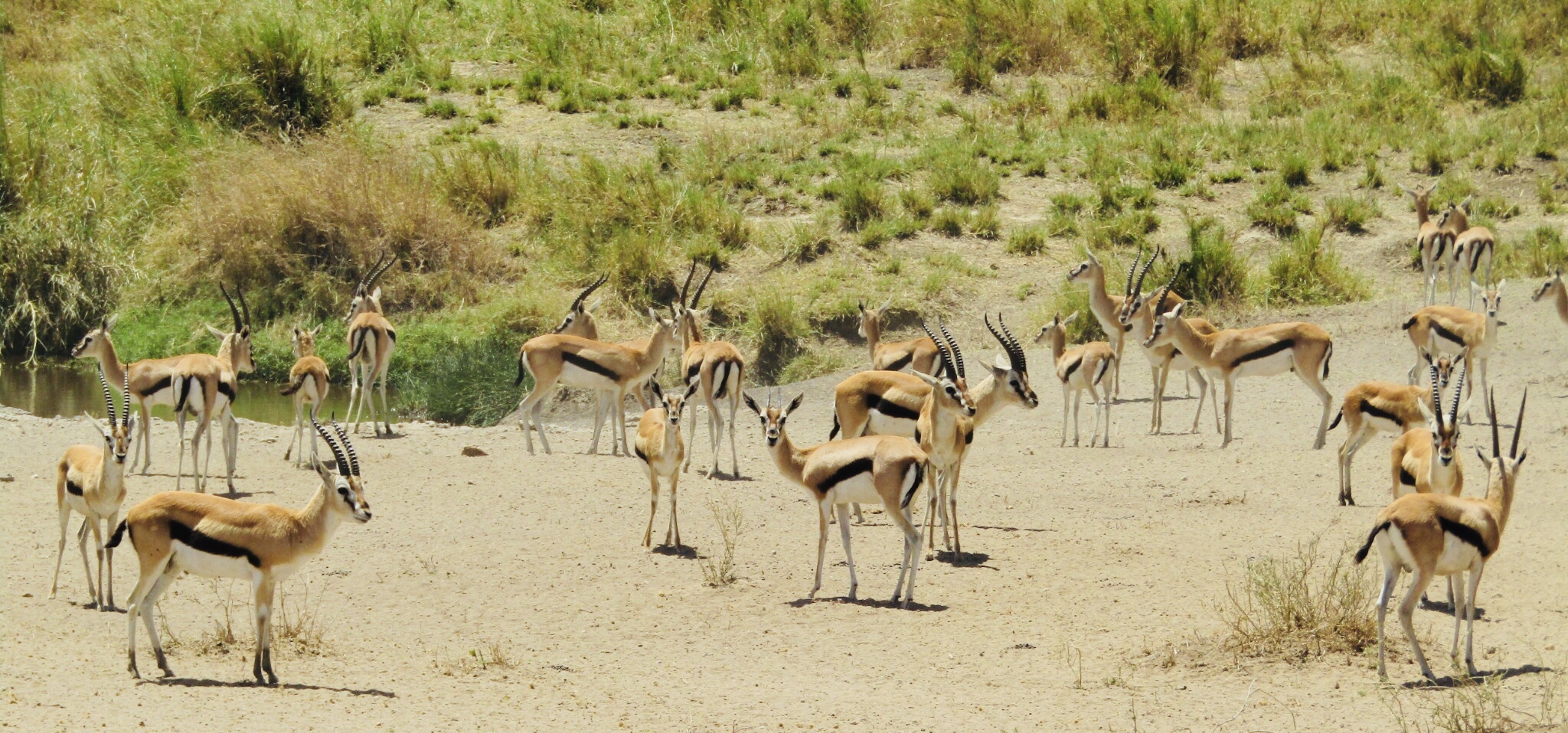
After a while we are back in the endless plains of the Serengeti but the land is more gently rolling here and the grass is increasingly growing greener. We start seeing bigger and bigger herds of wildebeest heading north mixed in with only slightly smaller number of grazing gazelles and herds of zebra, eland, impala, and did-diks darting between the trees.
Joshua cautiously pulls off the main dirt road and drives to a low tree under which we discover a resting lion and a young lioness. We drive a hundred yards away to another shady spot to see a huge lioness. Then it becomes clear that we are looking at a pride of lions resting after a kill. One cub is still tugging at the buffalo carcass. Everyone else is resting and licking their own and each other’s bloody chins.
We spend a long time looking at this scene play out. Then Joshua reminds us that we still have a way to go. An hour later we pull into Mara Under Tents – our first real tented safari lodge.
Last night our Maasai warriors, spears and all, escorted us back to the “tents” after dinner and cigars by the pool. This morning we woke up early, had a quick breakfast and got back in the 4x4s with Phillip and Joshua for a full day of game viewing in central Serengeti.
[photo credit to the Lahia website]
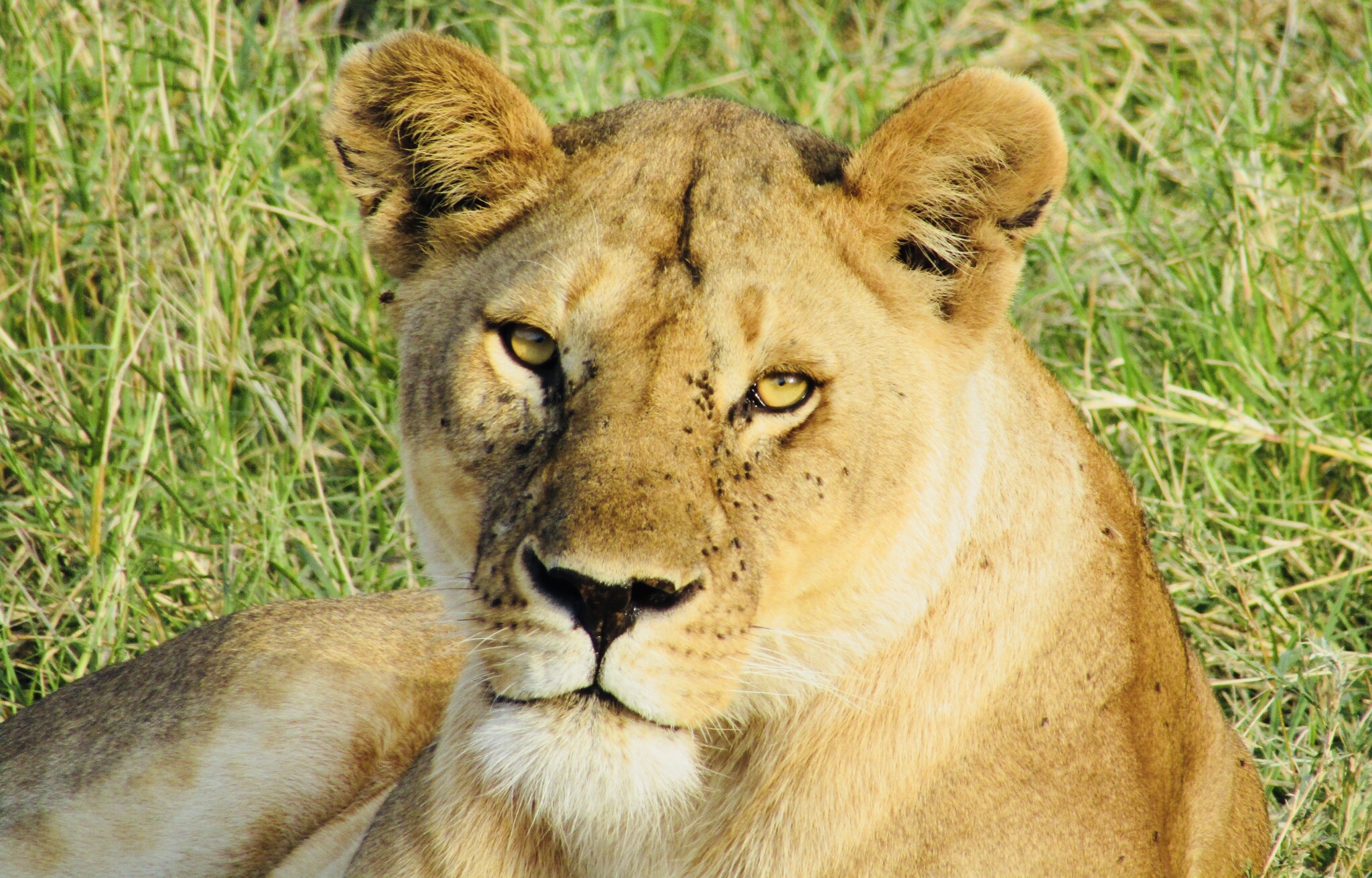
Less than 30 minutes out of camp, Philip cautiously pulled off the main dirt road towards a river crossing. In the mostly dry river bed was a herd of elephants. On the other side was a large family of baboons. And right in front of us was a pride of a dozen lionesses and cubs. Here’s a closeup on the main Mama. Even Vivian and Evan sat up and noticed.
A few more miles down the road we almost ran into a huge elephant. He was a bit away from his herd and stepped out on the dirt road at about the same time we came around a bend. Philip quickly swerved right while the elephant crashed into the brush on the left. Then he recovered his balance and seem to take a few belligerent steps towards us before backing up into the brush again, but he kept his face towards us and flapped his ears. He was clearly ready to take this argument to the next level. We left him in the brush, passed his herd a few minutes later, and headed down the road, keeping the river bed to our left. A bit later we were rewarded with a rare sight.
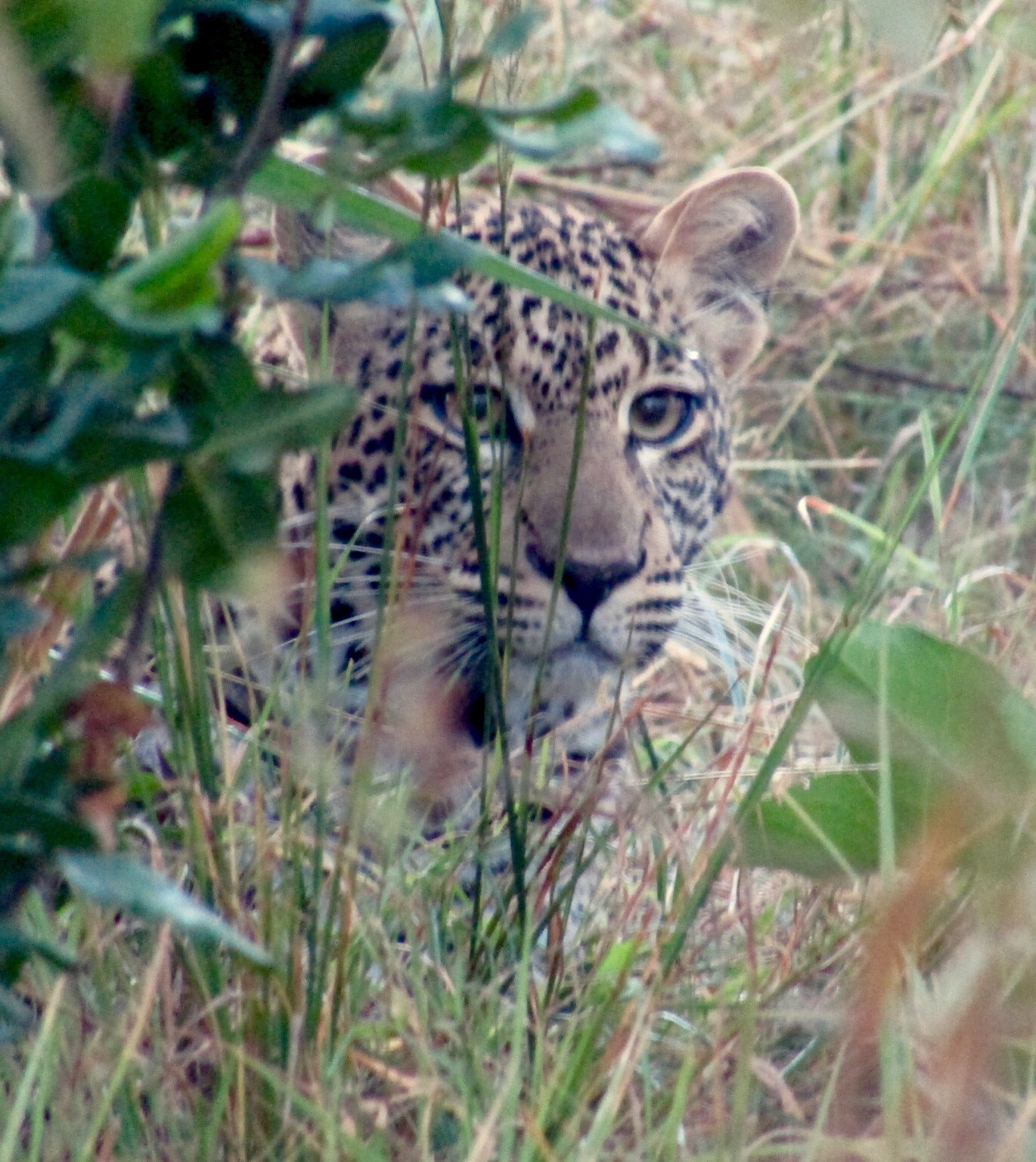
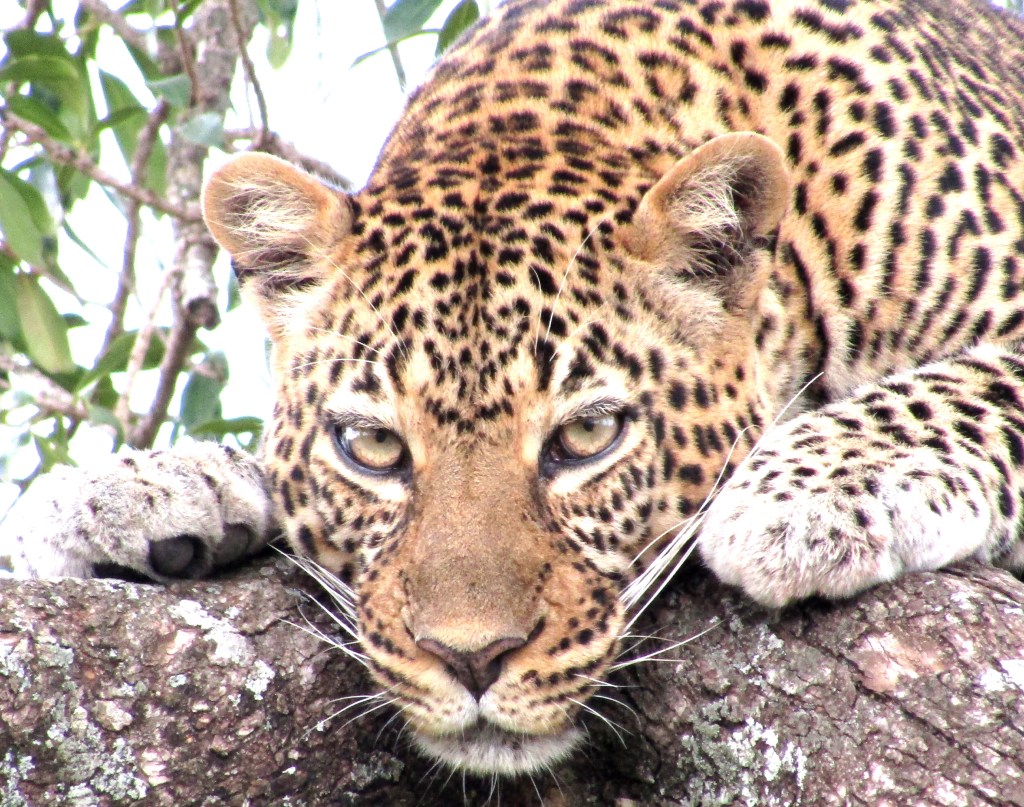
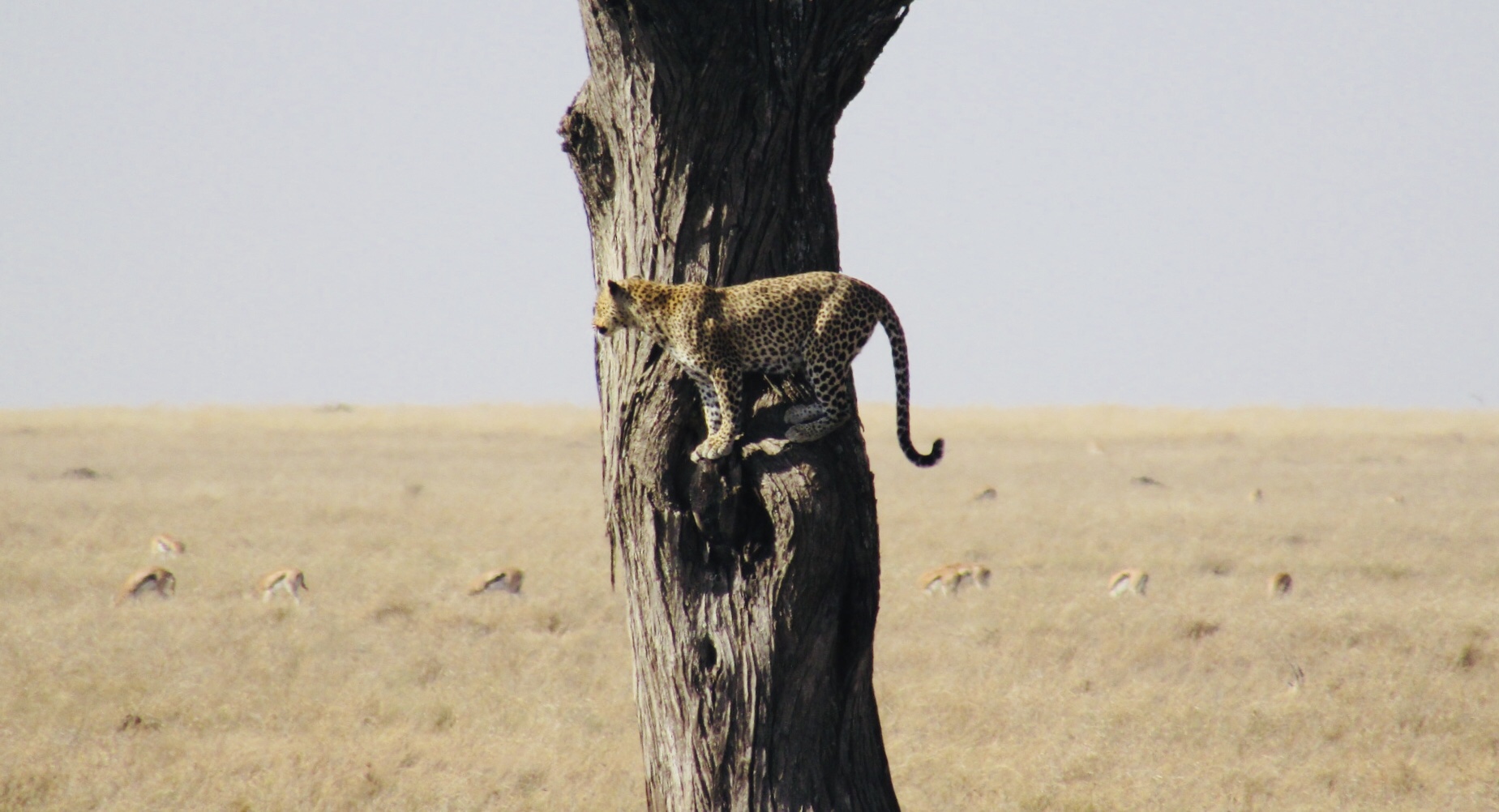
A leopard mother and her young cub were hanging out at the foot of a tall acacia tree. While we watched, the mother made her way gracefully up the tree and proceeded to plonk herself down on a big branch like it was the most comfortable bed in the world. The cub wandered off into the brush. We waited for an hour and watched, during which the mother occasionally changed positions and then eventually walked down the branch towards the trunk. We drove around to the other side of the tree and saw that she was feeding on a gazelle carcass that she must have killed and dragged up the tree earlier. The cub was nowhere to be seen.
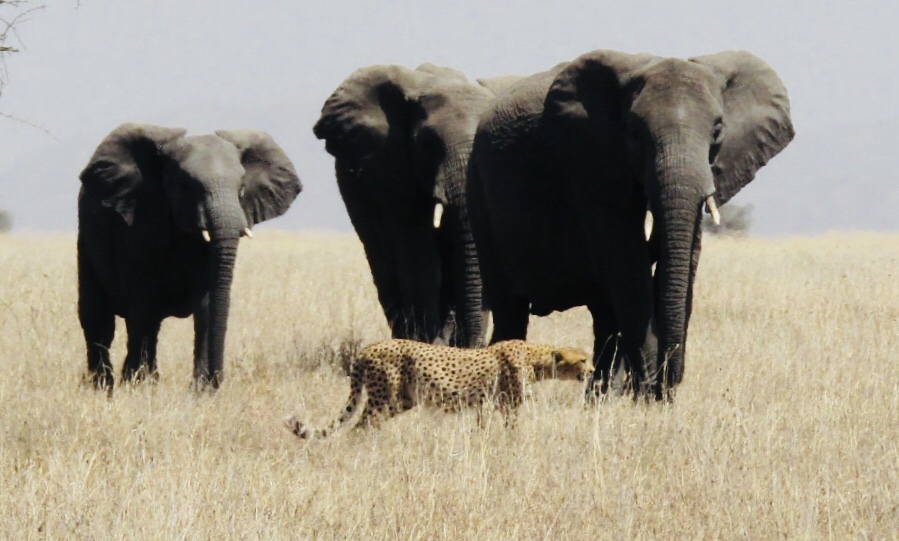
Still later we drove off to see a cheetah that had been spotted a few miles away. Upon arriving we saw a beautiful cheetah sitting under a tree. Nearby, there were three large vultures in the tall grass. Philip conjectured that the carcass from her kill must have attracted the vultures. Then we noticed a herd of elephants come over the horizon. They were moving roughly in the direction of the cheetah resting under the tree. Game watching is like fishing. It’s mostly waiting. We waited.
Eventually the elephants arrived. They either smelled the carcass or the cheetah or both and raised their tusks to sniff the air. Then they ambled at their leisurely pace straight towards the tree and the cheetah hiding in the tall grass. We held our breaths and waited. At the tree the herd split up around it, and the bigger elephants walked right up to the cheetah. The cheetah at that point decided that hiding wouldn’t do, and in the photo below, you can see it getting up and walking away from the elephants.
And that’s how we spent most of our morning. Later we waited for a lioness who was crouched down on a grassy bank to attack gazelles that approached the water hole but that didn’t materialize during our wait. So we went back to the mother leopard in the tree. Her cub had reappeared. He scrambled up the tree and ate on the gazelle carcass while the mama continued to sleep on a branch. The mothers in our safari truck joked about how it must be the mama leopard’s time off and that she had left the kid a snack and didn’t want to be disturbed.
We ended that afternoon driving up to another lion – in this case an old dude resting under a tree. And then back to the large pride of lionesses and cubs from the morning, a passing herd of zebras and wildebeest, and then back to our safari lodge. Vivian and Evan swam, we drank excellent wine by the pool, and had a lovely dinner. Another day in paradise.
[thanks to Prabhu for this lovely photo of zebras]