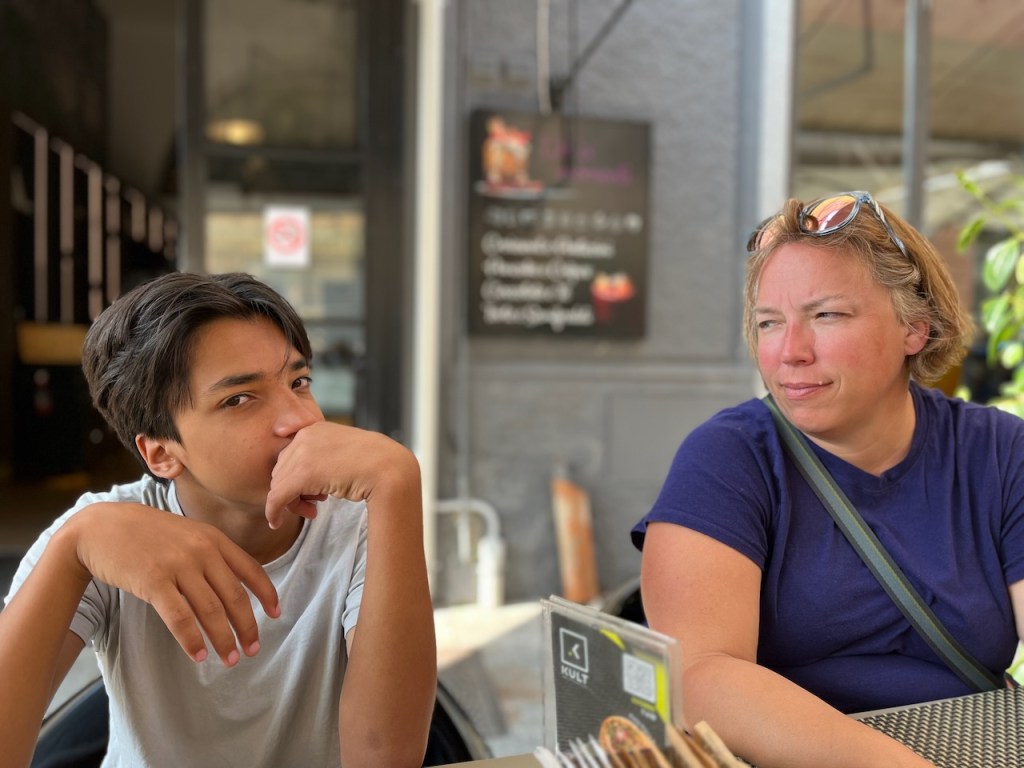
Time seems to be flying by. Jo has been in Nebraska twice in the last two weeks and has probably crossed back over the Red River sometime this afternoon. Vivian is enjoying her first weekend alone at home. I’m sitting at Memphis airport watching Fedex planes take-off every few minutes (about 400 planes loaded with overnight packages go through FedEx’s Memphis every day). Evan is sitting across from me, computer on his lap. He’s supposed to be working on his Mandarin homework but he could be playing video games. He is here for soccer and had two hard games with zero subs yesterday and today, so he claims he’s a bit tired. Earlier in the morning we had a nice brunch at Paulette’s. From our table outside (74 degrees) we see the giant cottonwoods on this bank of the Mississippi and bits of the double arches of the I-40 bridge to Arkansas. Large swaths of sandy river bank are visible on both sides of the meandering wide river.
On Friday night Vivian had three friends over and I dropped them off and picked them up from the Arctic Monkeys concert at the Moody Center (dad/climate change joke that made them all groan “so, y’all are off to see the tropic monkeys?). They seemed to have had a great time without involving alcohol or other substances, which is good, especially given that she is going to have free reign of a home and car for the next two days.
We get back home on Sunday night and everybody is back together again. Ouiser is the most excited by this. The kids have whiled away another perfectly good weekend and get down to finishing up homework around the dining table which is rare. They have entered a new phase in their relationship. Vivian now sees Evan as more grown up. They have an easy chit chat about teen fashions and language and chemistry experiments. Vivian occasionally asks Evan for help with a word in Spanish. Or a question about nuclear waste. He is happy to prove that he’s up to snuff. Jo grabs her book and heads to bed after a long 12 hour drive. I drag my computer upstairs to stare at data. “Don’t stay up too late.” “And turnt out the lights”.
Evan’s school has been fortunate enough to have excellent science teachers. Recently he was assigned a paper and asked to understand it, and then present the information to the class. The paper is at https://pubs.usgs.gov/fs/fs-0095-00/fs-0095-00.pdf and is titled “The Sun and Climate” and is five pages of closely formatted text with several graphs. The required 25-35 references follow on page 6. The article, unlike an article in a scientific journal, does not list any authors. So I will credit Walter E. Dean of the USGS whose name appears at the end as a contact for more information.
I didn’t set my eyes on a scientific paper till I was in graduate school. Yes – not even undergraduate college. We were given study materials, typically in textbooks, and if you mastered what was between those covers, you were golden. I am excited the this is what is expected of Evan at the beginning of 8th grade. So I took more interest in this than I normally would. Evan created his set of notes. It took him hours and hours. The text is written in a form that makes it harder to understand than what an 8th grader is used to (“The most prominent cycle in the Castile is a salinity cycle with an average period of about 2,500 years in which the cycle begins, in the extreme, as a laminated limestone with thin calcite and anhydrite laminae. The anhydrite laminae then become thicker, and the cycle ends, in the extreme, with anhydrite and halite varves.”). I asked Evan to email me his notes from the paper.
In seemingly unrelated news, yesterday Vivian sent me a text from school saying that her teacher asked her to download an app called DigiExam on to her personal laptop. She wanted to know if she could wait and come home and chat with me about it. A quick look at their website and reviews shows that DigiExam is a Swedish app that helps teachers and institutions administer exams with less or no supervision. Your laptop on which you take the exam is your proctor. It takes periodic snapshots of your screen. It turns on your laptop camera and records you (and anything else in it’s view). It analyses your eye movements to see if you perhaps have another source of content close by like another computer screen that you are consulting frequently. It does not allow other tabs to be opened in your browser and records what tabs you do try to open. Same with other apps on your computer desktop. The idea is for instance to discourage you from opening another tab to ChapGPT and copying and pasting your questions and the AI’s responses. Very good. Can it be turned on and off remotely, and who will be able to do that? Or even worse, is it on all the time? Here’s a question I expect at a future congressional hearing once DigiExam becomes required everywhere, from a concerned congressman: “If my daughter sits in her underwear and takes an English exam at home, is that camera recording her? Who has access to that recording and for how long? Is there a room full of low-paid remote nannies somewhere offshore sifting through videos of kids that the software flagged for one reason or another?”
Why did Vivian’s school take the draconian step of ask students to download and install surveillance software on their personal computers (which she didn’t)? The rise of AI is causing panic. While policy makers ask abstract but important questions (“is critical writing worth teaching any more?”, “is the college essay dead?”), the poor English teacher does still need to grade that pile of 11th grade homeworks comparing Whitman to Dickinson. If half the class used ChatGPT it wouldn’t be fair.
Back to Evan. I sat him down this morning and opened a tab to ChatGPT.
ME: You are a science journalist
AI:Certainly! I can act as a science journalist and provide you with information on various scientific topics or write articles on specific subjects of interest. Feel free to ask me any questions or provide a topic you’d like me to cover, and I’ll do my best to provide you with accurate and engaging information.
ME:Please read the following text and categorize it according to the school english grade level that it would be appropriate for. The text is:
[I copied and pasted the first two paragraphs of the USGS paper]
Many geologic records of climatic and environmental change based on various proxy variables exhibit distinct cyclicities that have been attributed to extraterrestrial forcing. The best known of these are the changes in Earth’s orbital geometry called Milankovitch Cycles, with periodicities of tens to hundreds of thousands of years. However, many cycles seem to have subMilankovitch periodicities, commonly on decadal and centennial scales, similar to those of known solar cycles. A direct connection between solar irradiance (solar constant) and weather and climate has been suggested for more than 100 years but generally rejected by most scientists, who assume that the effect of solar variations would be small. However, recent satellite radiometer measurements and modeling studies indicate that small changes in total solar irradiance could produce global temperature changes of the magnitude suggested for climatic events such as the Little Ice Age (A.D. 1550–1700). The best known and documented solar cycle is the 11-year sunspot cycle (Schwabe Cycle; fig. 1), during which the number of dark blotches (sunspots) on the sun’s surface increases from a minimum to a maximum then back to a minimum over a period of about 11 years. The origin of sunspots is not fully understood, but thanks to satellites such as the Solar and Heliospheric Observatory (SOHO), scientists are learning rapidly. What is known is that during the period from A.D. 1645 to 1715 very few sunspots were observed. This period is called the Maunder Minimum (fig. 1) after E.W. Maunder, superintendent of the Solar Department of the Greenwich Observatory in England, who continued the observations of the German astronomer, Gustav Spörer (Eddy, 1976). Spörer noted a dearth of sunspots during a 70-year period beginning about A.D. 1645, and during an earlier 90-year period beginning about A.D. 1460 (now called the Spörer Minimum). An early association between sunspots and terrestrial phenomena was the observation that the number and intensity of aurora borealis sightings were greatest during sunspot maxima when the sun was most active (active sun), and lowest during sunspot minima (quiet sun). Another terrestrial observation was that the Maunder Minimum coincided with the coldest part of the Little Ice Age.
AI:The text you provided contains a high level of scientific terminology and concepts related to geology, climatology, and solar phenomena. It would be most appropriate for students at the high school level or above, typically for students in grades 11 and 12 who have a strong interest in science or are studying advanced science courses. This text would also be suitable for college-level students studying geology, climatology, or astronomy.
The text discusses topics such as Milankovitch Cycles, solar irradiance, sunspot cycles, and their potential effects on climate. It assumes a certain level of prior knowledge in these fields, making it less accessible to younger students or those without a strong science background.
Evan smiled when he read this part. Then I asked the AI to produce the kinds of notes that Evan had be asked to.
ME:Read the following text and extract as brief bullet points the most important concepts discussed. Please do not add new information not contained in the text. The text is: [followed by the same first two paragraphs from the USGS paper]
AI:Important concepts discussed in the text:
Geologic records show cyclic climatic and environmental changes attributed to extraterrestrial forces.
Milankovitch Cycles are well-known Earth’s orbital geometry changes with long periodicities.
Some cycles exhibit shorter periodicities, resembling solar cycles.
There’s a historical debate about the connection between solar irradiance and weather/climate.
Recent measurements suggest small solar irradiance changes can impact global temperatures.
The 11-year sunspot cycle is the best-known solar cycle, with sunspots on the sun’s surface.
The Maunder Minimum was a period with very few sunspots from A.D. 1645 to 1715.
Sunspots were studied by scientists like Gustav Spörer and E.W. Maunder.
Aurora borealis sightings were linked to sunspot activity.
The Maunder Minimum coincided with the coldest part of the Little Ice Age.
As a comparison, here are the notes from Evan’s brain for the same first two paragraphs:
The orbital geometry changes over time and is called the Milankovitch cycles
Periodicities of tens to hundreds of thousands of years
There are sub-Milankovitch cycles usually on the scale of centuries and decades
Similar to known solar cycles
A direct connection between solar irradiance, climate, and weather has been suggested for more than 100 years but has been rejected by many scientists who assume the effects of solar variations would be small
Recent satellite radiometer measurements have indicated that small changes in the solar irradiance could cause changes on the scale of the Little Ice Age (A.D. 1550-1700)
Best known and documented solar cycle was the 11 year sunspot cycle (Schwab Cycle, fig.1)
Number of sunspots increase from minimum to maximum to minimum again over an 11 year period
The origin of sunspots is not fully understood
We are learning rapidly because of new solar satellites (such as SOHO)
During 1645-1715 the amount of sunspots was very low
This period is called the Maunder period after E.W. Maunder
E.W. maunder carried on the observations of German astronomer, Gustav Spörer
Gustav Spörer noted a dearth of sunspots over a 70 year period beginning a about A.D. 1645 and a 90 year period from A.D. 1460
One of the first connections they noticed was that the number and intensity of aurora borealis were greatest during the sunspot maxima
The sunspot minima coincided with the coldest part of the Little Ice Age
I was duly impressed by both Chat GPT and Evan (I had watched Evan do a large part of this work so I knew he did it the hard way). I don’t think DigiExam is the answer, though that won’t stop many schools from jumping on that bandwagon. But if I were a teacher or a parent (one of which I am) I’d be pretty concerned about the effects of AI on our kids’ education (and their lives). By the way, here’s the rest of Evan’s notes about that paper:
Recent studies have shown that the production of radio production (carbon 14) is related to solar activities
Radiocarbon is produced by the bombardment of nitrogen 14 in the atmosphere by neutrons from outer space, which are called cosmic rays
An increase in solar activity (more sunspots) is accompanied by an increase in the “solar wind,” which is an outflow of ionized particles, mostly protons and electrons, from the sun
Carbon 14 concentration in the atmosphere is lower during the sunspot maxima and higher during the sunspot minima
Carbon 14 concentration in the atmosphere is recorded in the tree
A relationship between carbon 14 and age can be made
Expressed as 𝚫C14
Represents the radiocarbon levels compared to the levels in the 19th century
They have reconstructed the 𝚫C14 for the past 11,000 years using decedal and bi-decedal wood samples (fig. 2A)
Shows that the C14 production was higher during the mid-holocene era (approx. 7,000 years ago)
Then steadily decreased until approx. 1,000 years ago
When you remove the long term trend you can see that there are cycles with periods of about 2,000 years
Called the Hallstadtzeit cycle (fig. 2B)
Looking at the last 1,000 years you can see that the C14 production was higher during the Maunder and Sporer minima
There were also peaks at A.D. 1300 and 1050 which have been named the Wolf and Oort minima
These cycles in C14 production last and, by relation solar activity, have periods of about 200 years
The sunspot minima precede the C14 maxima by about 20-60 years wich is how long it takes for the effect of solar activity on 14C production to cycle through the atmosphere-ocean system
When they perform a spectral analysis on the C14 cycle there are other peaks in addition to the 2,000 and 200 years (fig. 4)
Some prominent ones are at 400 and 88 year intervals
88 year is called the gleisberg cycle and is thought to be the result of amplitude modulation of the Schwabe cycle
A 22 year periodicity called the “double sunspot” or Hale cycle may also be because of amplitude modulation of the Schwabe cycle
Satellite radiometry over the last 20 years has shown the the total solar irradiance varies 0.1 percent during the 11-year cycle
A change in total solar irradiance over one 11-year corresponds to about a 0.5 – 1.0 C change in the global tropospheric temperature
Total irradiance is highest during the sunspot maxima and lowest during the sunspot minima
May seem counterintuitive because the sunspots would make the sun dimmer but the bright area surrounding a sunspot (faculae) cause the sun to brighten at peak activity
It is estimated that during the Maunder Minimum, total solar irradiance was reduced by 0.2 percent relative to a present quiet sun but total UV radiation was reduced by 1.04 percent
Important because UV radiation modulates the ozone production
Ozone production regulates the middle and upper atmosphere
Crowly and Kim estimate that a total warming of 0.8-0.9ºC occurred between the minimum of sunspot activity during the Maunder Minimum and the maximum sunspot activity during the mid-20th century
According to Lean and others the surface temperature of the earth has increased 0.55 C since 1860
About half of this could be due to the solar warming since the Maunder minimum
However 0.36 of the 0.55 has happened since 1970 and only 0.11 of that can be accounted for by solar forcing
The rest could be due to greenhouse warming or some other cause
The period of low 14C production between about A.D. 1100 and 1250 is called the Medieval Maximum of sunspot activity (fig. 3)
Coincides in time with a warm interval called the Medieval Warm Period
The general solar activity was low during the period of 1300-1900
Two distinct lows, the Sporer and Maunder minima
Only in the 20th century has the solar activity increased to the levels of during the medieval maximum
There has been an observed connection between solar activity, geomagnetic storms, and the climate
strong solar-geomagnetic disturbances in the troposphere during winter were often followed within a few days by a deepening of subpolar low-pressure systems over the North Pacific
A weaker magnetic field lets more cosmic easy in which results in more C14
The cosmic ray reflux also affects cloud microphysical processes
Dust records show centennial-scale variations of increased dustiness during periods of reduced solar activity
Cycles of 200 years in the dust records match with the Suess cycles in radiocarbon
The mid-Holocene may have been a time of increased eolian activity for much of North America (particularly in the Great Plains)
A varve-calibrated eolian dust record for the last 1,500 years in Elk Lake shows distinct cycles with dominant periodicities of 400 and 84 years (fig. 6)
The Elk lake record is one of many that show cycles that match up with solar cycles
The dust record in the GISP2 ice core exhibit shows distinct cycles of 11, 22, 90, and 200 years, believed to be associated with the Schwabe, Hale, Gleissberg, and Suess solar cycles, respectively
Suess solar cycles, respectively (Ram and others, 1997; Ram and Stolz, 1999). The physical connection between solar activity and dust is postulated to be variations in precipitation patterns in the Greenland dust-source areas caused by changes in cloud cover and cloud microphysics, which in turn are affected by the cosmic-ray flux
The varve thickness record shows cycles with an average period of about 20 years superimposed on longer cycles with an average period of about 200 years. Could these be related to “double sunspot ” (Hale) cycles and “Suess wiggles”? In fact, could the dominant 2,500-year cycle in the Castile Formation be related to the dominant 2,000-year cycle in the 14C spectrum (Hallstadtzeit Cycle
A modern example is titanium concentration in sediment samples from the gulf of california
Have a striking cycle over the last 200 years with about 10 year periods
The average titanium concentration in the record illustrated for core BC6 in figure 10 (0.35 percent) is more than twice the average titanium concentration (0.16 percent) in sediments deposited over the same time interval recovered in core BC50 (fig. 9)
These cycles match up with the 10-12 year cycles of precipitation observed in tree rings
Could variations in rainfall and river flow on the west slope of the Sierra Madre somehow be connected with the solar sunspot cycle as are changes in precipitation postulated for dust sources in Greenland ice cores?
It can be said that if you look hard enough anything can relate to the solar cycles
The challenge to geologists and atmospheric scientists is to test these correlations with reasonable models of how solar cycles could affect the atmosphere and geologic processes at the surface of the Earth.
I like to take pictures of the books my kids return home with. Here are Evan telling Jo and Vivian what he selected from the bookstore for his birthday, and a picture of the books, followed by what Vivian picked up during a trip to Book People earlier this week. There appears to be little overlap in their reading lists but in fact they have read a lot of the same YA fiction. Someday I’ll stack up my last few books and add here. And Jo, who seems to be focused on reading about college these days.
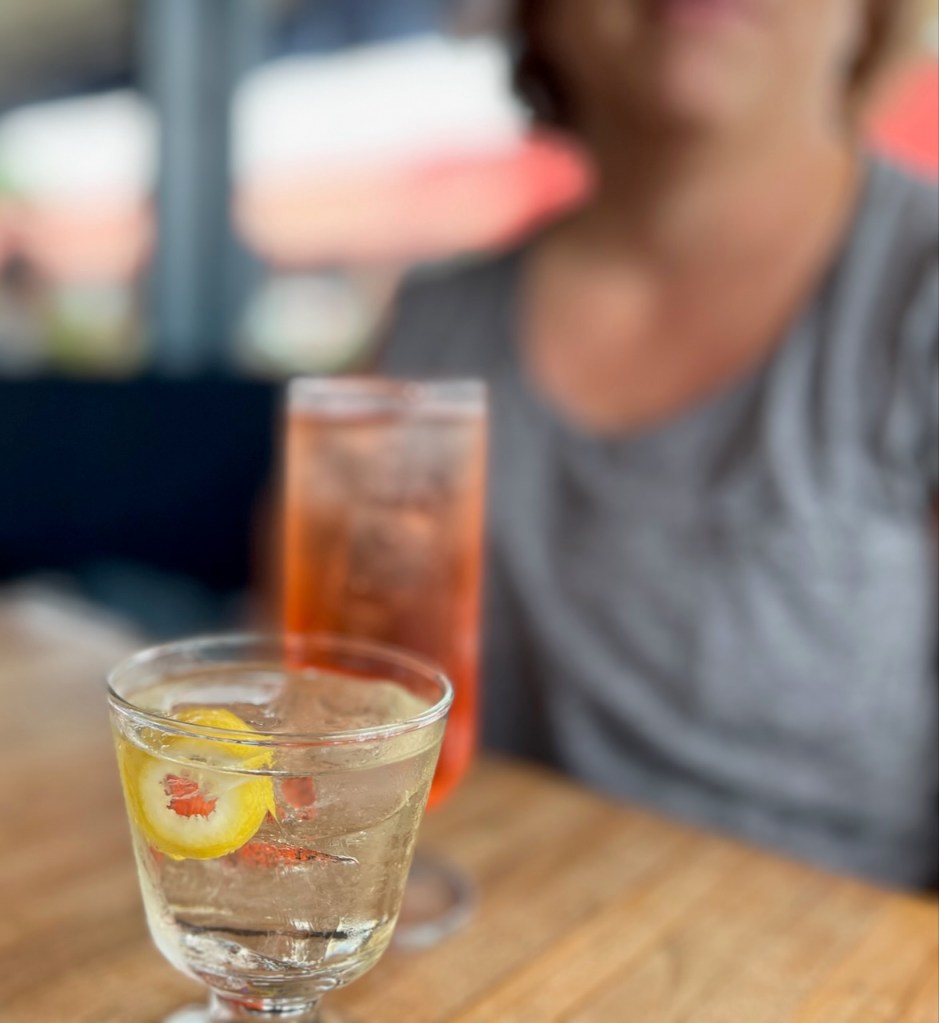
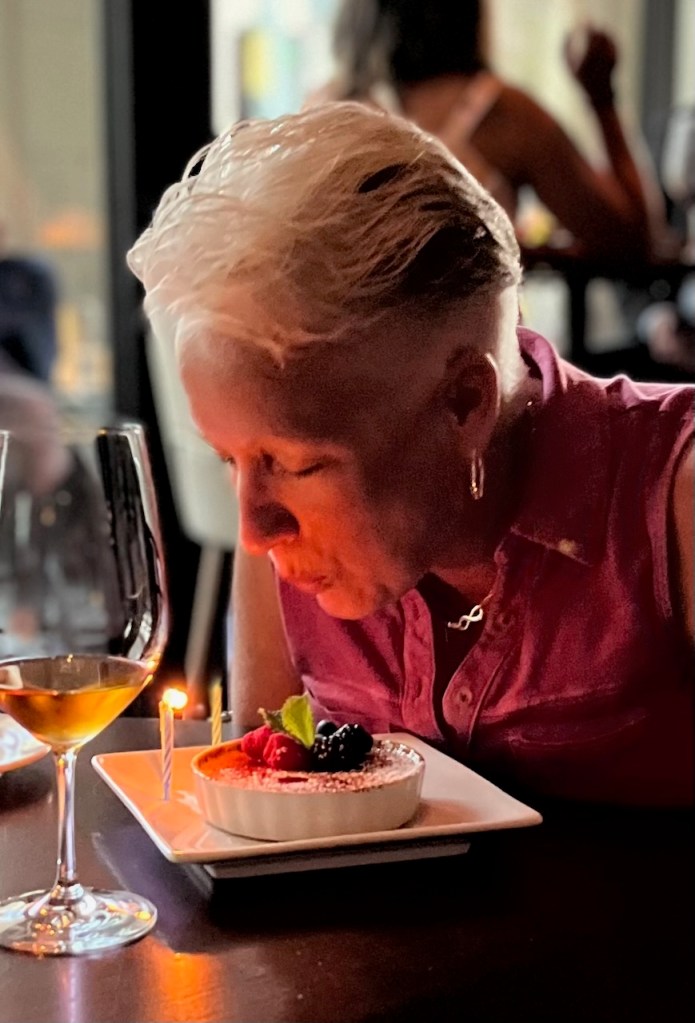
Summer snuck past us. Earlier this week Jo and I celebrated back to school with negronis and lunch at Uncle Nicky’s in Hyde Park. The photo isn’t an attempt at being artistic – I didn’t have my glasses on so I couldn’t tell what the portrait mode focused on.
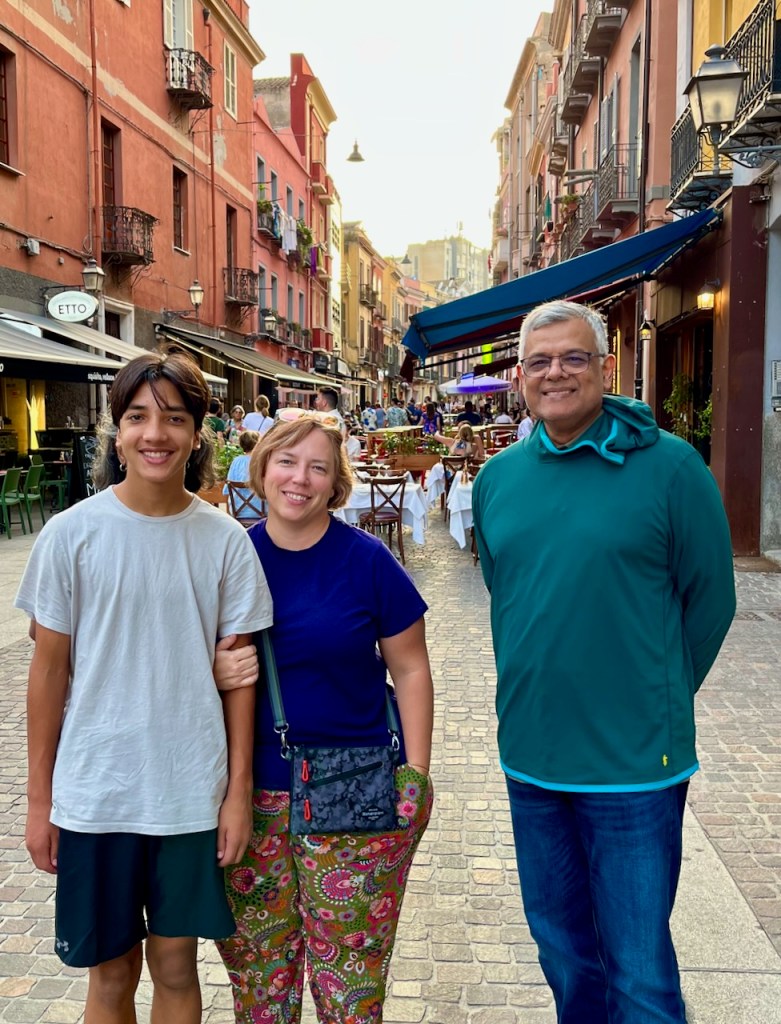
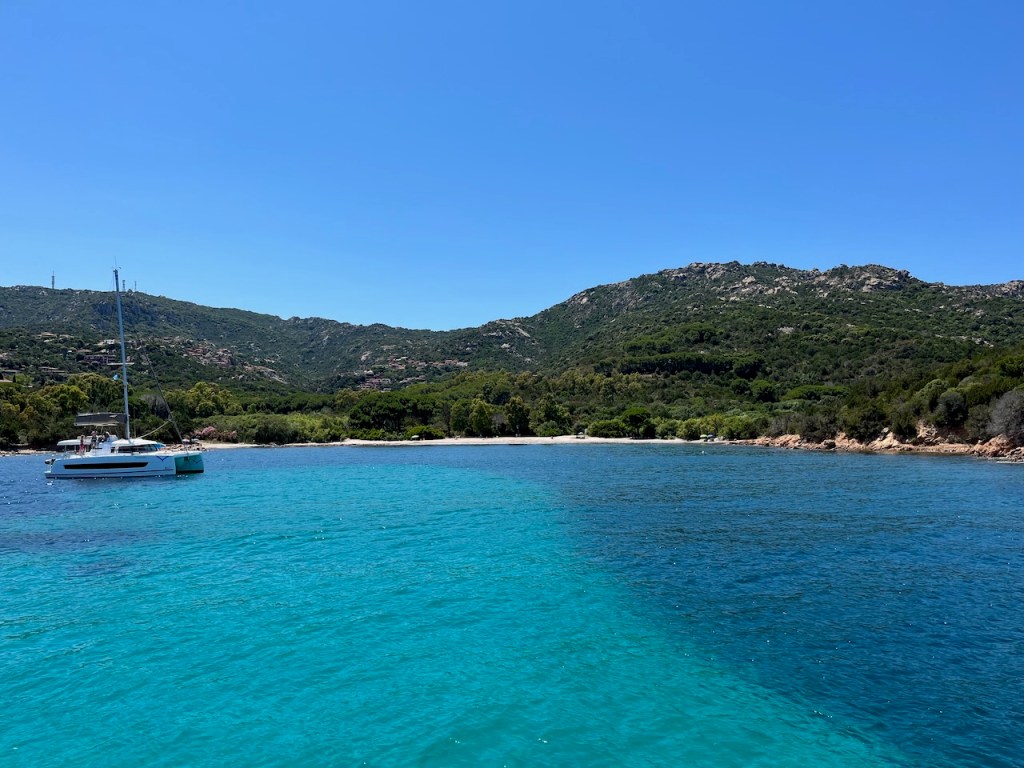
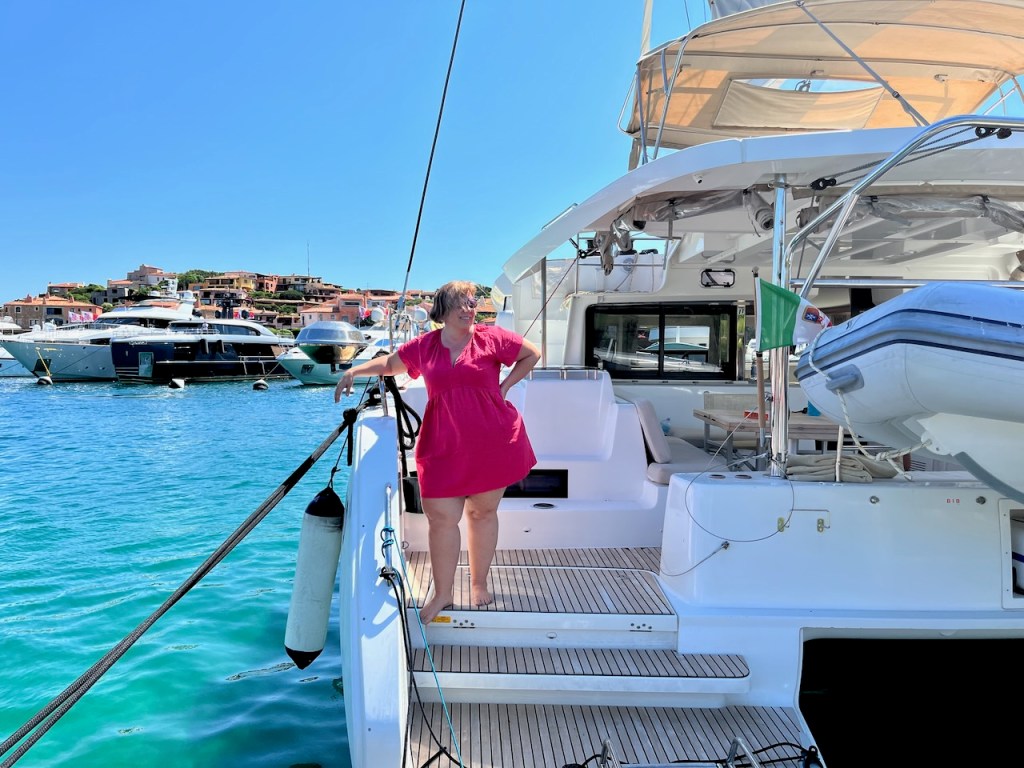
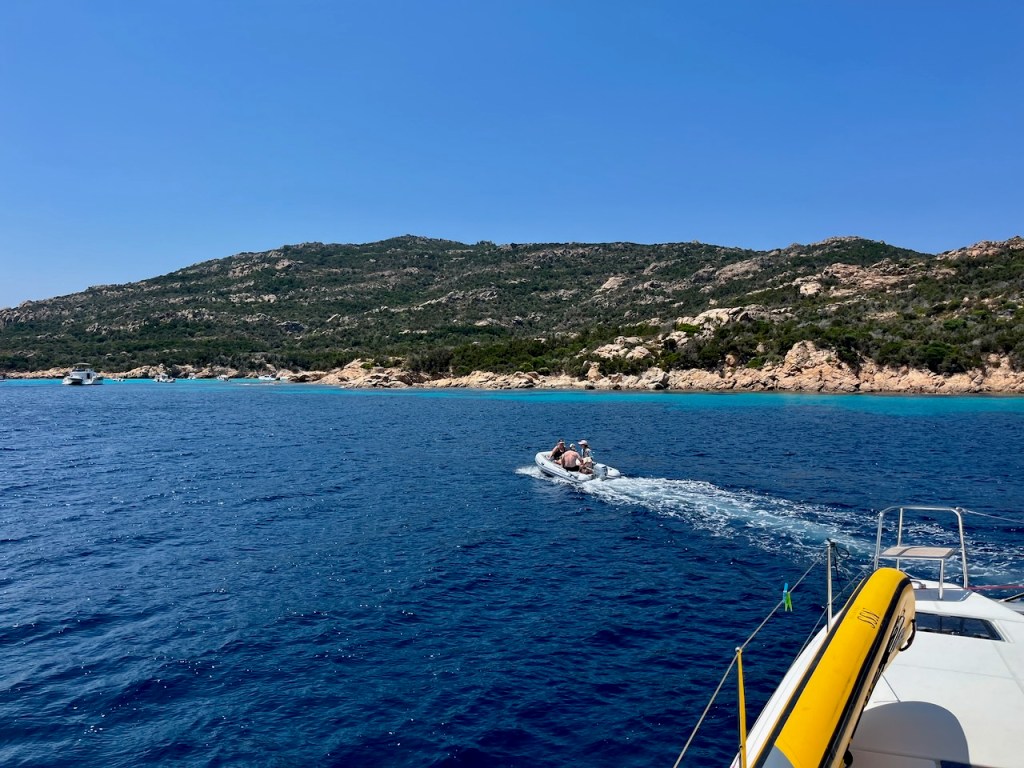
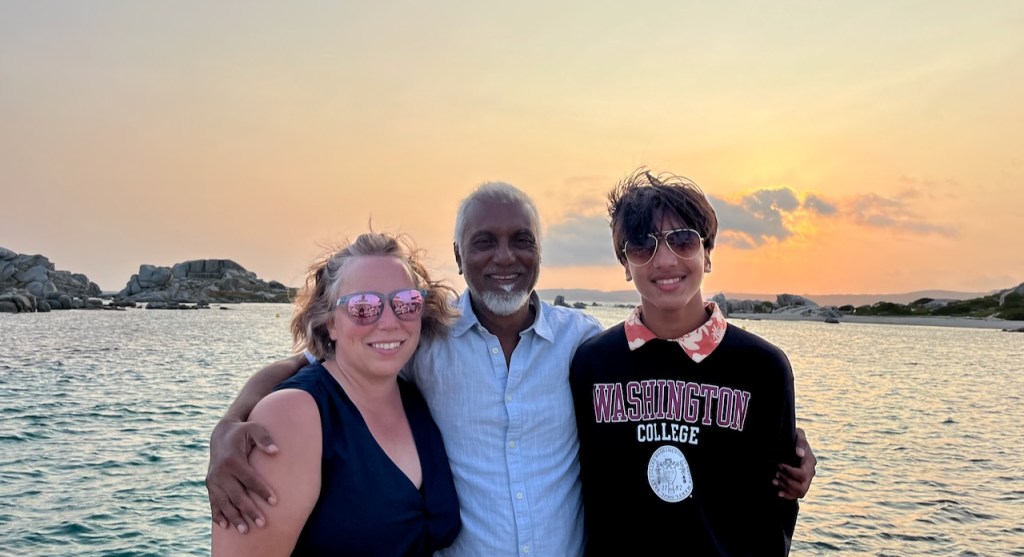
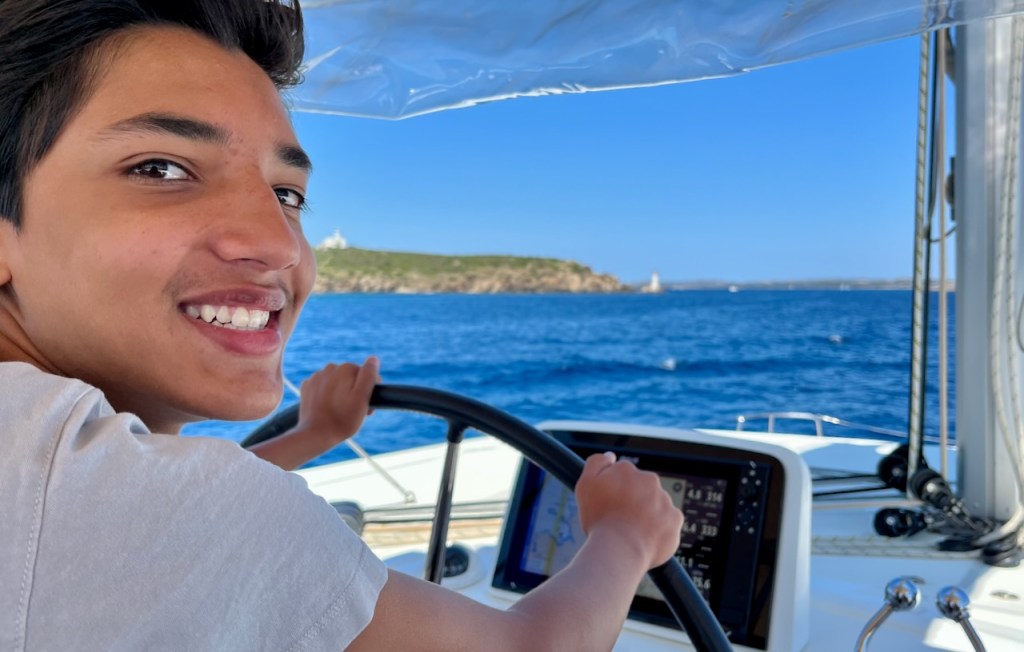
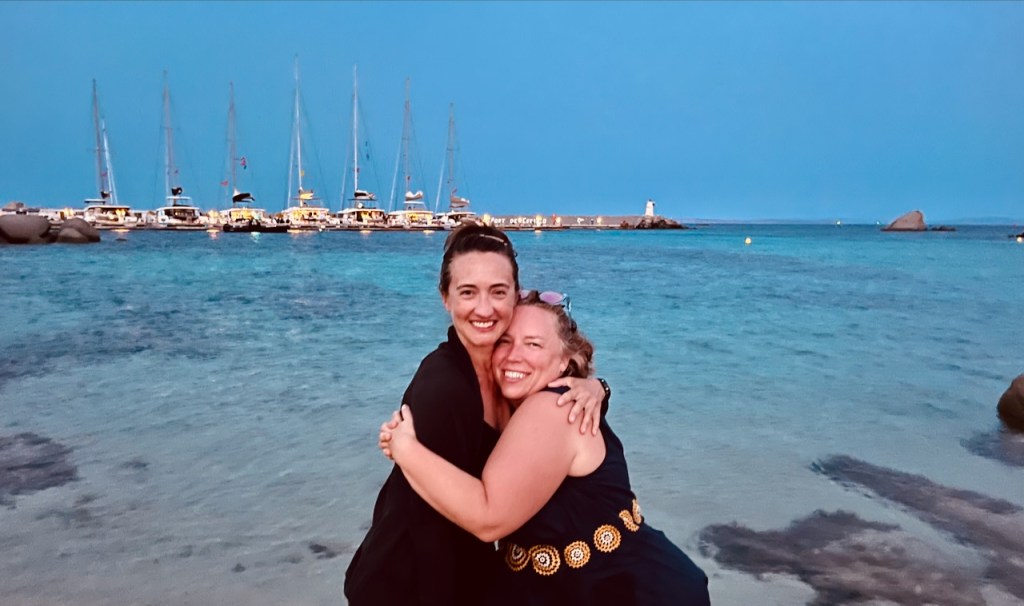
Sometime this summer we went to Alu’s, leaving Ouiser with Carol in New Braunfels. Then Evan, Jo and I went to Sardinia while Alu and Michelle took Vivian over to RISD for her 5 week summer program. We met Praveen and Renuka in Sardinia and drove around the island, eating excellent seafood and sampling some beaches. Then we returned to Olbia in the north. There we joined up with Jen, Greg, and his two teenage boys and sailed around the Costa Smeralda in a 46 foot Lagoon with seven other boatloads of friends. It was a lot of fun expect the day when we battled 30 knot winds and ten foot seas.
On the way back, Evan got pulled up the security in Frankfurt airport for having “The Making of the Atomic Bomb” in his backpack. But they couldn’t find any dubious residues on the book so they let him go. Back in the US, Jo went to Utah where four of Carol’s siblings had a reunion. The week after Jo returned, I went to Alu’s and spent an excellent week hanging out. In the evenings I got dinner with Vivian who was less than an hour away in Providence. Then I got back to Austin and it was Evan and Jo’s turn to go back to Rhode Island. Vivian finished her course, and they went on a short college tour and met up with Vicky and Lily, and later with Cara and Eric. Finally, early in August we were all back at home – both cats, Ouiser, both kids, and Jo and I, basking in the 105 degree days. Then Evan’s soccer started up (he joined a new club), and the poor boy has played multiple tournaments in above 100 degree temperatures (in the shade – much hotter out there on the pitch). He started 8th grade and Vivian in a junior (holy cow), and Jo and I got ourselves a couple of negronis. And that was our summer in a nutshell.
Looking back at the photos I realize how much of a blur it all seems now. But we did slow down and savor life and make some good memories. Now it’s all school and car pool and soccer tournaments and work. And it’s still fucking 107 degrees in the shade in Austin.
Happy birthday Evan. Yes – your birthday was back when the bluebonnets were still blooming but this is the speed of the blog.
Evan hit his stride this year. He got nerdier, taller, faster, funner and a bigger pain in the arse (no, not arsenal, Mr. Overbearing Autocorrect). This particular shot of him holding Phineas is a still from a 30 second video he made to campaign for treasurer of student government. In the final version he did not have a cat, but he did win. Last year’s Evan ran half-heartedly for student government and didn’t get anywhere. Year before last’s Evan would have never entertained the idea. Like with Model UN, the school newspaper, or basketball, I took it as a possible indicator of his interest in what is happening around him. He is growing up! But ask him to put his bowl in the dishwasher or to brush his teeth and he will engage in long torturous arguments that always end with Jo or me yell “just fucking do it”.
Still, I really like this version on Evan. A couple of weeks ago we were traveling and Evan looked up from his book to Vivian, JoEllen and myself and said “it’s interesting how evolution doesn’t equip you to deal with a non-local universe”. Bam!
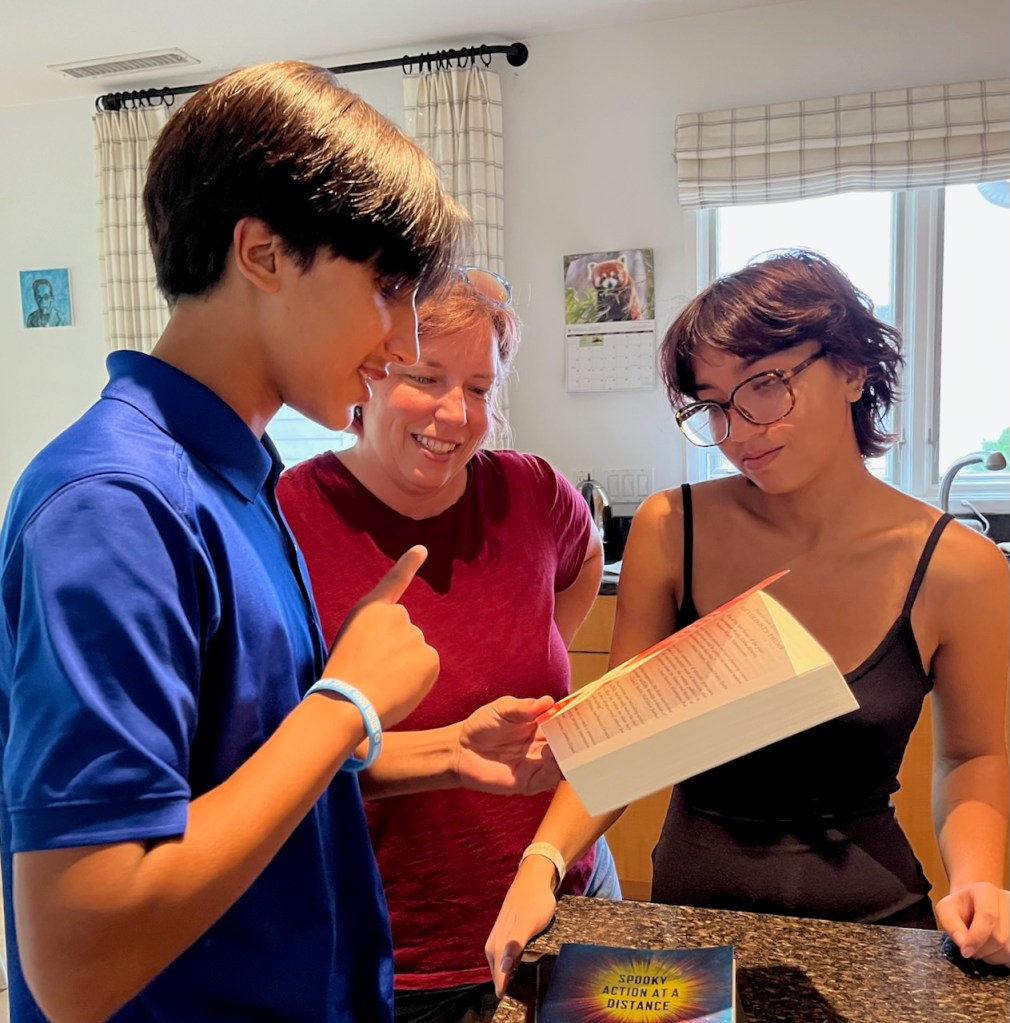
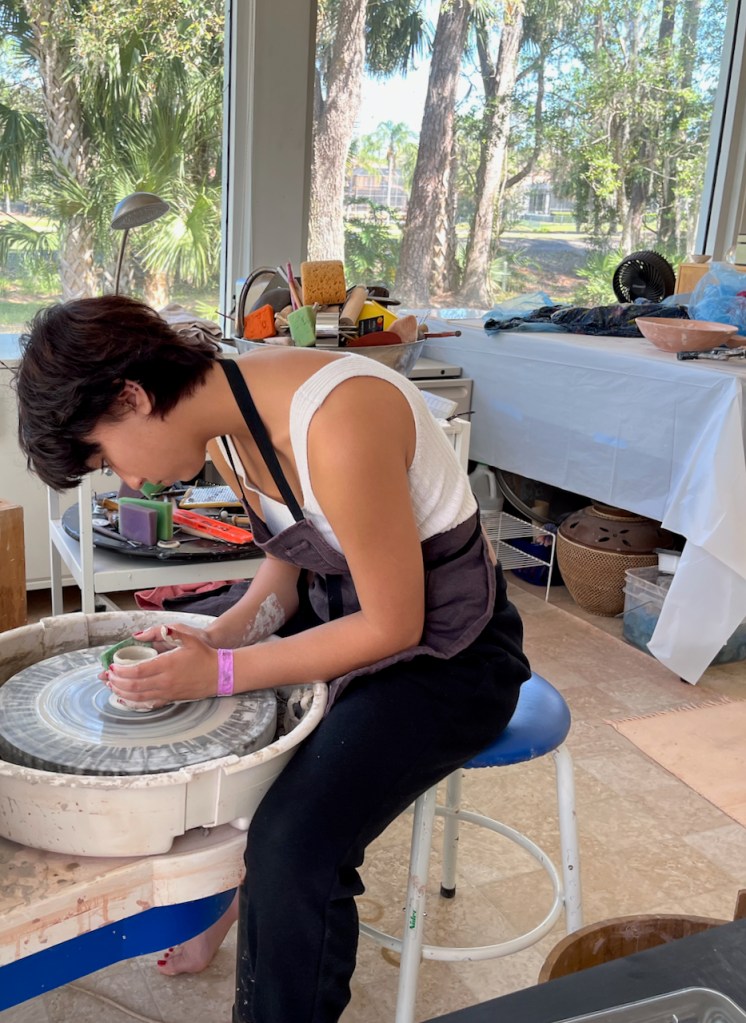
Evan’s birthday celebration was in three parts. For part one he got together with friends for a few hours on a Saturday morning at Urban Air – a trampoline+ place where his age group seems to have returned for birthday celebrations. For part two on the day of his actual birthday we took him to a book store and then Musashino for dinner. Jo and I had procrastinated on his gift for too long and didn’t have anything on the day of, so I drove him to Barnes and Nobles directly after school and he picked out Richard Rhodes’ The Making of the Atomic Bomb, Ivo van Vulpen’s How to Find the Higgs Boson, Sam Kean’s The Violinist’s Thumb, George Musser’s Spooky Action at a Distance, and Frank Close’s Elusive: How Peter Higgs Solved the Mystery of Mass. He proudly plonked the books down on the kitchen table and read each one of their titles out to an amused Jo and Vivian. Part three of his birthday celebration happened just the other day when Vivian picked up the chess set from the arts studio at her school that she had made for him. She carefully hand-moulded each piece from clay and painted and fired the whole thing! Some specific details she pointed out to Evan are – the king (who doesn’t do much anyway) has been trimmed to size, and the colors are not white and black.
We were at a wedding a couple of weekends ago. More about that in another post. But I include a video from the wedding here to further celebrate Evan. He had been practicing Naatu Naatu – the Oscar-winning sensation from Hyderabad for PE at school and in this video you can see Vivian and him taking a crack at it. The fun he had with this is an example of the fun Evan is having with life this year.
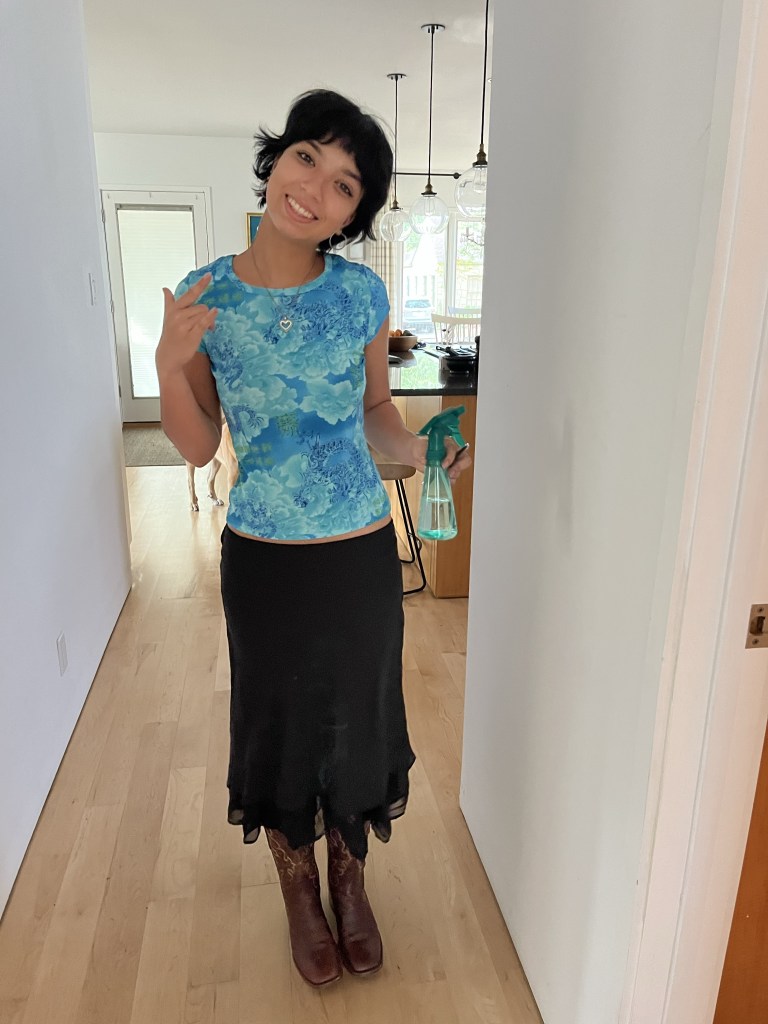
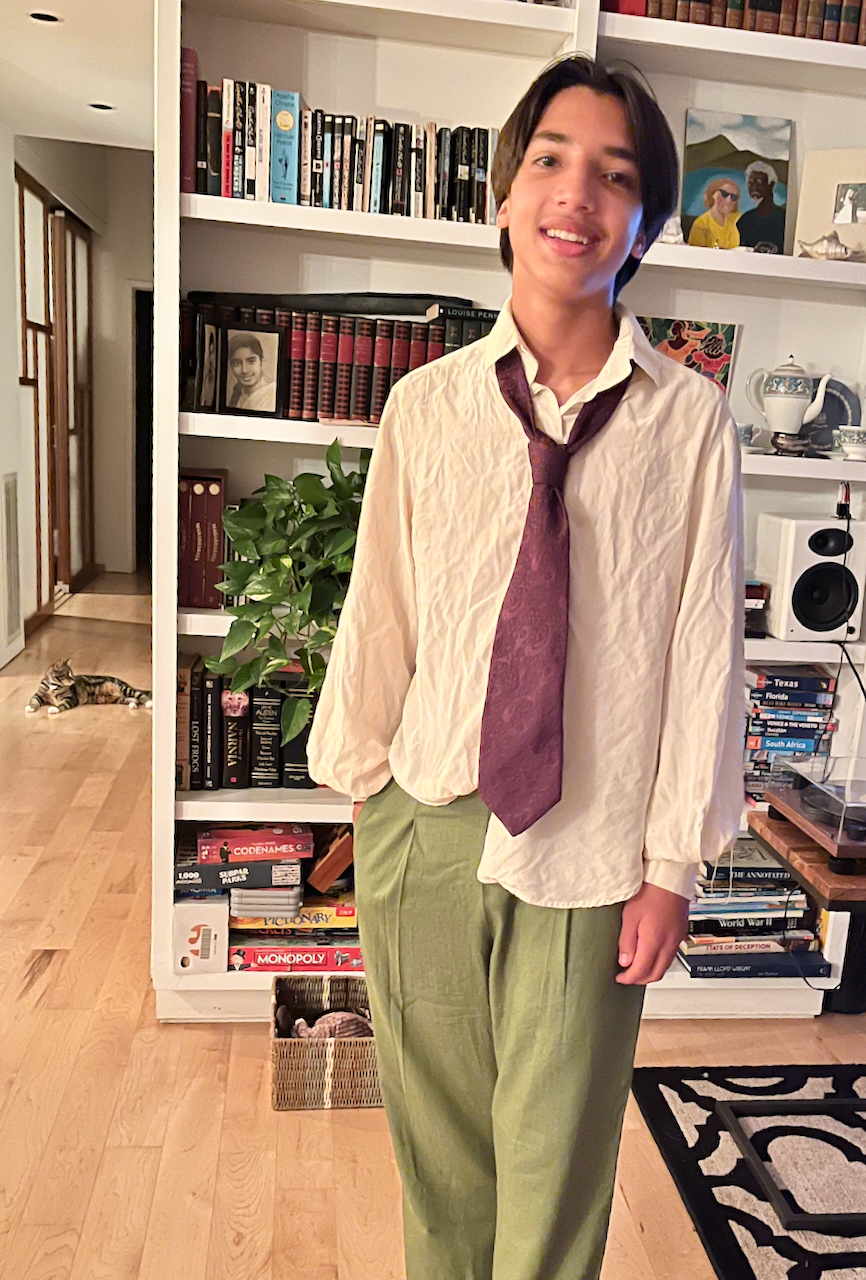
And I end with a photo of Evan from yesterday. Vivian and he are finally done with school and are getting to relax before the travel of summer vacation starts. Evan told Vivian that he was taken aback when his friend Shaan asked what he had on his Pinterest clothes/dressing boards. He didn’t have any. So Vivian dressed Evan up in a selection of her clothes to get him started on his own Pinterest board. He liked it enough to where Vivian had to almost wrestle the clothes back from him. May be this means we’ll see him in something semi-formal that is not black and white this coming year. Happy birthday kiddo.
It’s Vivian’s first day of summer vacation. She’s a junior suddenly! She met some friends for coffee this morning and is at Barton Springs pool now. I think. Evan still has two days of school left after Memorial Day (his school does this just to fuck with parents). He is a rising 8th grader! He is at the PanIQ Room (love the name – it’s an escape room that belongs to a franchise that started in Hungary) to celebrate the end of the school year with friends. Jo is at a hot springs about an hour’s drive away. Ouiser, Phineas, Zeus and I are lounging on the couch with a nicely chilled glass of sauvignon. And a few minutes to catch up on the blog.
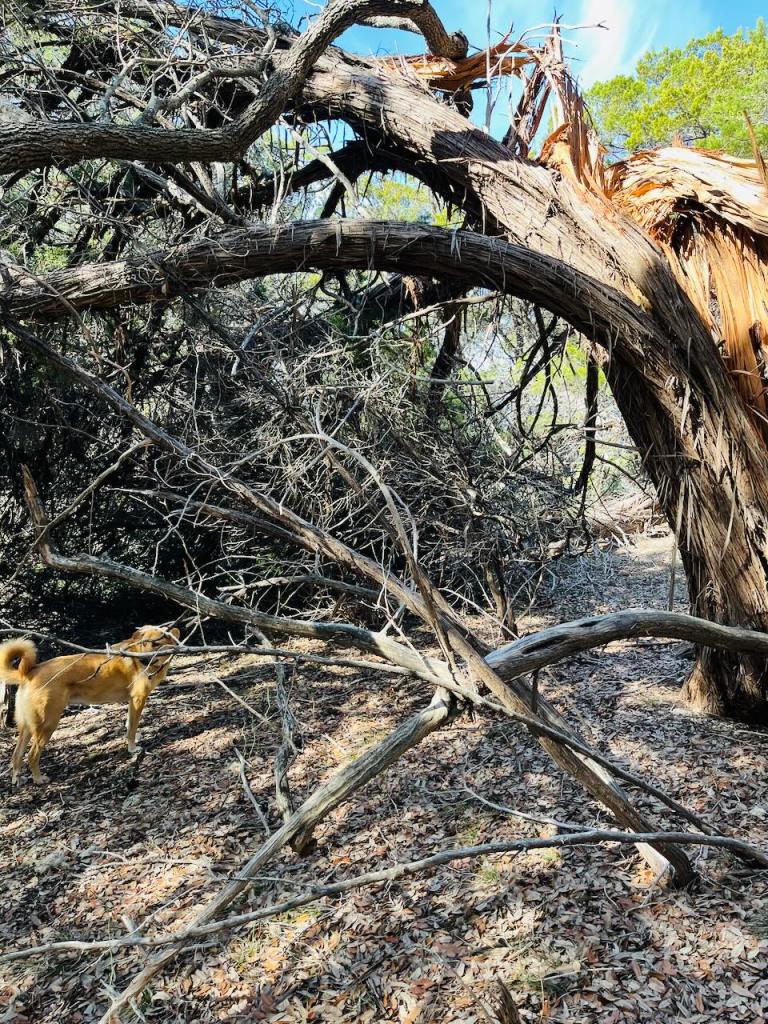
Spring in Texas is a vague term. It could mean anything from between New Year’s Day and the official start of summer. Back at the end of January we had our predictable annual winter ice storm. The kids have come to expect school closures and weren’t disappointed. Live oaks and cedars this far south don’t shed their foliage during fall. So they tend to easily collect ice. Austin is full of live oaks and cedars and they dropped like flies all over town during the winter storm, especially on to power lines. We didn’t have power for many days while the city recovered. Streets were lined with dead tree debris for months.
In Canyon Lake the winter storm mangled a majority of the trees. I had finally sawed down the big ash by the front door that we lost from the 2021 winter storm and haven’t even contemplated what needs to be done to clean up after this one beyond some cosmetic work to clear the driveway. Let me know if you’d like to come over and spend a week with a chainsaw.
We started prepping the backyard for a new pool and the first thing that had to go is the deck. If you think the yard looks trashy here, the deck is completely gone now. All the greenery has been scrapped down to dirt. The city-mandated tree protection resulted in about a foot of mulch covered in sheets of plywood and rolls of temporary fencing around the trees. Yesterday they painted the layout of the pool on the dirt so that city inspectors can OK that. One day they will start digging. Before our sun swallows the inner solar system, there may be a pool.
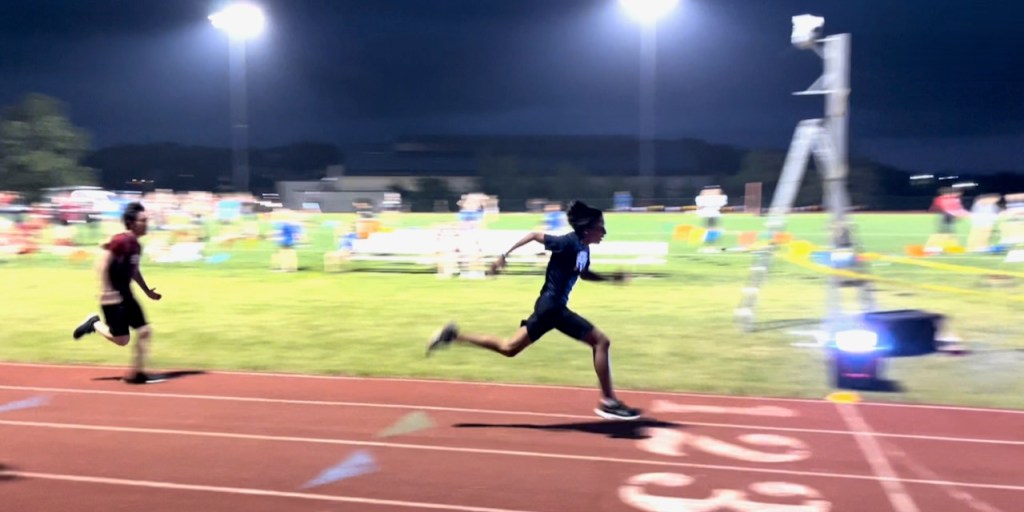
Evan finished a pretty decent first season of playing school basketball and then gave school soccer a try. He is loving it because most of the players on his and other teams aren’t soccer kids and so he thinks he is Mesi. Evan decided to join his school track team. They don’t have a school track program but a parent (the founder of Alamo Drafthouse) who has two kids in track trained the motley crew for an hour on two Sunday mornings. Evan ended up participating in one meet at St. Stephens and did pretty well. He continues to improve is academics and ended 7th grade with better than expected results (he has learned the art of setting low expectations). I complained that he was only in the 99th percentile on a standardized test and he sarcastically replied that 99th percentile is the highest score anyone can get. So he was at least awake during the stats unit. His article for the school newspaper was on quantum computing. He continues to geek out.
Vivian ended a great sophomore year. She had so many activities that she complained when she has to do a regular five day week. She traveled with the school to Fort Worth for arts festivals, San Antonio for a diversity conference, and to Taos for a rock climbing trip. She went to the state capitol to help participate in the legislative process – but our legislatures need a lot more than high school kids helping to display signs of intelligence. Vivian created several interesting works of visual art that I will shortly (haha) post on this blog. She had a couple of poems in the Proteus, St. Stephen’s annual collection of student published poems and essays. In her final essay for history she wrote about the relationship between the American romanticism school or art and the realism school that followed it, with references to what was going on in society and the way people lived that was reflected in the art of those times. I learned something from reading it. I was not writing such analytical pieces when I was in the 10th grade. Oh – and Vivian’s second set of braces came off! I don’t yet have a photo of her displaying her expensive teeth without braces.
Among other spring goings-on, Partha stayed with us for a weekend. He was in Houston for a cricket match and dropped by Austin. I am glad that the Hyderabadi kids are getting to know each other a bit. May be there will be second generation friendships where they can brag that their parents knew each other from when they were babies. Vivian also has a distinct shortage of interactions with Indian older cousins and Partha helped fill that for a few days.
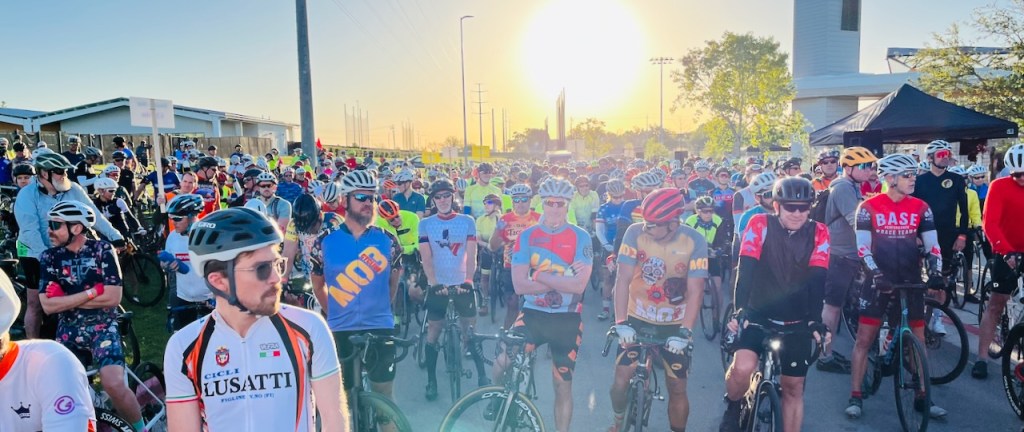
We got through the 29th Rosedale Ride. That day is usually a magnet for bad riding weather, but for the 29th, it was perfect. May be a bit windy on the return side of the loop, but I only did the 22-miler so it didn’t matter. Thanks to friends who went out and had a good ride. Your support helps the students, families, and staff at the Rosedale School. Speaking of the Rosedale School, the architects who designed it – Chad Johnson and Jim Brady from Page won the “Humancentric” award at the AIA Austin awards ceremony. Congratulations!
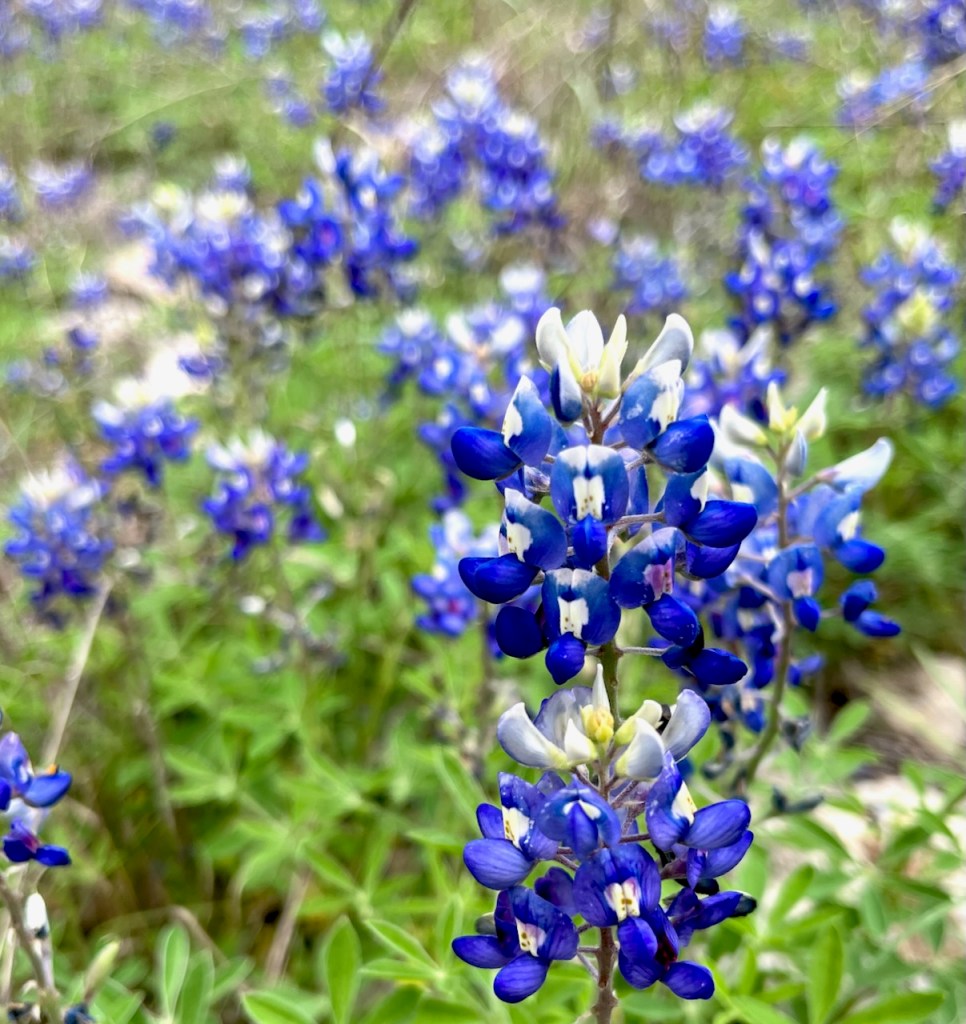
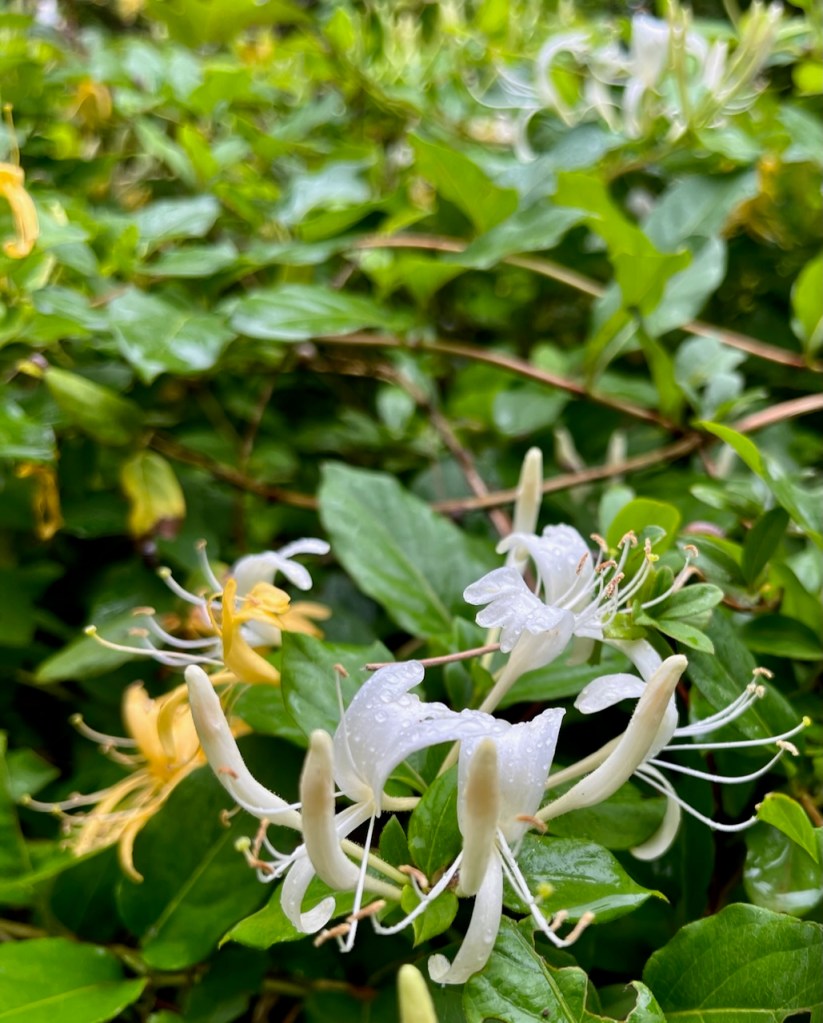
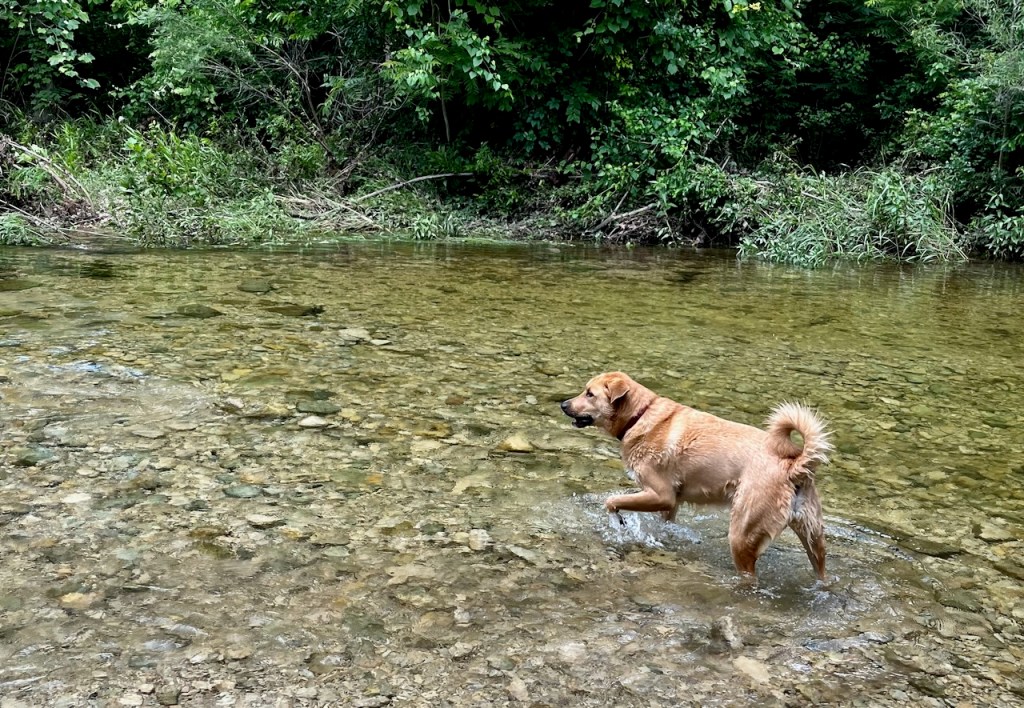
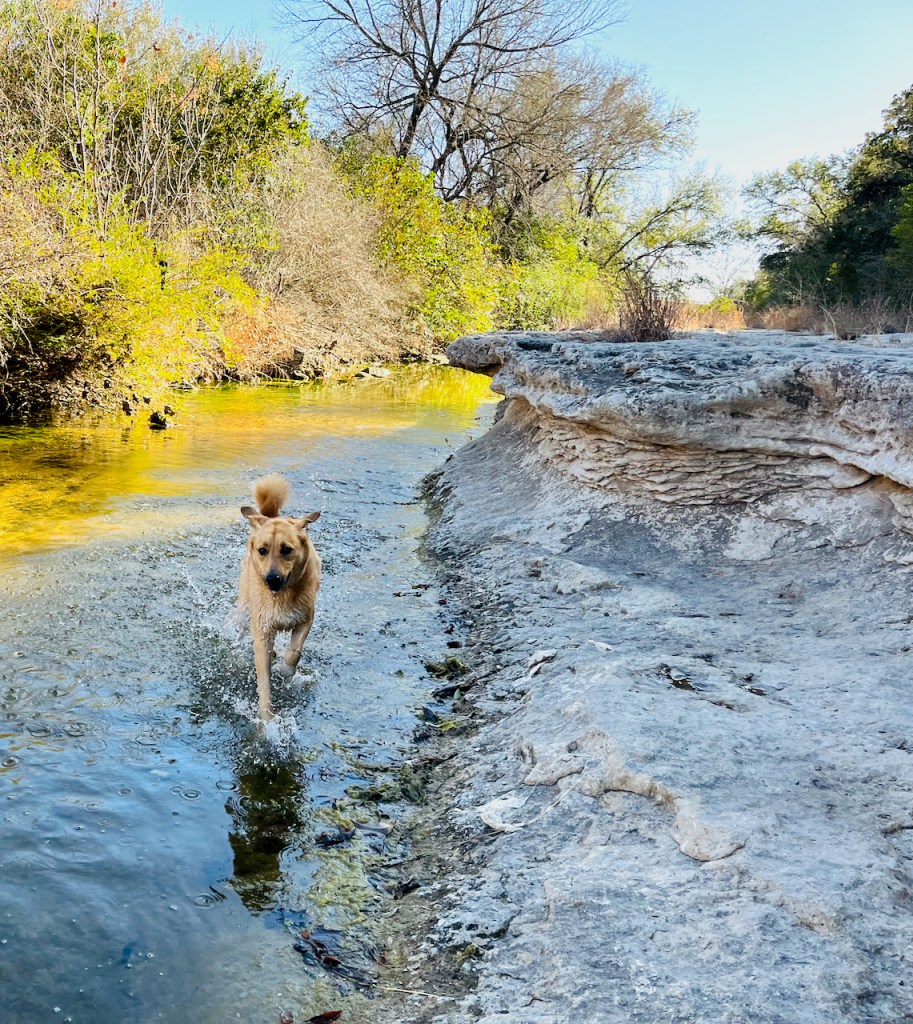
After a promising start, the bluebonnet season was a disappointment. The blooms started earlier than expected, and then a hot dry spell ended things well before Easter. But I did get a picture of one of the kids in a bluebonnet patch : – ). Since then it has rained regularly (though not enough) and the late spring blooms like the Mexican hats, cedar sages, and Indian blankets are doing very well. They look particularly good around Ouiser in what I call the Upper Turkey Creek trail. The honey suckles were in crazy full bloom for a couple of weeks and the trails smelled like citrus honey. OK – I reluctantly end my spring bloom report right here.
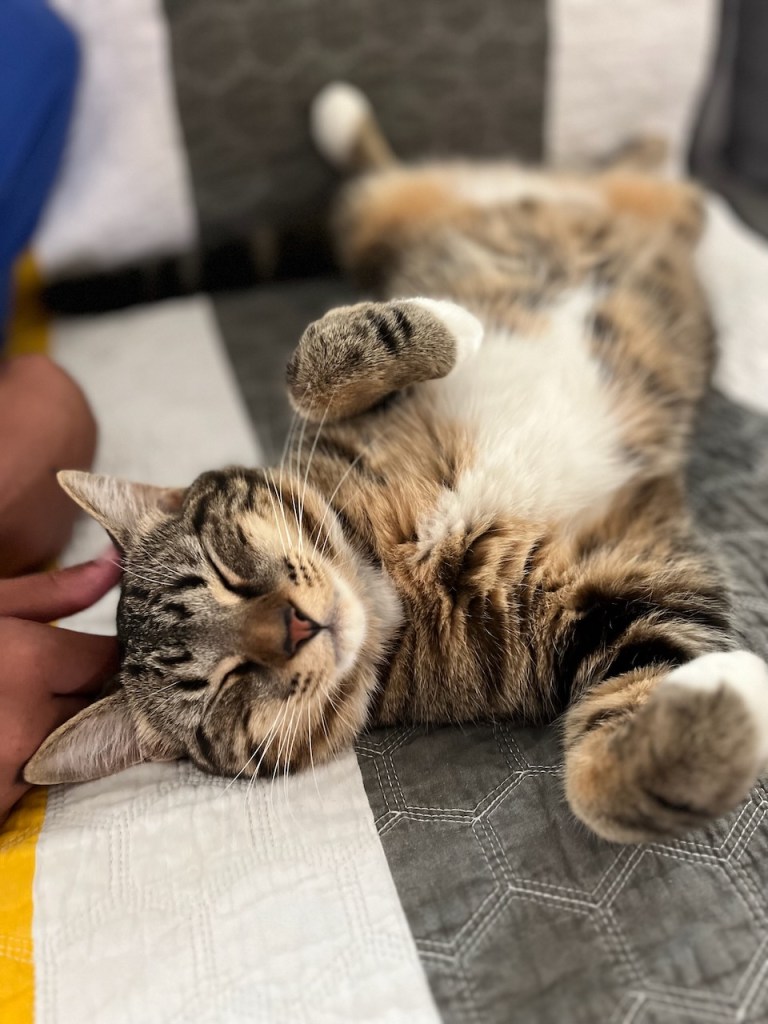
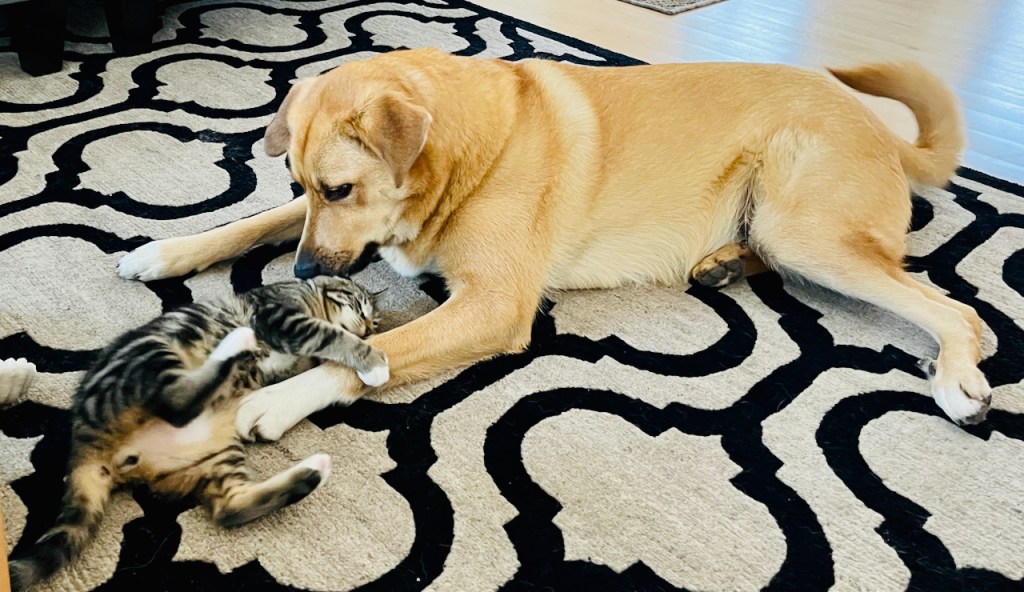
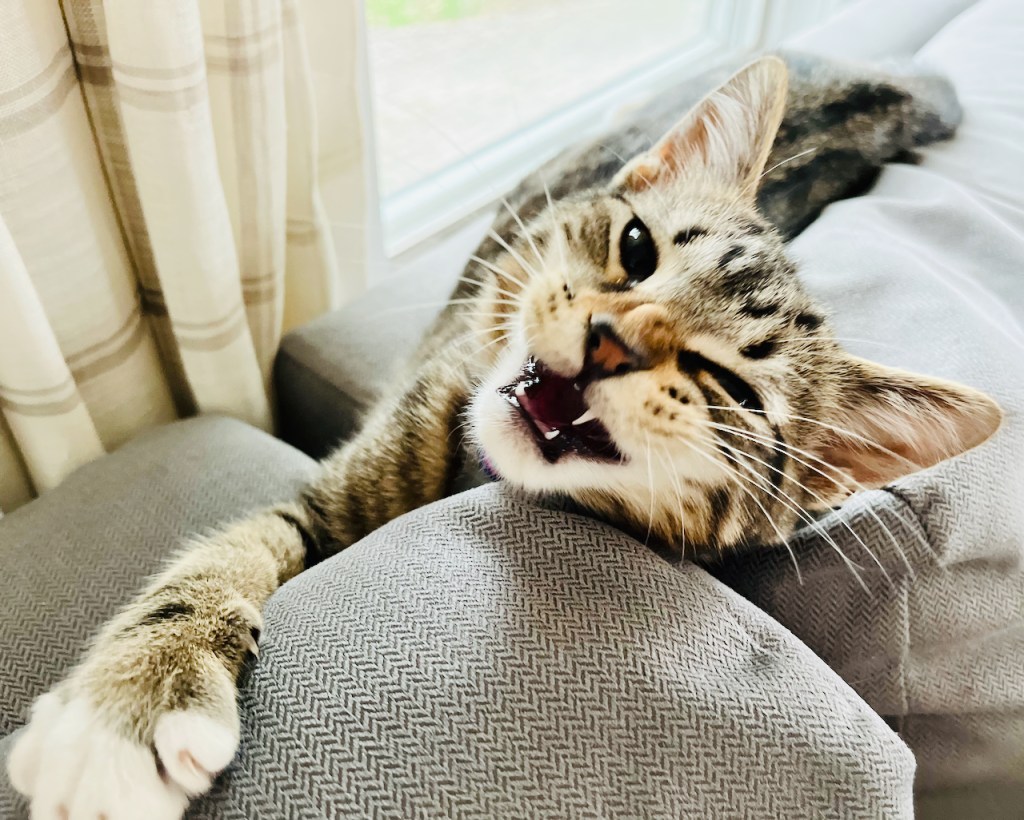
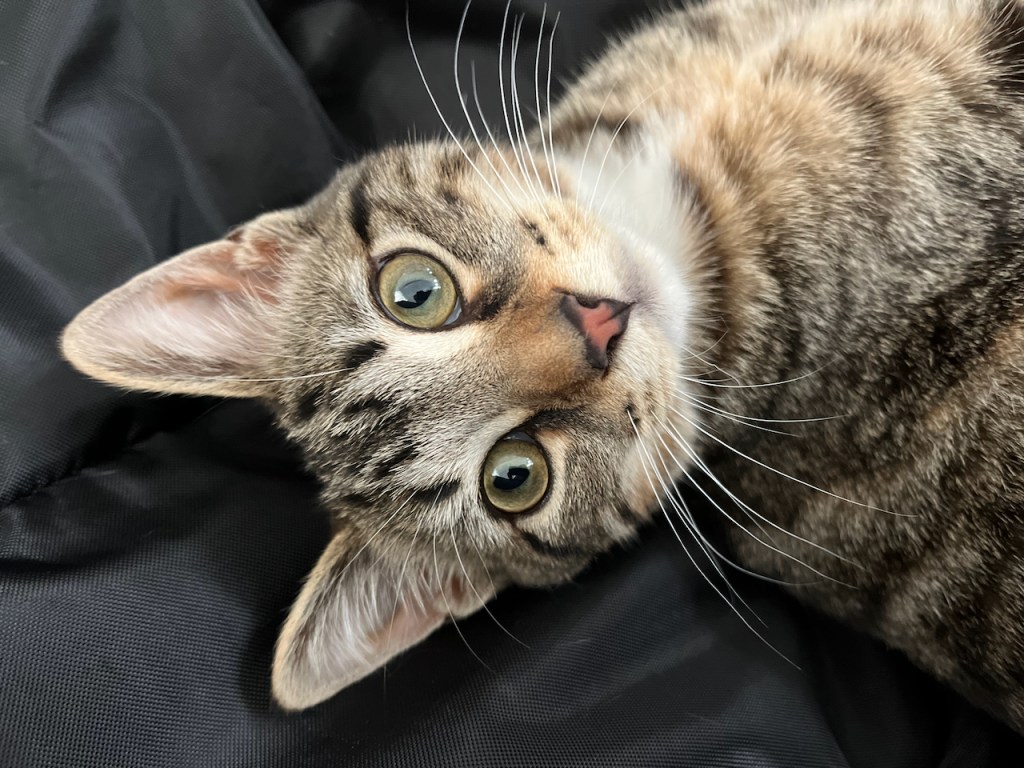
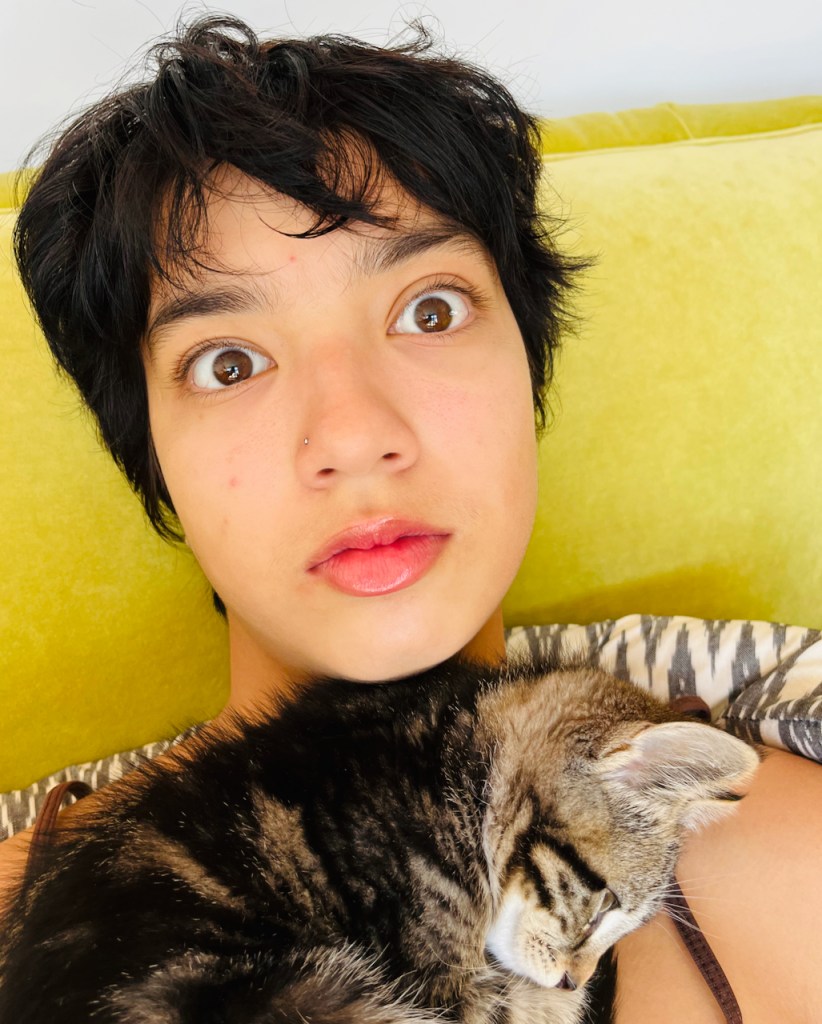
Phineas Schrödinger is growing up quickly. He does not spend as much time on Jo’s boobs or our shoulders but he still is a loving wonderful kitty. He and Ouiser are great friends and they tussle with each other several times a day. At times he leaps up and grabs Ouiser’s head. Ouiser reciprocates by gently holding Phineas’ entire head inside her jaws. Zeus is getting to be slightly friendlier towards Phineas, but it is still too early to tell if Phineas is a butt head or is trying to play with Zeus. Cats, inscrutable as they are, keep us guessing.
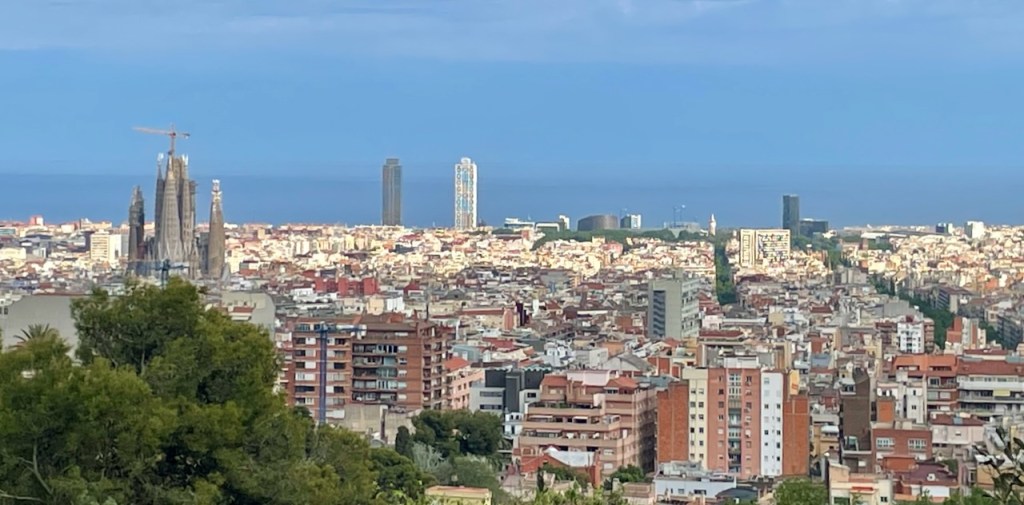
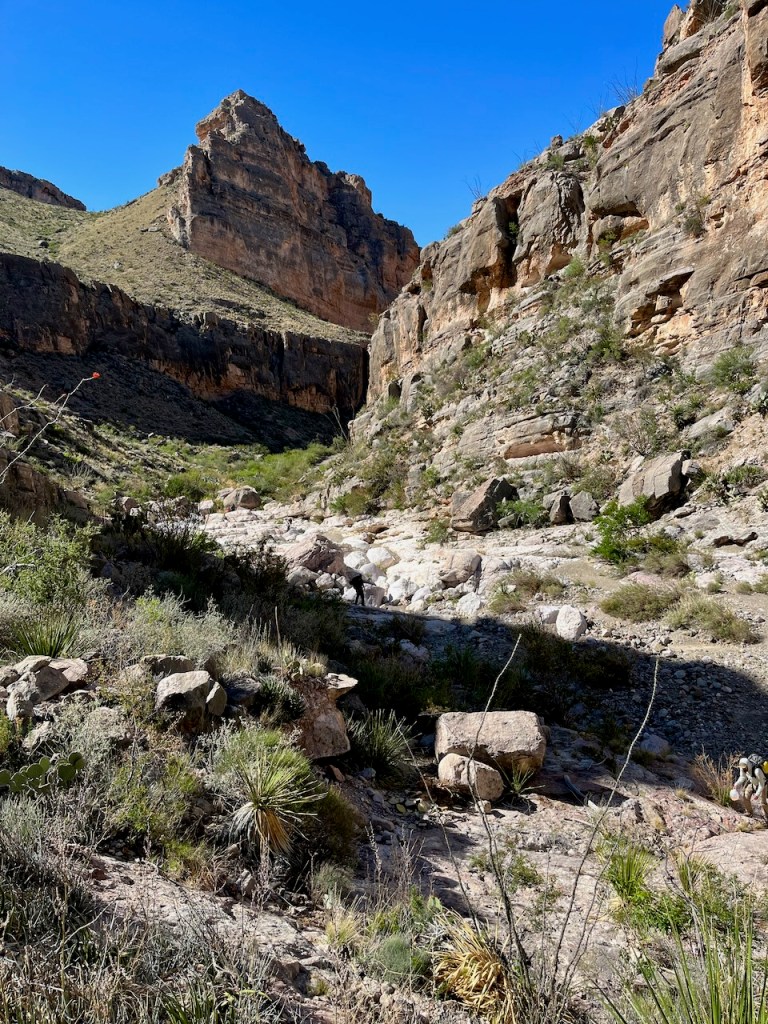
Jo travelled to Barcelona on a solo trip for her birthday. She sent back daily texts and photos of Picasso paintings and Gaudi buildings on the family group chat till Vivian begged her to stop. Vivian wishes that she had taken her pre-spring break trip to Barcelona instead of Maui. Jo had a good time and found a nice apartment on airbnb and I am hoping that sometime in the near future doing a shoulder season she can take me back there. I went to the Big Bend Ranch State park for Easter. It is less than half the size of its national park neighbor and in all my years of going to the national park I had never set foot in the state park. We started our hike from near the town of Lajitas at the Mexico border and stopped for lunch at the ruins of the old the Beuna Suerte mines. Then bushwhacked to the Lower Shutup slot canyon where we spent the first night. Next morning we headed through the slot canyon towards the Solitario – the remnants of an old caldera. But our path was blocked by smooth canyon walls and a big pool of water in a tenaja. Half our party turned back. The rest of us backtracked and climbed out of the slot canyon and found our way back into the Solatario. We spent that night at the Tres Papalotes campground where a friend who had driven out in a 4×4 met us. The last day we walked past the Solatario Bar into the Lefthand Shutup and then hiked out of the park’s eastern edge. We humped another few miles of desolate dirt roads with an inexhaustible supply of ups and downs over hills and across dry creek crossings. Just when we were getting a little tired we found the entrance to a friend of a friend’s hunting lot and as we walked up to the shack on the property we were met by a truck full of friends, cold beer and steaks ready to be grilled. Brendan was fantastic with the topo map and the gps and we never felt totally lost though we spent a lot of time staring at the map. I’ve marked some of our 35 mile jaunt through the park in the map below in case I do this trip again someday.
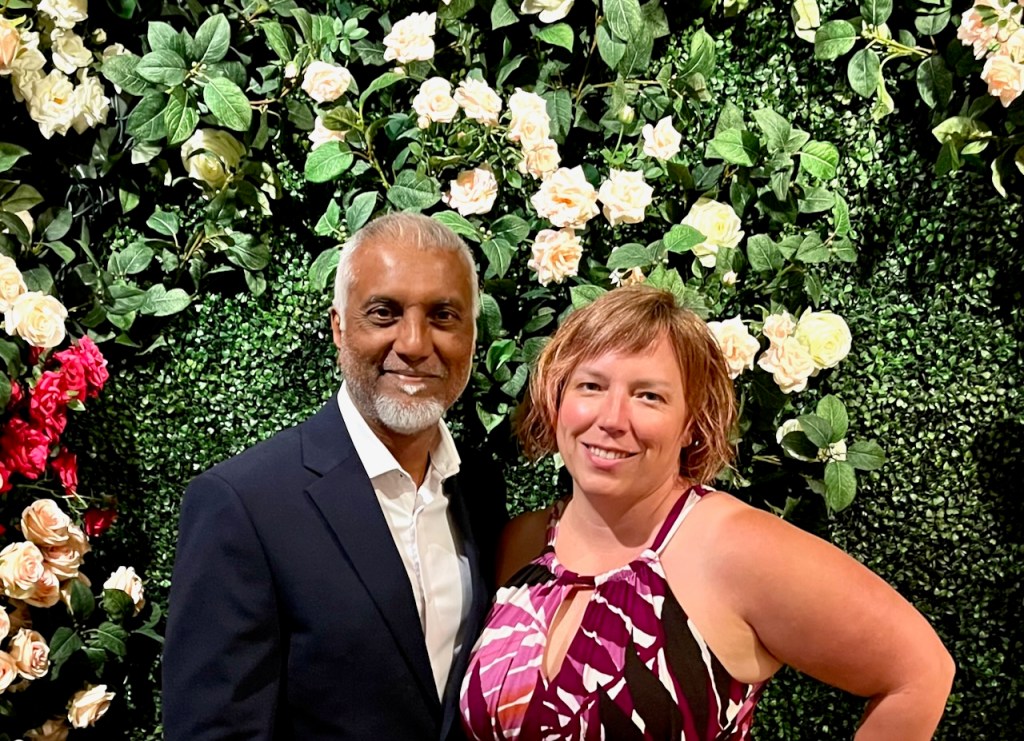
Jo and I dressed up and attended a few galas and Nicolle came into town for her birthday. In other notable events we finished up a crunch project at work and now have a bona fide partner who will use our technology. It has almost been two years and the interesting thing is that we haven’t deviated very much from our original vision. Still plenty of roadblocks and challenges between where we are and success but if the journey is the trip I am pretty darn happy already. Oh – and at the end of spring I started my tenure as the president of a non-profit board. That was our spring, roughly.
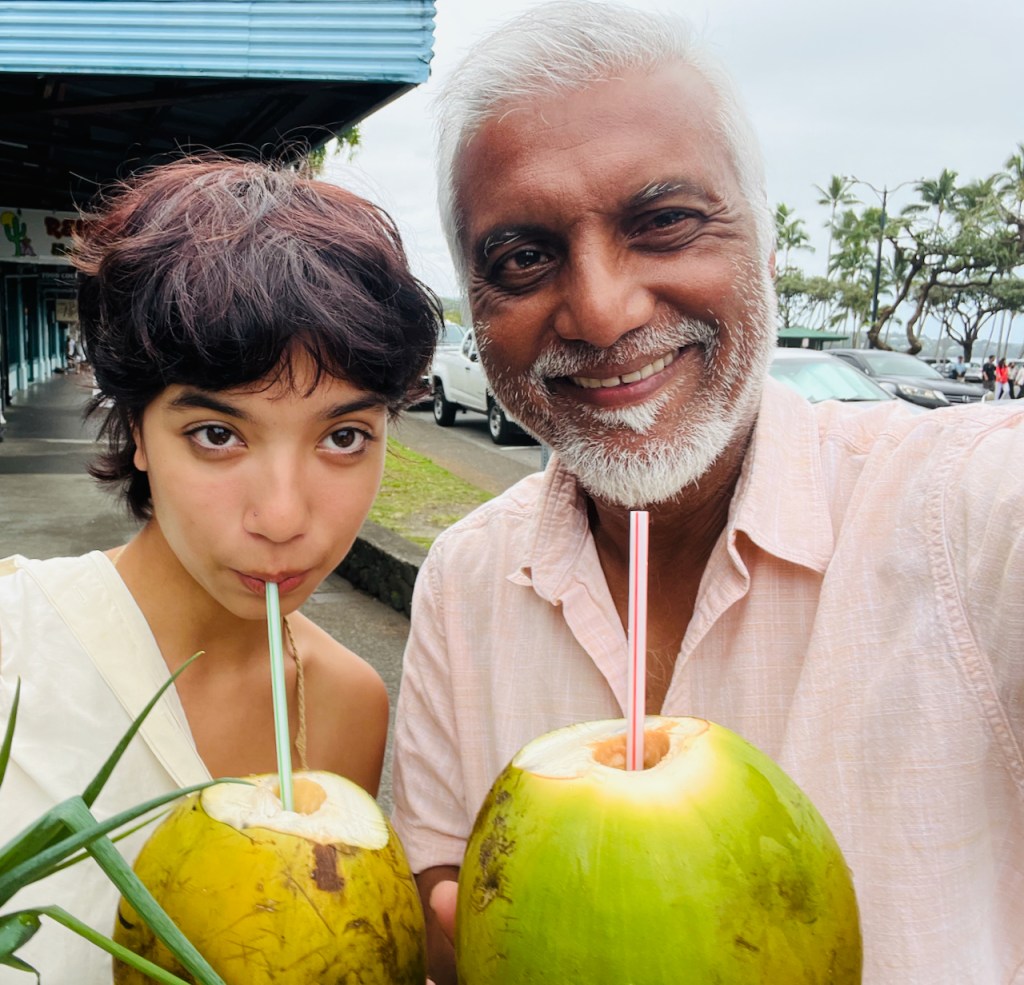
Aloha. Vivian gets two weeks off for spring break. Evan gets one week. I get zero. So Jo and Vivian went to Maui for the first week and joined Evan and me for a second week at the Big Island. The girls had a great time in Maui. They stayed at Neela Masi’s house in the upcountry (who was cruising South America at that time), and had their own adventures, including getting locked out of their car due to some kind of fob malfunction in near freezing temperatures at the Haleakala crater at 10,000 feet after sunset. But they survived and met Evan and I when we landed in Kona just in time to witness a stunning sunset on a Friday evening. We spent the next very fun 9 days together. I dare say the middle-years slump is over and it is again great to travel with the offspring.
We grabbed a quick substandard Chinese dinner near Kona airport and headed off into the darkness of the highway connecting to the Hilo side. Somewhere between the snow-dusted peaks of Mauna Loa and Mauna Kea we parked on the side of Saddle Road and stepped out and stared and stared at the night sky. It is nothing like we see here in Austin. There are no dark spots. Look long enough at any patch of sky and you’ll eventually find it filled with twinkling stars and galaxies and glowing nebulas and perhaps a star that went supernova.
We started off staying on the Hilo side, visiting the farmers market and snorkeling with turtles in the little rocky beaches north of Hilo airport. One morning Jo waited in the car while Evan, Vivian and I ran into the Big Island Candies’ giant store and ten minutes later we returned with a shopping bag full of chocolate delicacies and a rather impressive bill. Jo and I usually awoke at dawn and walked, she with her folding chair, me with a cup of Kona, down the street next to Kahakia park and watched the sun rise over the Pacific while the waves crashed on the house-sized boulders below. After breakfast one morning we visited Volcanoes national park and hiked through the muddy puddles in the dark and cool Thurston lava tube, and past the bellowing steam vents on the rim walk while peering hopefully at the Kilauea crater which had been spewing lava till just a few days ago. We drove up to the volcanoes observatory that had been damaged during the latest eruptions and is now closed. Many years ago, Vivian was enchanted by a painting of Pele the Goddess in the entranceway of the observatory. Jo had fashioned Vivian’s halloween costume one year based on that painting (Evan had been the other Pele, from Brazil).
We walked down into the much smaller (and much more dormant) Kilauea Iki crater and hiked through it up on the other side, stopping to pick lava rocks that should have weighed fifty pounds but were almost as light as feathers. Then we drove down the Chain of Craters road, stopping like the jaded tourists we were, to look at only the best craters. I was planning on driving out to the Muana Ulu lookout or as far south as the road would take us but we were soon swallowed up by a late morning fog that reduced visibility to a few hundred feet and turned the lava – duh – grey, so we turned around and headed home.
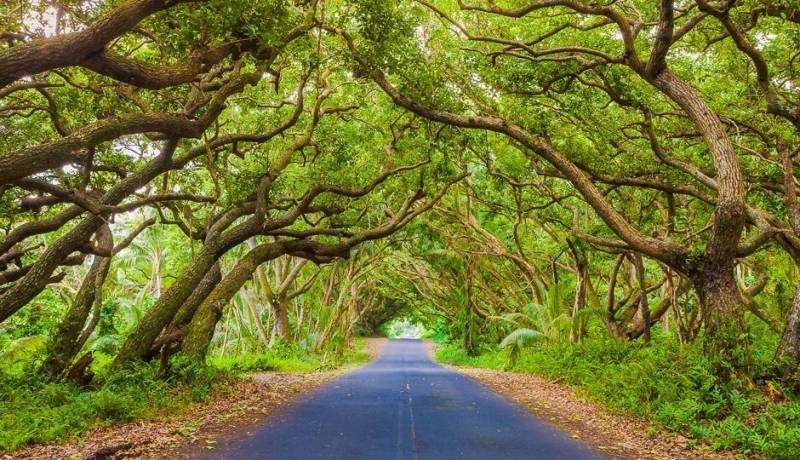
One day we drove for hours out to a the Isaac Hale park. The roads to it and the park and beach itself have been altered by the 2018 lava flows. In places it looks like an alien landscape – with fresh tarmac laid between miles and miles of desolate black and grey lava rock. And then you drive past a small island of greenery that the lava flowed around and spared. The coastal road is lush and green mostly with occasional pullouts where locals had parked their trucks and kids were playing in sandbox sized beaches. There are sections where the trees form a tunnel above. I didn’t get a photo of that so I have included a link from the internet above (which may disappear without warning).
We spent the next few days on the Kona side, driving through the small towns along the coast from South Point all the way to the Waipi’o valley. We drove to the end of the road at South Point and walked down to the Kaulana boat ramp which was busy with boats and their extra long tow attachments. Jo and the kids sat on a big bleached driftwood log and enjoyed the view while I decided to walk part of the way to the Papakōlea green sand beach. I gave myself 30 minutes, after which I was going to turn back. I practically ran so I could cover as much ground. Along the way I passed several locals hawking rides on their pickup trucks warning me that it was a six mile roundtrip. There were a few people who were walking, though most eventually hopped into the trucks. The scenic dirt path by the ocean alternated between very pointy rocks and ankle deep yellow dust. I passed a couple who were walking back from the beach. A few minutes later my 30 minute timer went off, and I turned around and started walking back. I passed the same couple, this time going in the same direction. We said hello again. Then I noticed they were staring at my feet. They were both wearing light hiking boots. I was in my flip-flops. The woman finally said “My husband was marveling how fast you are walking in your flip-flops.” Then she smiled guiltily and added “He said you Hawaiians are probably born wearing flip-flops”. It was fun to tell her that I had been in Hawaii for precisely three days.
We tried to go to Manini beach where the kids spent many an hour when they were tiny but it was full. It is a secluded beach and tourists like us don’t usually get all the way down there, but this was spring break week in Hawaii too and everyone was out. We tried to find the house up the street from Manini beach where we spent two different memorable vacations, but the whole area looks quite different. The shave ice place where we had celebrated Evan’s second birthday with a huge shave ice in lieu off a cake is now a kayak rental place. One of my favorite places near Manini is the Pu’uhonua O Honaunau National Historical Park (it’s a mouthful) – an ancient place of refuge for injured warriors or those fleeing the Hawaiian belief system of Kapu. It is a magical place of stone and sand and calm waters and tall coconut palms and 17 foot wide ancient rock walls and on my third visit here I am happy to say it felt just as magical.
Our favorite bbq place, Big Jake’s Island bbq, was closed because the owner was out for knee surgery. We met a semi-local (spends six months in Kona and the other six in Colorado) who sent us to Foster’s Kitchen in old Kailua-Kona for dinner (“y’know the place – where Rosa’s used to be – upstairs from the beach volleyball courts”) and we had a good time.
The precarious road down Waipi’o valley was closed due to “damage” to all, even pedestrians, unless you were a local – which put me in a bad mood because I was so looking forward to walking down into the valley which is my favorite spot on the Big Island. We have two sets of kids photos from different ages from the lookout on top and I asked Vivian and Evan to lean in so I could add to that collection and they rolled their eyes. Already being in a huff from the road closure, I went off and enjoyed the view on my own. I must say it looked great without them in it : – ) Assholes. Tex’s malasadas were just as huge and delicious as we remembered them. The pizza place (and many other restaurants) in Honokaa looked like they hadn’t made it through the pandemic.
One morning we went down to the Kahalu’u beach park. Vivian and Evan joined a couple of other kids for a surf lesson. Jo and I walked to the back of the white and blue painted wooden toy-like St. Peter’s Catholic Church and sat on the stone wall and watched them attempt to stand on their boards and ride the surf. They managed enough to give them a head start the next time they try again. Then I snorkeled the bay and it was amazing. It is much shallower than Kealakekua bay at Manini beach or Honaunau bay at Two Step beach but the sea life was very good. The corals are mostly bleached but a few seem to be making a comeback. The park has stewards who help people learn not to step on the bottom and to use a less poisonous sun screen, so may be things will get better.
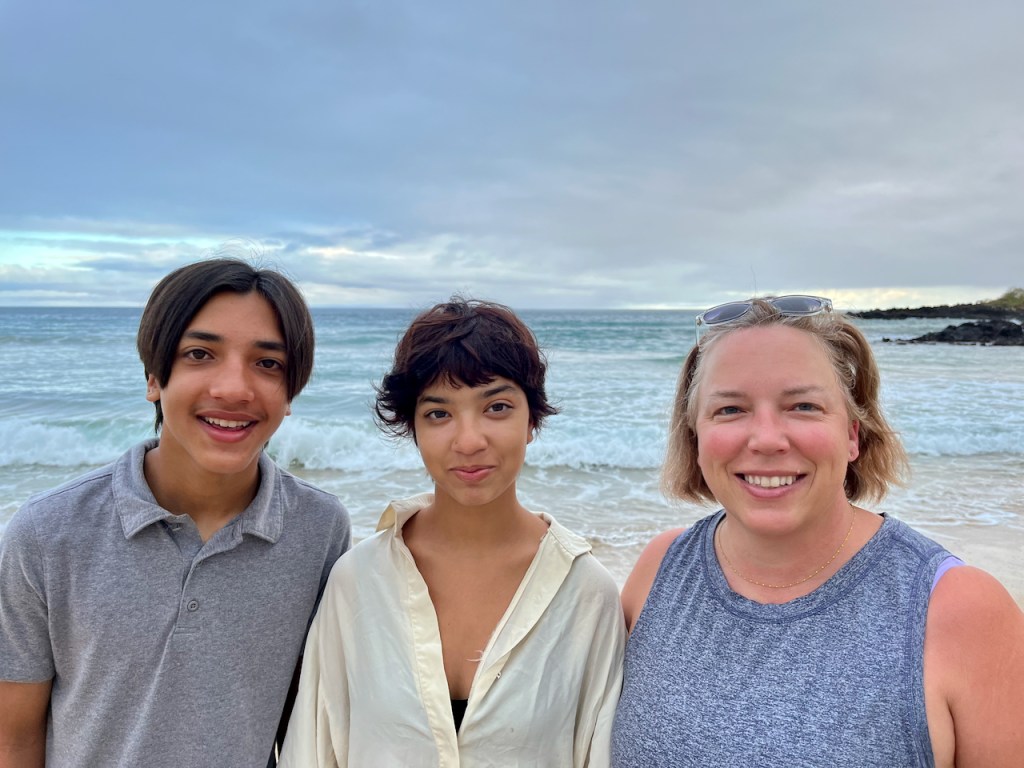
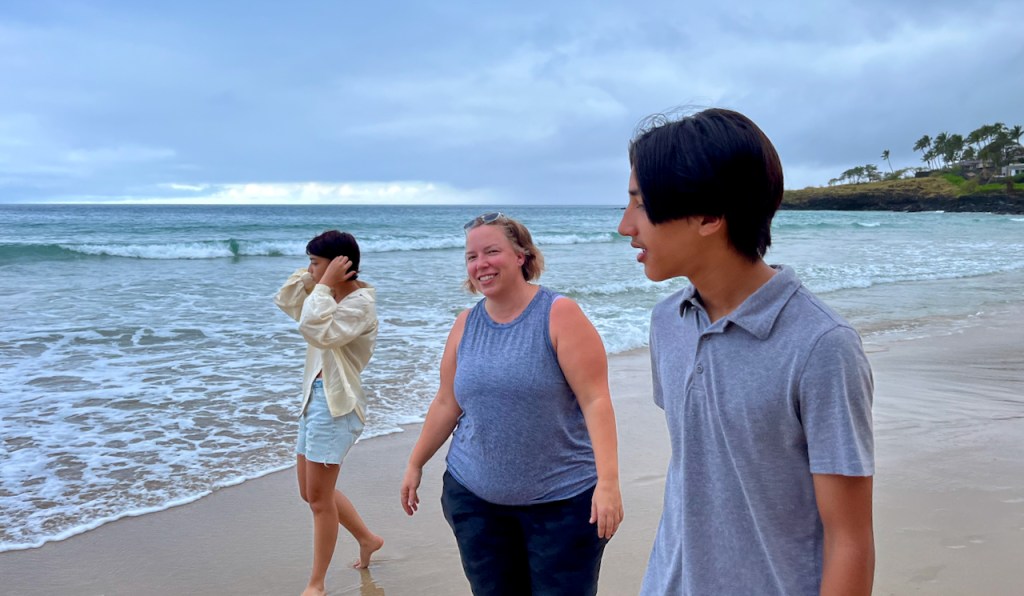
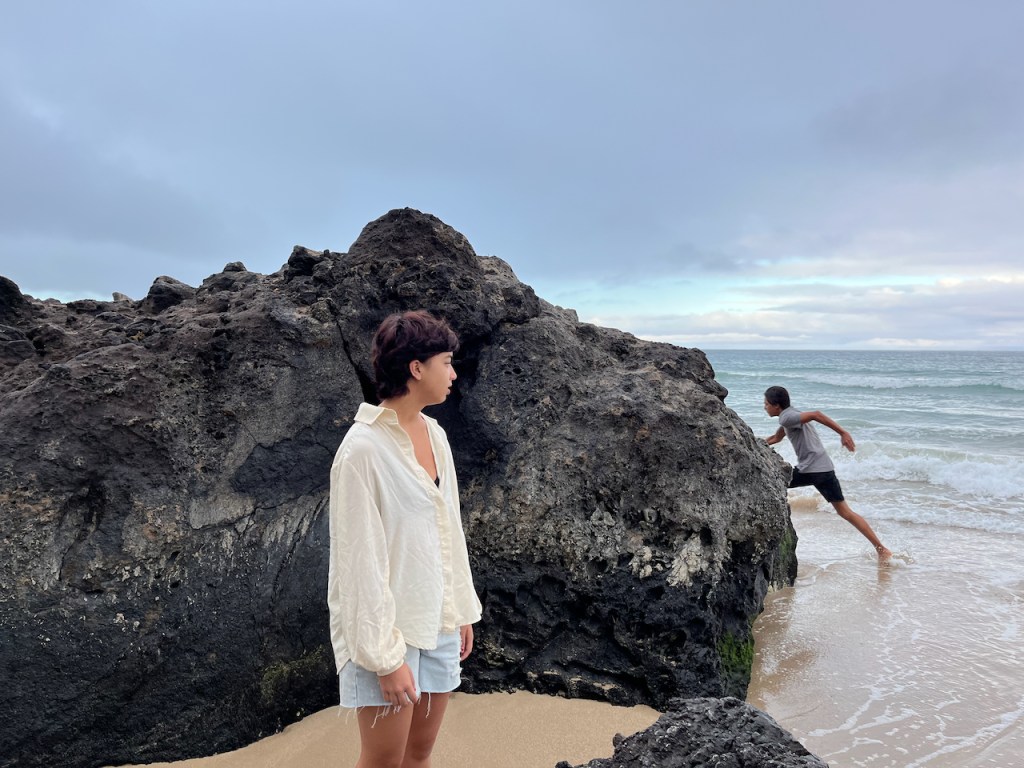
We also spent some time at Hapuna Beach. Jo got us a room at the fancy hotel there for one night, and we drove up and use the public beach access another time. We love this beach. Evan had a diaper blowout on this beach 11 years ago while Jen fell asleep after a few drinks. One morning at sunrise Evan and I raced on the beach. Evan gave me a 30 m head start and then sailed past me in another 50 m. We measured his stride in the sand – it is longer than he is tall. So now both my kids can officially outrun me.
Remember I said I got zero weeks off for spring break. My team was very accommodating. There was a lot to get done, and I got on Zoom for the first meeting at 8:30am in Austin – which was 3:30am in Hawaii. By breakfast time in Hawaii when the rest of the family was stirring, I had usually finished a very productive five to six hour workday. Often I caught a nap in the afternoon, and if not, there was good coffee to be had. On the whole, this was an amazing vacation and a busy work week. I really did get the best of both.
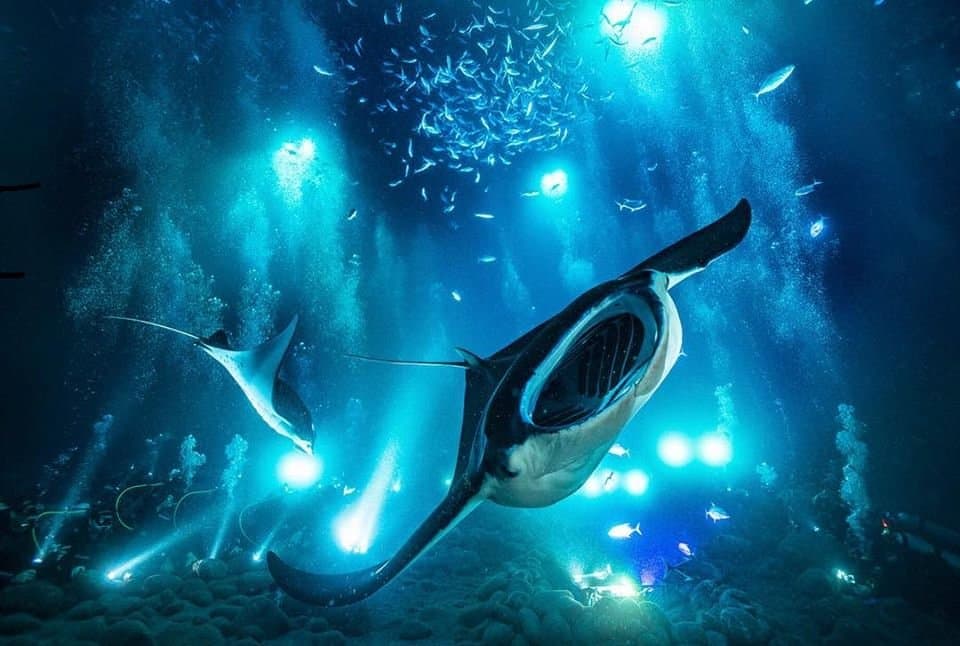
Jo booked us a night manta ray snorkel. On our last night, we drove down to the boat docks at Honokohau marina. There we wiggled into wet suit tops and took a windy 45 minute boat trip down the coast. They threw a mat with a bright LED light into the water and chummed the water with plankton. The mat had a PVC frame around it and we held in to the frame with our hands and kicked our flippered feet behind us, looking downward through our snorkel masks. Moments later we were rewarded with the sight of giant manta rays. The biggest – Big Bertha – has a 15 foot wide wingspan and weighs over 1500 pounds. The mouths on these things are wider than Evan. They swim straight up towards the surface to the light, mouths gaping open, sucking up plankton laden water. Just as they almost break the top they flatten out with their bellies upwards and then summersault back down for another loop.Their mouths are inches from our faces. Their wingtips occasionally brush us, though we are warned to not touch them. We enjoy this spectacle for almost an hour. I don’t have any pictures of this adventure, but I’ve linked one from the internet (it may disappear without warning).
Then, cold and wet but filled with wonder and amazement, we retrace our trip back. By midnight we are showered and in bed. Our alarms go off four hours later. We see the sun rise over Hualalai volcano as our plane taxis down the runaway. Before midnight, with one stop in Las Vegas, we are back at our white wooden house. Mahalo.
Time to catch the blog up. Winter break ended and the kids with less fur went back to school. That gave the rest of us time to hang out and chill. Phineas and Ouiser are getting along like best friends. They play all the time. Ouiser’s walks are getting slightly less frequent because the head dog walker is otherwise engaged in the world of generative AI and non-generative video.
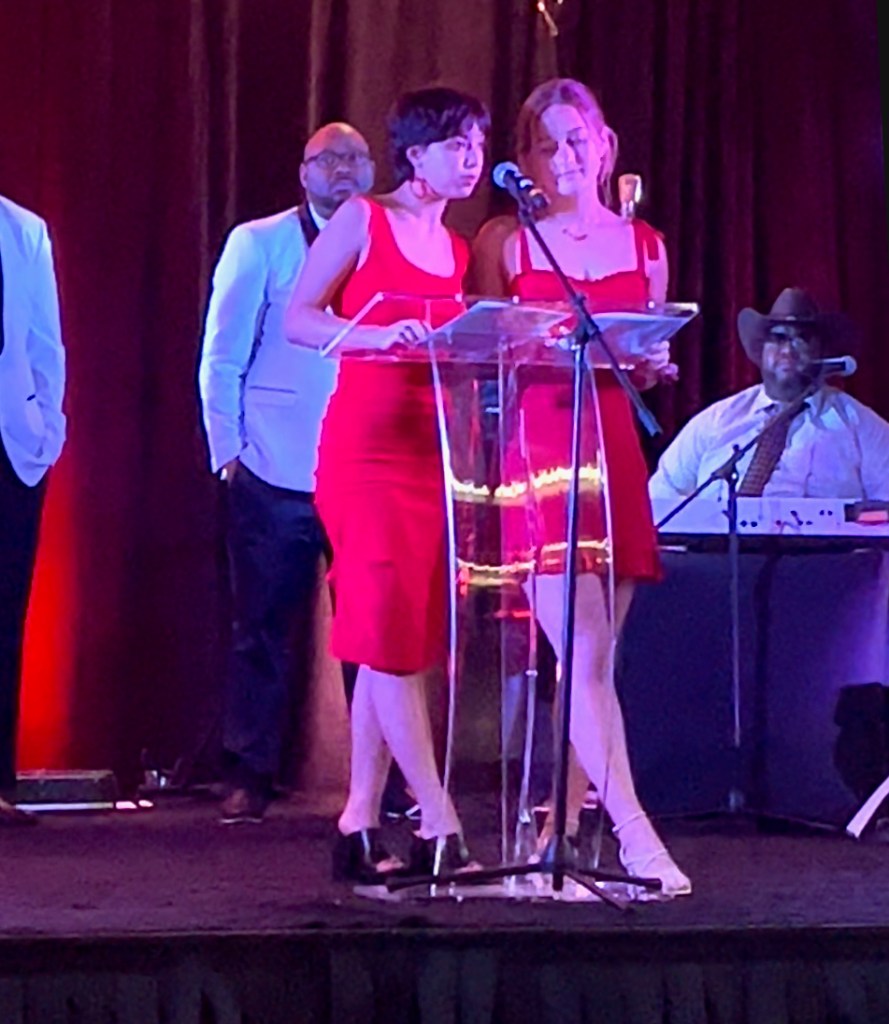
The kids and us had reason to find our formal clothes a few times. Vivian went to her school dance with her friends and a date. Evan went to his school dance and an all-day model UN session at Southwestern University. Jo and I dressed up for a couple of galas. Vivian and her friend were invited back as alums to speak at her school gala and they ended up doing a fantastic job and raising some serious money. And then we dressed up again in Florida for Praveen’s 60th bash where we met up with Alu and Michelle.
Vivian, our sweet first born, turned 16. Jo and I quietly celebrated keeping another human alive for sixteen years. Vivian got her friends together at a trampoline place and had a great time (we’d have to go to these places 10 years ago for her classmates’ birthday parties). If Vivian was a whiskey I’d say she is complex and layered with strong notes of creativity and hints of sarcasm. Pairs well with citrus and spice. The finish can be confident but sometimes drier than you may expect. Never straightforward but a warm and funny16 year old that should continue to mature very well. Also, learning to drive. So watch out, world. I couldn’t be prouder, child. I can’t wait to see you lead your life everyday. As I write this post many months after her birthday (it’s the middle of April), Vivian has been way for an arts fair in Fort Worth with her school for the last three days.
We were on our way back from Florid and at the airport. Vivian asked Evan to make the Zoolander face. This is what Evan did. I’m dying laughing.
Earlier this spring after a few minutes of coaxing, Evan decided to play a sport not called soccer. He and I went to Dick’s and bought his first ever basketball. A week later I watched him play for his school and make his first steal/basket. He was pumped.
I think we were in the car driving to Central Market when Jo and Nicolle were on the phone. Nicolle said that she had an opportunity to go to Alaska for a few weeks to teach at a school in a tiny village on the North Slope in the dead of winter. I volunteered to travel with her on her way in. Which resulted in us being together a couple of weeks later on a flight coming in to land in Anchorage (it was breathtaking).
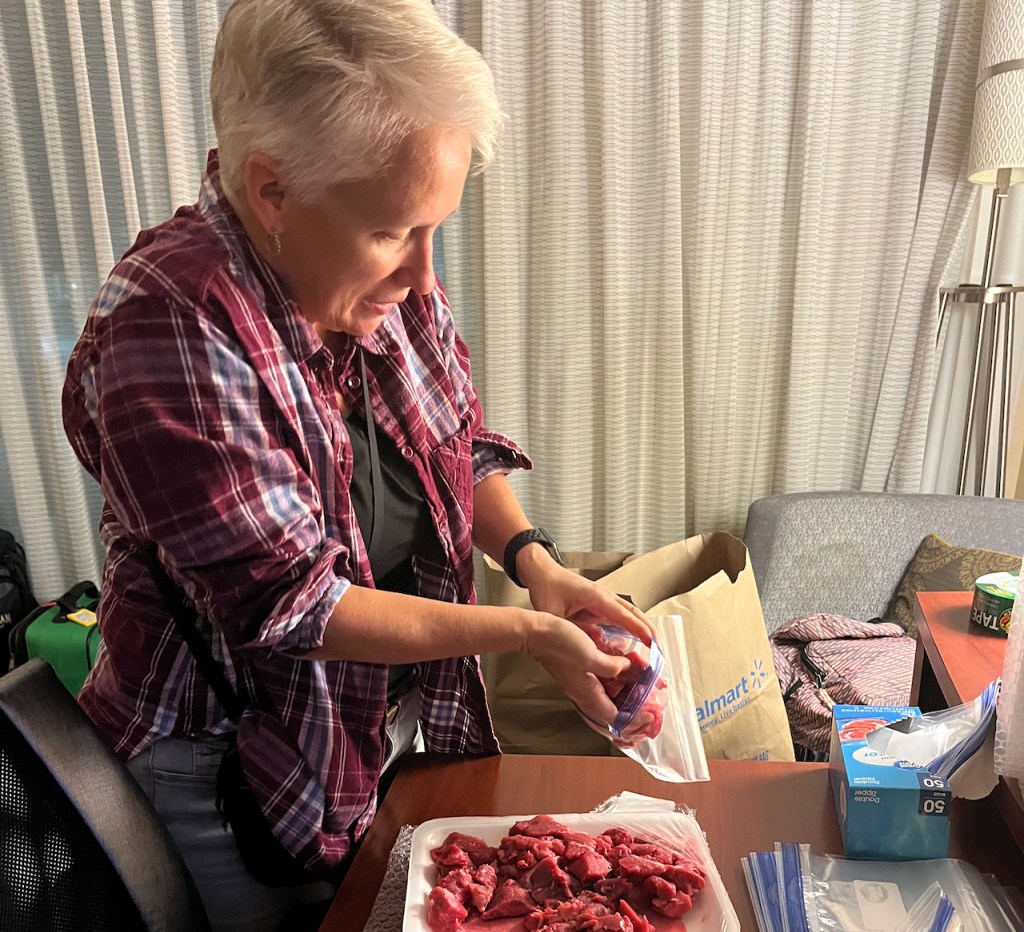
That evening Nicolle bought a cooler and stocked it with a small slaughterhouse’s worth of fresh meat and a few other things to supplement what she would find the single general store at Point Hope. The next morning, on January 6th, I dropped her off to continue her journey to Point Hope that still involved multiple flights.
I spent the rest of the day screwing around Anchorage. I strolled along the coastal trail where the Alaska Railways track runs south to the Kenai peninsula. Beyond the train tracks and the short strip of snow-covered land there were blocks of sea ice the size of cars on the Anchorage side of the Knik Arm and warning signs that I shouldn’t wander out there. I turned a corner and came up on the Captain Cook monument. He had arrived here in 1776 looking for the famed northwest passage – a way to get from the Atlantic to the Pacific via northern Canada – worth 20,000 pounds in a law enacted by the British parliament in 1744. Cook sailed up what is called the Cook Inlet today and explored the Knik Arm and the Turnagain Arm, the later named by the infamous Bligh of Bounty fame who was a Master on Cook’s voyage. Once he realized these were dead ends, Cook returned to the Gulf of Alaska and headed north through the Bering Strait. In the Chukchi Sea he found impassable ice and headed back south. If only he had waiting for 150 years, global warming took care of that. In 2014, the Nunavik became the first cargo ship to travel the passage without an escorting ice breaker. Ironically it was delivering nickel from Canada to China. Today the northwest passage is a regular shipping lane. A disappointed Cook returned to Hawaii for repairs and to restock and was killed during a quarrel (see my post from 11 years ago – http://arunzadad.blogspot.com/2012/05/captain-cook.html).
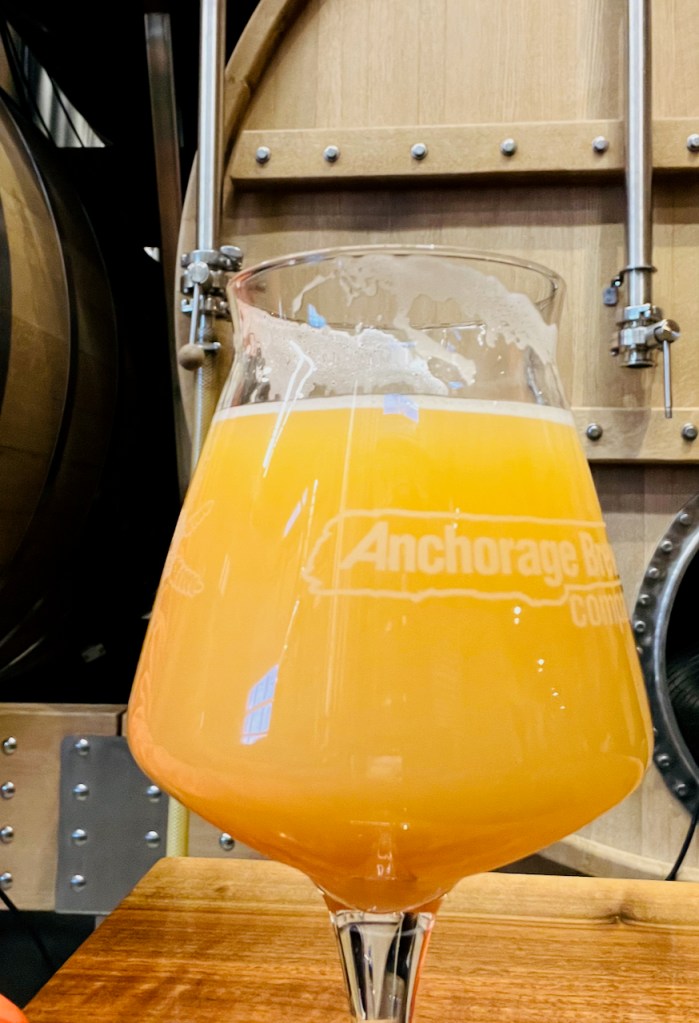
All the walking in the cold made me very thirsty and I spent the afternoon visiting a couple of excellent brew pubs around Anchorage. Then I drove to the eastern edge of town and wandered around the surreal winter landscape of the Far North Bicentennial Park, past walkers, joggers, cross country skiers, and an occasional musher in dog sled with a small pack of 2-4 dogs.
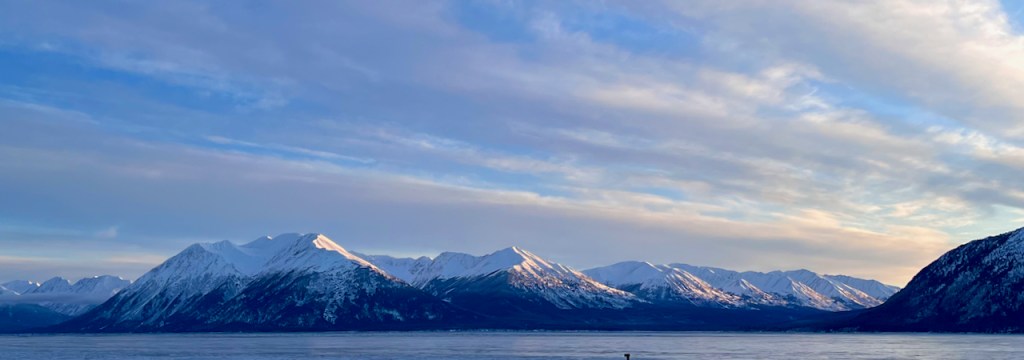
The next day I went snowmobiling. I drove to the town of Girdwood an hour south east of Anchorage. I had traveled down this highway to Seward a few years ago during a hiking trip in summer and it was an amazing drive (http://arunzadad.blogspot.com/2015/08/school.html). I remember thinking – what would this look like in winter? Even more amazing. The body of water in the foreground is the Turnagain Arm. The mountains behind are the northern extensions of the Kenia mountains. The Turnagain Arm has the largest tidal variations in the US, with about 30 feet of change in level every twelve and a half hours. That is a lot of water flowing in and out. In fact, this body of water is one of very few that have a tidal bore – a wall of water than rushes in carrying the tide. It was low tide on my way to Girdwood and I asked if they could hold the high tide till I was on my way back. But Chaucer said that time and tide wait for no man. Boo.
Girdwood was a very successful gold mining town back in the day. It sunk eight feet in 1964 after a huge earthquake. Unfortunately, that Girdwood sits below the famous high tide mark of Turnagain Arm and had to be abandoned. I’m in the new Girdwood this morning to snowmobile. I like to hike. Motorized ways of doing the same are signs of poor moral character and sloth. 4-wheeling or ATV-ing across Big Bend State Park wouldn’t be my cup of tea. So this decision to snowmobile required some inner monologue-ing. Eventually the 4 degree F weather won. I get cold quickly in that kind of temperature. The man who outfitted my said that my jacket would be sufficient because “the handlebars are heated”. Hmm – OK.
Snowmobiling at the base of the Chugach mountains was spectacular. The heated handlebars did keep me warm. We stopped and had a fire in the snow and a picnic of reindeer sausage. We met some dogs that would be running in the Iditarod in a couple of months (they are skinnier and smaller than I expected). And I got to examine a sled that has been used in many past Iditarods.
I stopped by Alyeska, a ski resort in Girdwood. Alyeska comes from the Aleut word for “mainland” or “the object towards which the action of the sea is directed” and is the root of the name Alaska. The ski place is almost at sea level with 600 inches of base. How do you explain to them that in Colorado in December we’re excited about a 40 inch base at 10,000 feet? I was recovering from something happening to my big toe (gout?) and could not force my foot into a ski boot, so I got a nice cup of coffee and watched the skiers for a bit. Then I headed back to Anchorage with four hours to kill before my flight out. One of those were spent in a sensory-depravation float tank. I had never done this before. I suspect I may need to try it a few more times before I can quieten my mind which I find easier to do when I am walking. Then another hour at a pho joint. And two more watching M3GAN (the movie coincided with the world experiencing ChatGPT, making it all the more interesting). Then I stopped at a green light to let a moose cross, got myself to the airport, to LA for breakfast, and back to home for lunch with the family.
I am very excited about what I saw in Anchorage and Girdwood but then an old lady next to me on the flight back snorted “Anchorage isn’t even Alaska”. Nicolle of the North Slope, ye are in for a treat.
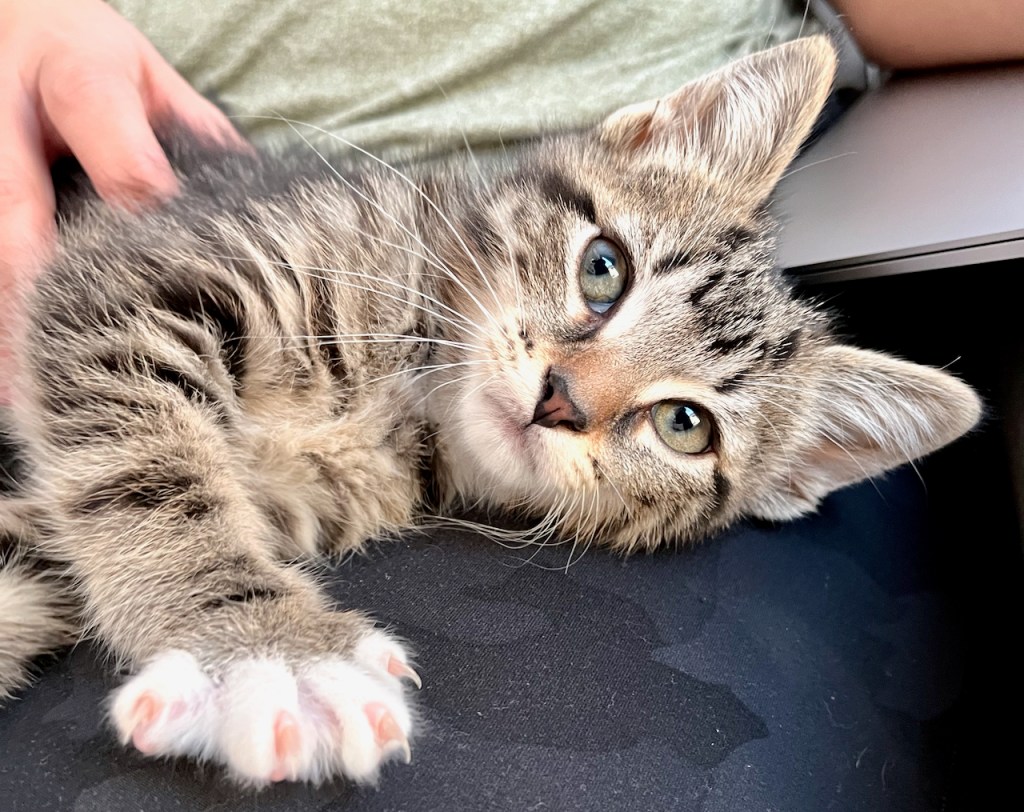
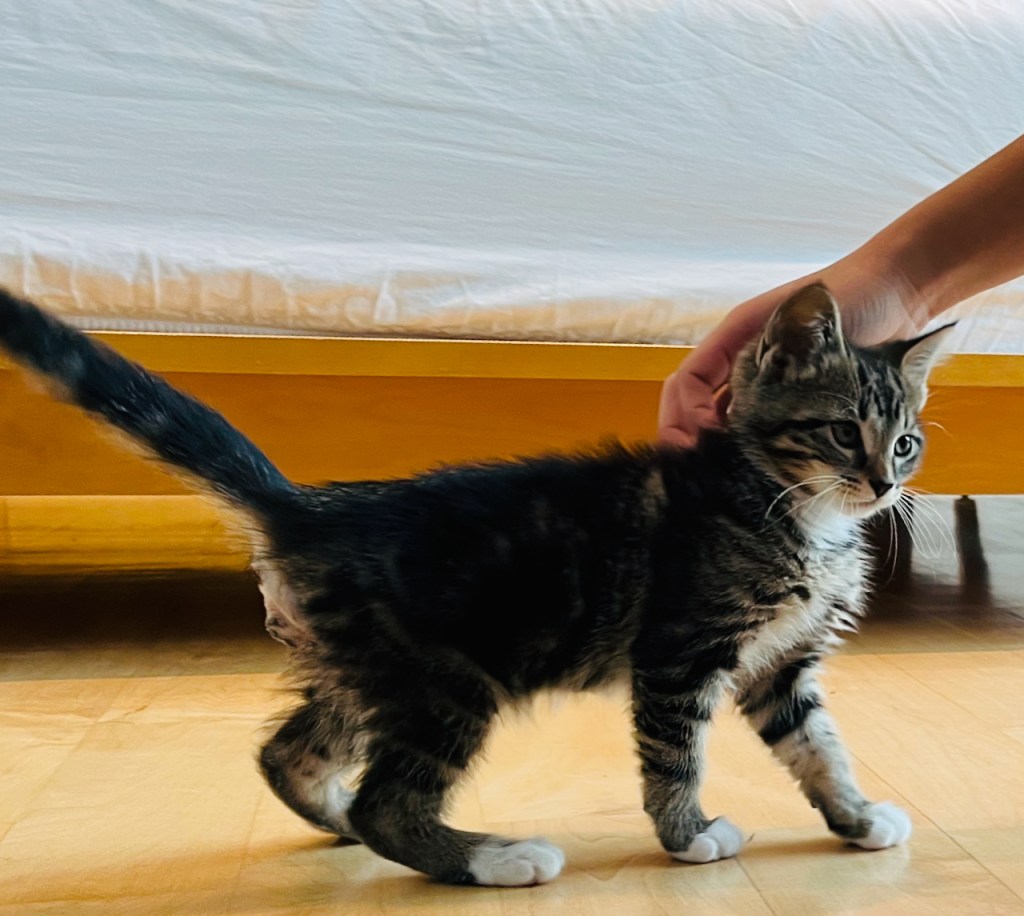
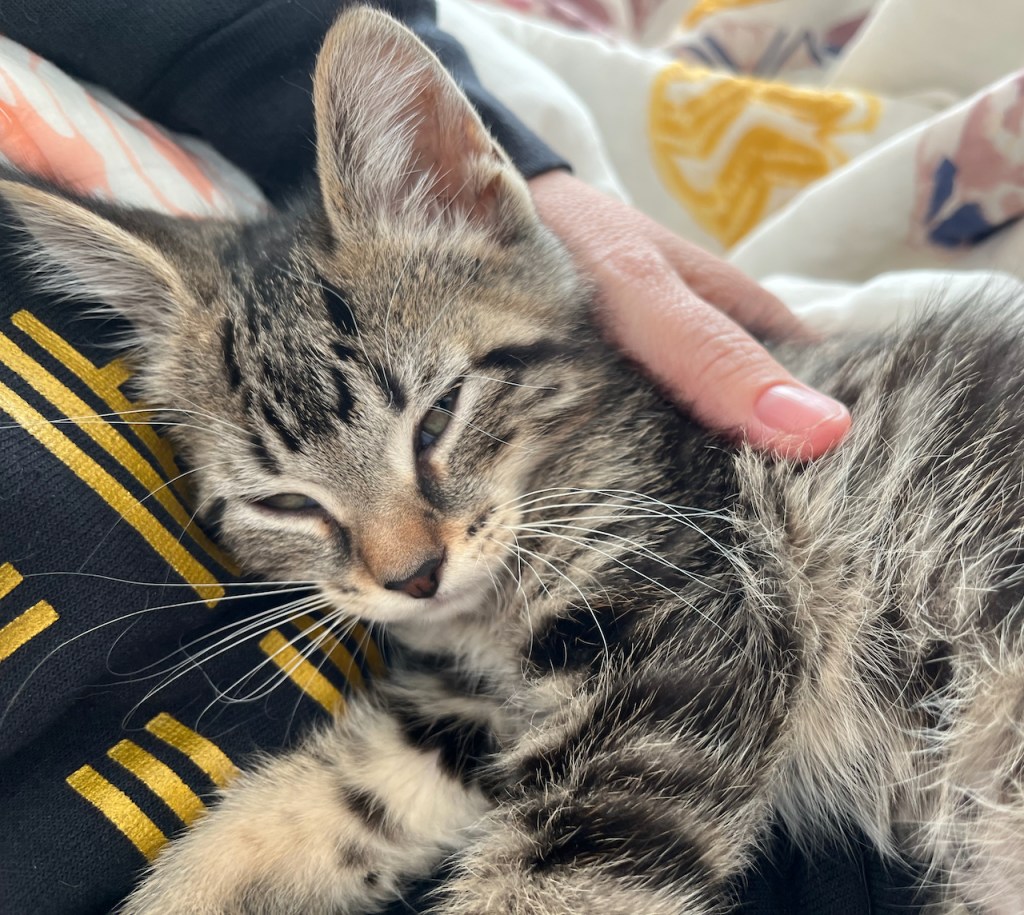
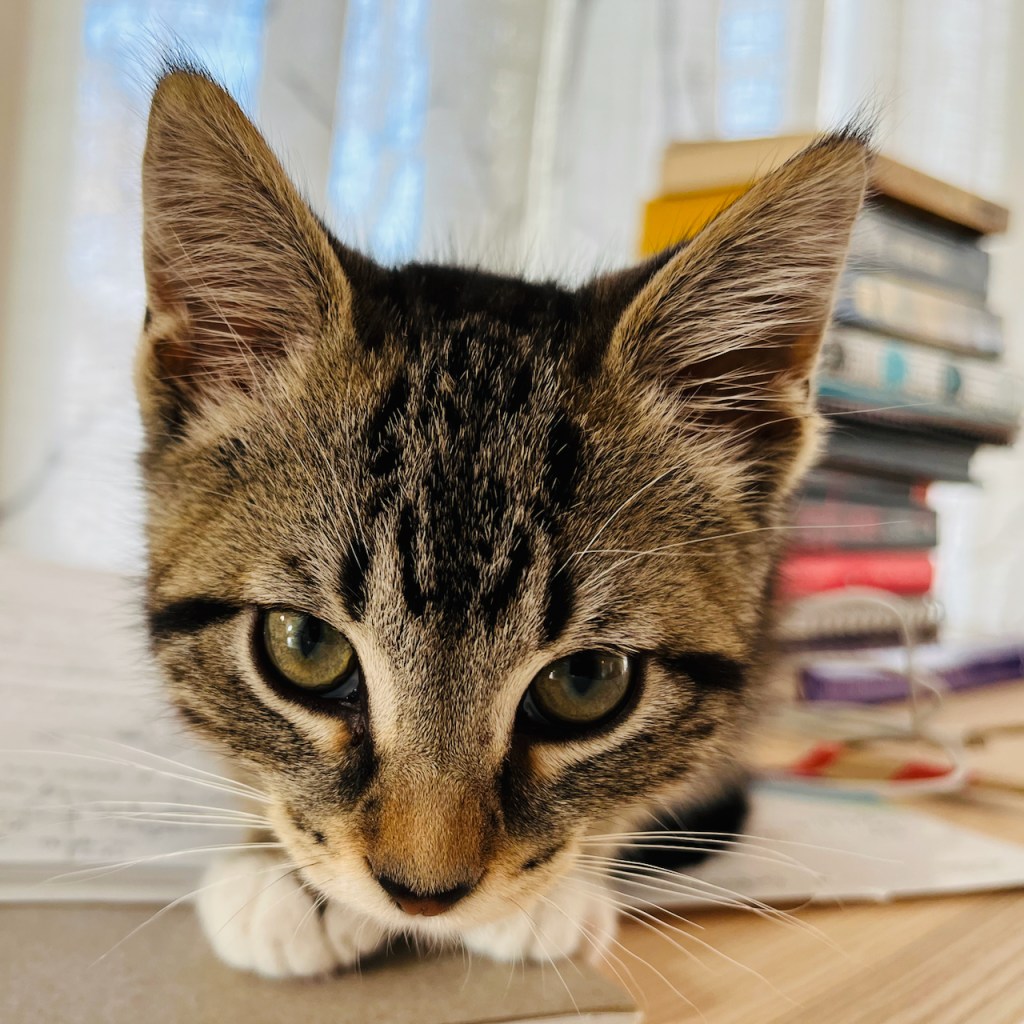
On the afternoon of the third day of the new year after a couple of glitches with the fine people at the Austin Animal Center, this is what the back seat of Jo’s car looked like. There is a white cardboard box with breathing holes. It contains a kitten. The kitten has been officially named Phineas, after the champion of the 104 days of summer, a few minutes ago. But Evan wonders about cats in boxes. Is it both alive and dead? So he names the kitten Schrödinger. Please welcome Phineas Schrödinger to the family.
By the fourth day of the new year, in a world plagued with uncertainty – right down to the quantum level – one things is clear. Phineas (I’m dropping the Schrödinger – the umlaut is a bit much) is unambiguously the most loved member of the family already. He loves people. He slept on Jo’s boobs for the first few hours after he got home. Then he rode around on Evan’s shoulder, Vivian’s arms, Ouiser’s tail, and my lap. This kitten likes to be held like no animal or child I’ve known before.
Two and a half months have passed between Phineas arriving home and my writing this. We got Phineas because we thought Zeus needed a friend. Phineas is still working on Zeus. As for everyone else, Phineas has filled our hearts and my photo app from that first moment he stepped out of his box.