Doing our Maine Thing

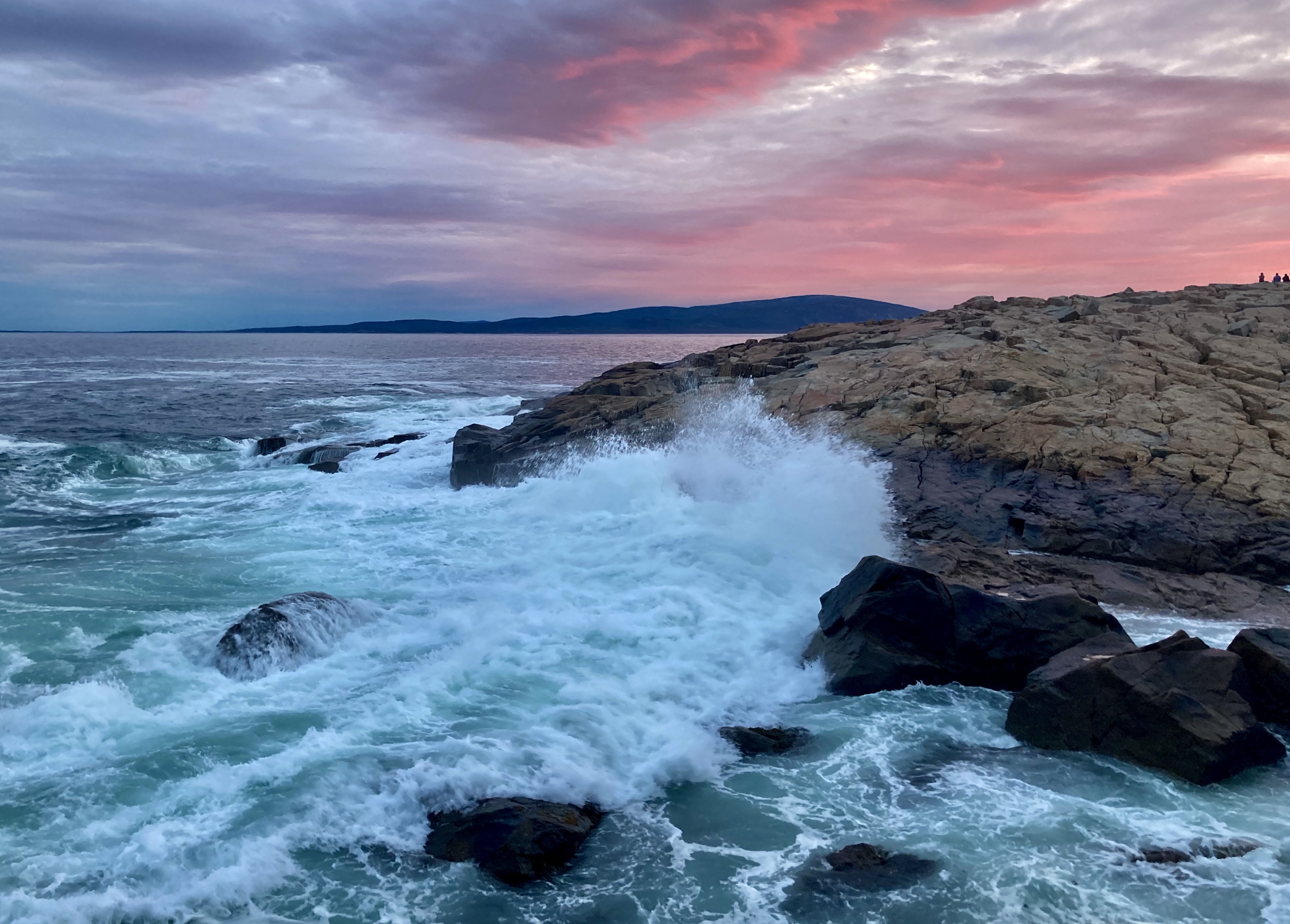
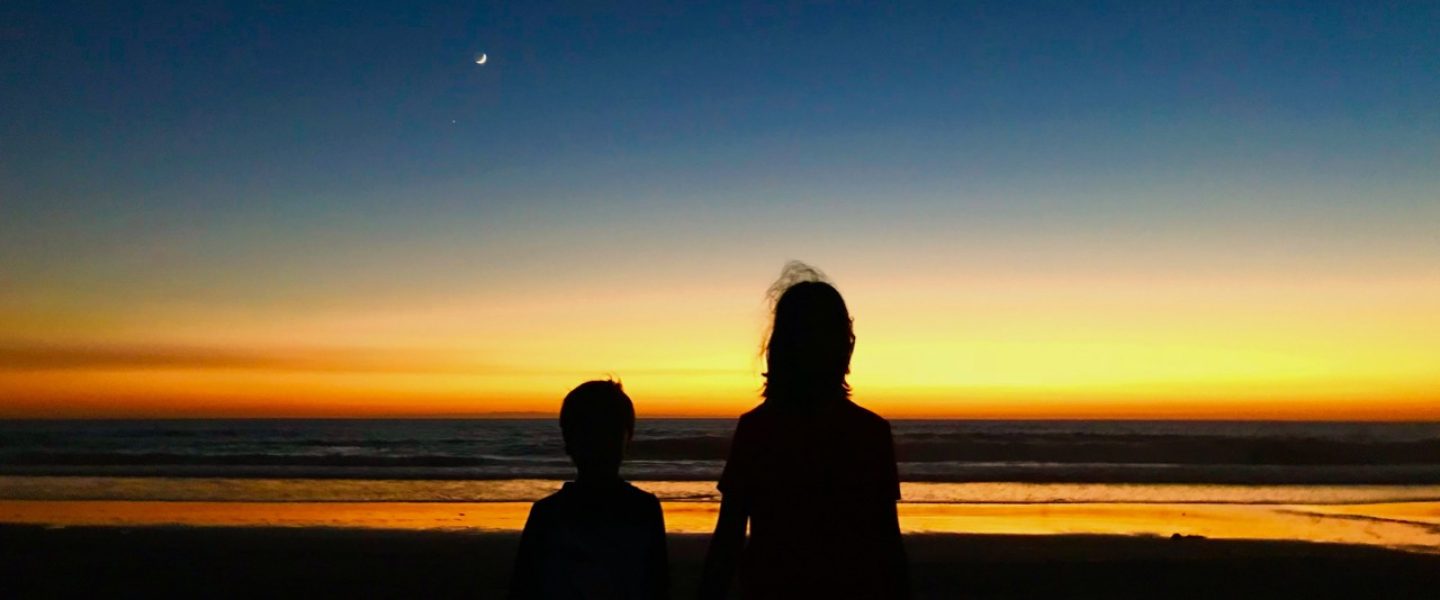
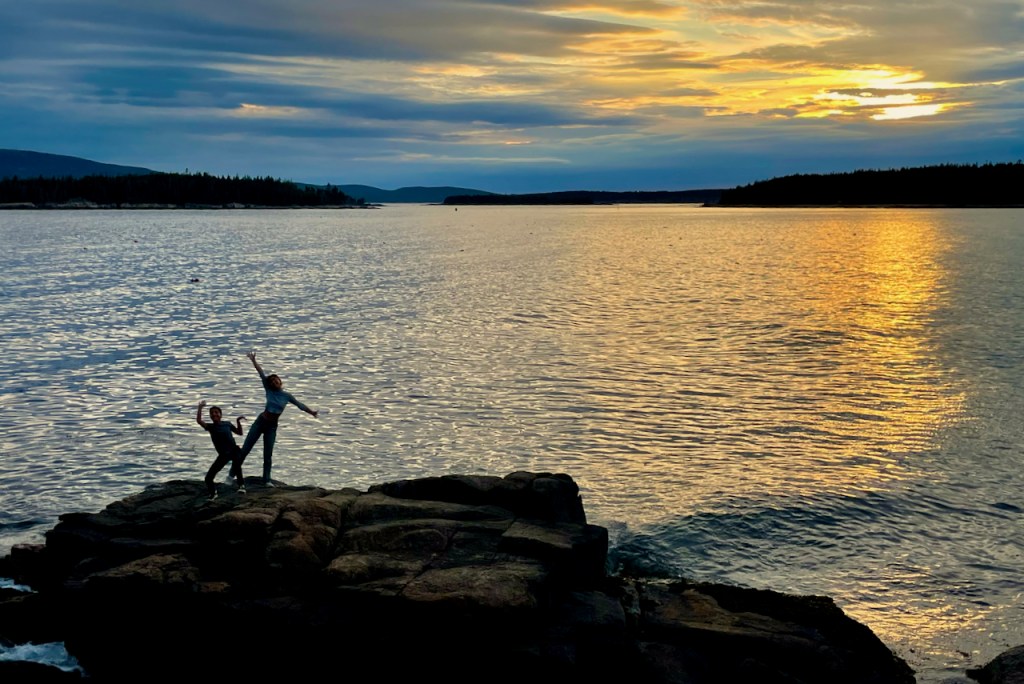
We spent our last few days in Rhode Island at Alu and Michelle’s the usual way. Walks along the beach and bike trails and long breakfasts and dinners and mid day beers and a trip to Jamestown with a lovely hike on the rocky coast to the Beavertail lighthouse and 4th of July fireworks on Narragansett Bay. On Monday night we drove north through Boston to avoid the traffic next morning. On Tuesday we stopped for a seafood lunch at a restaurant the very end of the pier in the lovely little town of Rockland in Maine. Then we continued towards Down East, which Jo informed us is the what this remote eastern end of Maine is called. After a grocery stop at Ellsworth we rolled into our airbnb on the Schoodic peninsula. I opened a bottle of wine and we lit a fire and watched the kids play on the rocks by the sea. And we wondered again why we chose to live our adult lives in a landlocked backyard with a view of a bakery when we could be doing this.

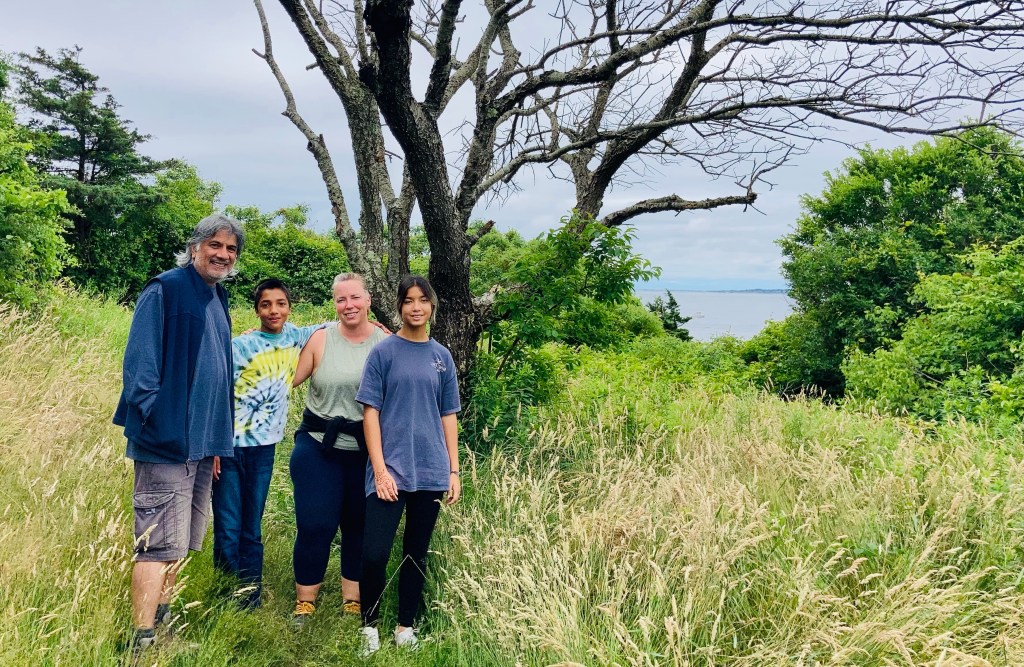
We set an alarm for 5:45am and drove dutifully next morning to Cadillac Mountain in Acadia National Park. The sun had risen an hour ago but the kids’ brains hadn’t. We had foregone the more excruciating but apparently more rewarding experience of waking up at 3am to go see the sun rise from the top of the mountain, instead arriving there at 7:30am, which almost felt like noon! Here we are sharing a morning family hug on the mountain with views of the north pole behind us. No one told me that we weren’t making funny faces for this selfie.

Acadia is beautiful. I’ve been waiting to see this park since I was 12 and the LIFE/Time book on Acadia arrived by book post at my dad’s library. Jo planned out our day at the park and warned us that it would be really really busy. The guide books had essentially told us that there was no point in going to the park between 8am and 5pm. We were ready for mayhem. It turns out that the guides must not get out to places that are actually crowded. We had a great day at the park, stopped for a quick meal at a crepe place in the harbor at Bar Harbor, and returned home, fulfilled. We have a week-long pass for the park, but I think we will explore our local surroundings instead.

Every nook along the craggy Down East coastline hides a delightful tiny village and a working lobster harbor. I can get used to the the rise and fall of the tides and seaweed covered rocky coves and mirror-like miles of bays dotted with millions of lobster trap buoys. Vivian and I tried dulse – a deep fried crispy seaweed with a strong aftertaste that goes well with a bitter IPA. But we haven’t yet found pickled wrinkles – a type of sea snail – not even at its namesake, the Pickled Wrinkle which serves pizza and burgers instead. Lobster fishing is a cottage industry here. Every other house has a wall of lobster pots along the driveway. You can see families on a wharf tying up the pots and loading them onto their boats. From our backyard we can spot the boats and hear the distant deep chug of marine engines as people tend to their pots.

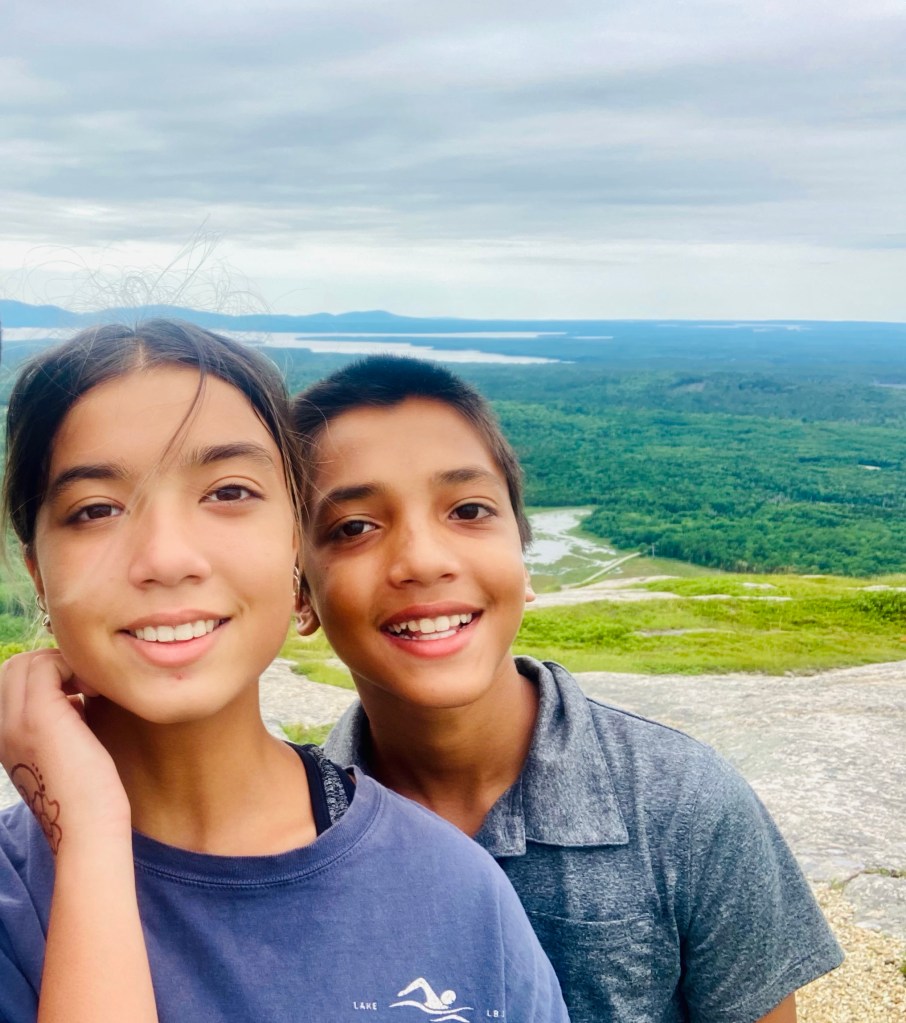
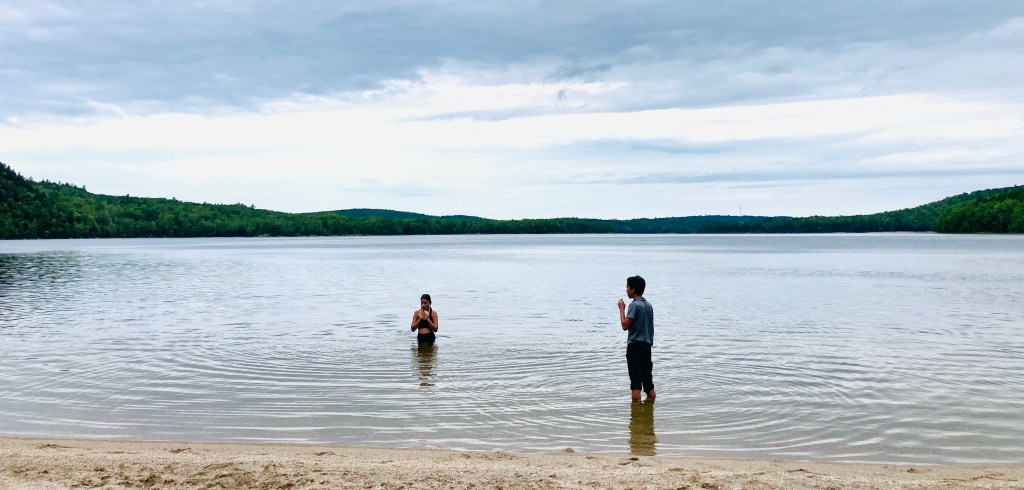
Yesterday Jo found us a nice hike inland. We hiked up the aspirationally named Schoodic Mountain that rises up all of 1069 feet. The path led us through moss covered forests and rocky granite slopes to amazing views from the top. The hills on the horizon you see behind Evan and Vivian’s head in this photo from the top of Schoodic Mountain is the Acadia peninsula and the largest one is Cadillac Mountain. On the way down we grazed on wild blueberries and then walked down to Schoodic Beach (why look any further when you’ve got a good name) to meet Jo who had found a comfortable spot to relax by the lake. Evan and I were happy to wade in to the cool refreshing water but Vivian jumped in for a swim.
This morning the fog has rolled in. I can see a few hundred yards into the bay after which the sea and the sky turn an indistinct milky white. From the sounds of the motors, the lobster boats are still doing there thing out there. We are waiting for tropical storm Elsa. Starting out as an eddy of wind in a thermal over the Sahara desert, she has made her way across the open Atlantic ocean, past Jamaica and Cuba and Florida, up the east coast and New York and Alu and Michelle’s home in Rhode Island, sending down deluges along the way. She will arrive here this afternoon and dump a couple of inches of rain on Down East. In a day and a half she will have continued along the Bay of Fundy and Nova Scotia and Newfoundland and cross the Labrador sea and wander past Greenland to finally dissolve into thin air near the Arctic. As we seek out nature in remote places, I take a moment to appreciate the journey of this little bit of atmospheric turbulence and marvel that humans are like fleas on the back of fleas on the back of fleas on a dog’s back. While we have accidentally stumbled on to the ability to fuck with nature, we are in awe and wonder.
I Am

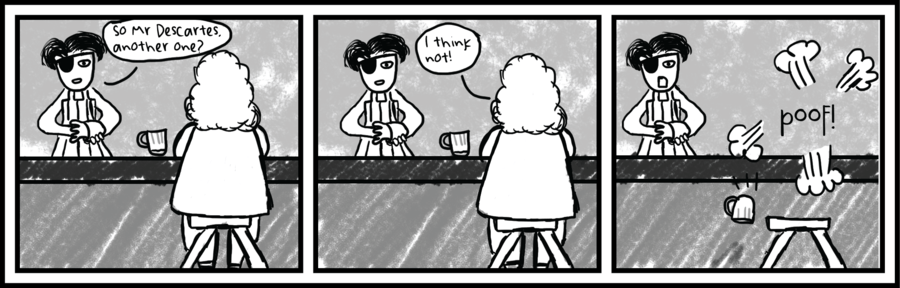
Vivian and Evan are nerds so we have nerdy jokes. And possibly none is nerdier than the one about René Descartes walking into a bar. After he has had a few the bartender asks “Do you want another one?”. René responsibly responds “I think not”. And poof, he disappears.

René famously said “I think, therefore I am” translated from French and then Latin into these pithy five words in English. When I first heard the line as a kid I took it to mean that because I think I exist. I thought thinking a necessary and sufficient condition for existence. Years later I learned that Descartes’ reasoning was more nuanced. He said that we cannot doubt of our existence while we doubt.

So I am born of doubt. I identify as me. My identity is generated from within, but also imposed by people around me, my childhood, my family, my community, my co-workers, my neighbors, my political cohort, my country, my culture, the media I consume. I am a husband, a dad, an engineer, an entrepreneur, a friend, a neighbor, an Indian, an American, a liberal, a global citizen, a geek, an art lover, a hiker, a sailor, a soccer enthusiast, a cook, and hundred other identities, some of which are thrust upon me, like “a person of color”, a legal immigrant, a tech bro, a boomer.

The other day a friend, a Gen X white cis male (enough identity labels?) said that he identified as an attack helicopter. We laughed. That was cool. Why didn’t I think of that? Should I say that I identify as a race car or an SR-71 or a Beneteau 43. Too late. I am a mediocre copycat.

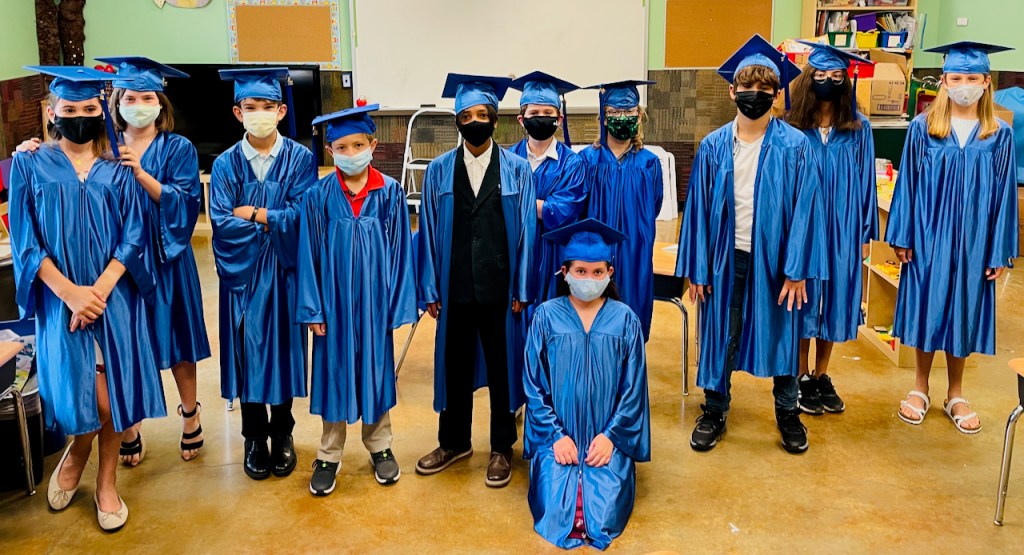
We were discussing gender identity. I have been groomed, though not to her satisfaction, by Vivian on the proper use of pronouns. My feeble jokes about grammar have been swept aside and my LinkedIn profile now lists my prefered pronouns, though “He/Him” is surely the most boring pair. Vivian deals with the concept of gender fluidity with the ease of one who is growing up in an environment with fewer prejudices. In the Age of Identity, gender, even most recalcitrant of categories is falling. We of the skinny jeans generation and older keep finding readblocks, but if I’m receptive enough, I find myself being led into wide open meadows to explore new ideas about these matters. Not all of them will stick, but it is too early to stop looking. Besides, at Vivian’s graduation, she wanted her “super power” to be announced as open-minded. I take some minor credit for the fourteen years of her life that led to that. How can I fall short now?

We were discussing the story of the Nigerian author Chimamanda Ngozi Adichie following in the footsteps of J.K. Rowling. In the frothy surf of gender fluidity and identity politics there is still the question of categories, just different ones. Are trans-women women? Adichie and Rowling have questioned that. They have been thought to seek the benefits of womanhood only for those born with wombs. If this is all you read about this subject, I must add that it isn’t that they are transphobic. Rowling has spoken and acted with sympathy about the horrors of high rates of suicide and assault that plague the trans community. But Adichie and Rowling have been labeled trans exclusionary radical feminists (TERFs). In the leftist progressive world that’s like branding someone an uber douchebag.

Back at home I googled “I identify as an attack helicopter”.

It turns out that the meme of “I identify as an attack helicopter” had landed like a ton of horseshit a few years back. Here is the original meme:

I sexually Identify as an Attack Helicopter. Ever since I was a boy I dreamed of soaring over the oilfields dropping hot sticky loads on disgusting foreigners. People say to me that a person being a helicopter is Impossible and I’m fucking retarded but I don’t care, I’m beautiful. I’m having a plastic surgeon install rotary blades, 30 mm cannons and AMG-114 Hellfire missiles on my body. From now on I want you guys to call me “Apache” and respect my right to kill from above and kill needlessly. If you can’t accept me you’re a heliphobe and need to check your vehicle privilege. Thank you for being so understanding.

It makes fun of people identifying as belonging to a gender different from the sex of their birth. Coming out must require immense courage. The attack helicopter meme is a joke and I’m up for a good laugh most of the time. But this meme has become pervasive enough that it crept into the consciousness of my Gen X white cis male friend who surely does not have a transphobic bone in his body but who is now inadvertently a part of the cruel joke.

I dug deeper into google (you can’t stop after just one rabbit hole). On January 1 2020, a short story with the title “I Sexually Identify as an Attack Helicopter” was published in the Hugo award winning Clarksworld SF magazine by an unknown author, Isabel Fall. It received critical acclaim as a fresh new work of science fiction. But soon enough it faced a tsunami of backlash in defence of the LGBTQ+ community. The most common sentiment was that the story was hurtful. It took a painful meme and used it as a weapon against the trans community.

My identity shapes my thoughts. If I write a poem or paint a picture, will you judge it in the vacuum of your value system or do you need my identity to give you a context within which you can declare that you like it? If I write an otherwise acceptable story about a poor Indian girl without living the experiences of being a poor Indian girl, am I doing something unethical? Does that determine how you receive my story? Am I of the wrong gender to tell her story? Am I Indian enough? Was I poor enough? Was Jeanine Cummins not brown enough to write American Dirt? But surely wasn’t Ishiguro knighted and awarded the Nobel Prize for his most English of books, The Remains of the Day? Back in the late 80’s I was moved by the movie and his book. Between the time I saw the movie and read the book I learned that the author was born in Nagasaki and moved to England as a child. That he, a first generation Japanese immigrant (identity alert), could live inside the head of his aging English butler protagonist blew my twenty-five year old mind. It increased my appreciation of his writing.

Nobody knew much about Isabel Fall’s identity. There was no context. Just her story to speak for itself. By the time I was googling attack helicopters, it had been a year and six months since the publication of the story but all this was boiling over and people outside the circles that care most about these issues were beginning to hear and add their voices to the conversation. There were stories in mainstream publications like the Atlantic and Vox. The Atlantic story’s title, The Talented Victim Is Not the Point, made me think about my reaction to reading Ishiguro’s book thirty years ago. I had liked the story on it’s own but the context of the author’s identity had added to my pleasure. Just as surely, the same sentiment can do the opposite.

Isabel Fall’s story was dragged through the mud. “She” must surely be a hateful male who wrote badly about things he knew nothing about with an intent to hurt or hoax. When you’ve been hurt over and over it isn’t an unreasonable reaction. But the author’s identity shouldn’t be the point. While there is nothing unusual about people disagreeing on the merits of a work of art, two different discussions morphed into one. How good is the story? Does the author have the moral authority to write it? In the anonymous free-for-all ugly world of comment threads judgement was passed that the story sucked because the author did not have the moral authority to write it. Isabel Fall contacted the magazine to retract the story 13 days after its publication. Once it was removed it is hard to find now. I did read it. I found it fascinating from my comfortable cis male dominion.

In the still unfolding story about the story, it turns out that the author who identifies as a woman was hoping to co-opt the attack-helicopter meme into the trans-friendly universe. Instead the world hurled acid filled bottles at the author’s identity while they were transitioning.

Vivian has been encouraged to apply for a certain youth literary recognition. Should her work be be judged on its merit? Will her work be judged on who she is? Descartes was on to something when he concluded that to exist is to doubt. But to doubt is to reason. And to reason is to seek clarity. Didn’t Yoda say that?

[https://medium.com/the-brane/a-scientists-courage-70eab5825063 for this cartoon and an interesting read on a different but related topic]

Cartoon Faces

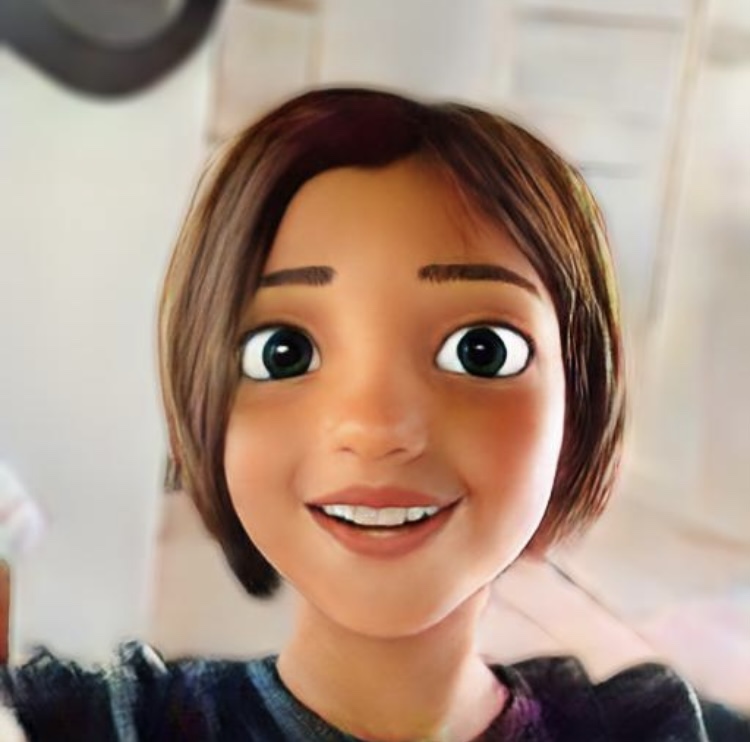
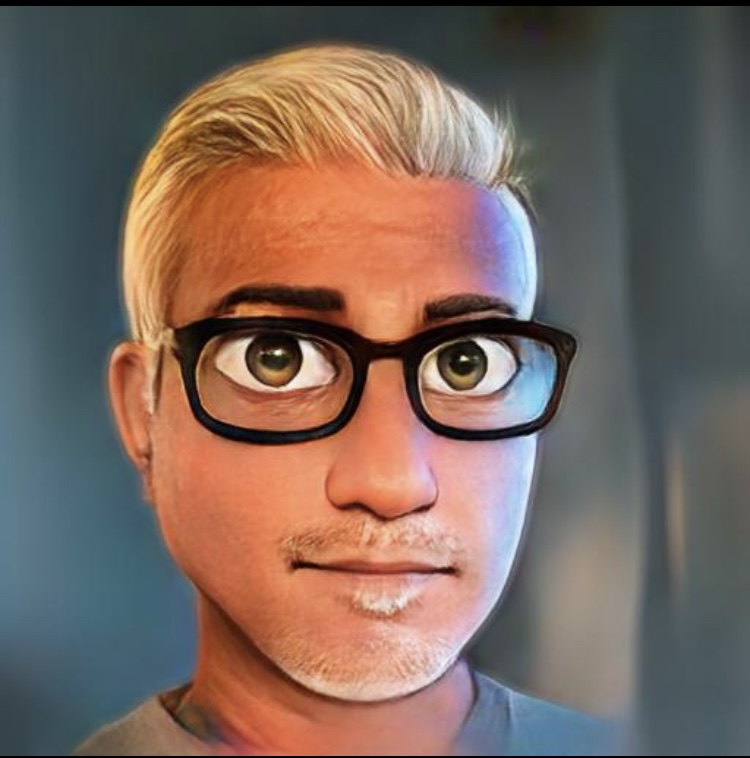
A couple of weeks ago a new deep learning based app took the internet by storm. It turns a photo of a face into a Disney style cartoon. Here’s the fam by Voilà AI. Cute!

In the foreseeable future Artificial Intelligence and Machine Learning will change our lives in ways we can’t imagine yet. In the mid 1990s my research group at Motorola was using ML to solve difficult problems in semiconductor manufacturing. In 2000 the startup that I cofounded was extracting meaning and relationships from text using a whole battery of learning tools. But we were mere babes in the woods. The technologies have gotten tens of thousands of times better since then.

Most counties in the US use AI based software to determine parole, sentencing, and pre-trial bail. I’m reading a book (The Alignment Problem by Brian Christian) that discusses one such very widely used program in some detail.

This program attempts to predict if a criminal will recidivate in the next two years. A journalist from ProPublica checked to see how it did by comparing its output to what actually happened over the next two years. It turns out that the program was about 60% accurate in being able to predict the recidivism rate for both white and black criminals. Sounds fair.

Of the 40% whose recidivism rate was wrongly predicted by the software, all mistakes were not the same. Blacks who were later found to have been at lower risk were far more often labeled by the software as high risk. And whites who were later found to have been at higher risk were more often labeled by the software as lower risk. More false positives for blacks and more false negatives for whites.

If you’re black and criminal the algorithm screws you over compared to if you’re white and criminal even though the accuracy of the predictions for both races are similar. That’s not very fair.

We can’t really check for recidivism. But we can check to see if you were caught committing a crime again. As black communities tend to have more policing, the chances are higher that you would be caught if you are black and committing a crime and we would incorrectly conclude that blacks recividate more than they actually do and possibly respond by further increasing the policing of black neighborhoods, which you can see is a positive feedback loop.

Once the journalist posted these results things took a bizarre turn. New research shows that because the base rate of arrest and re-arrest is greater in the black community it is mathematically not possible to have the same accuracy *and* the same error profiles for the two communities. You have to give up one or the other. As a result of this work we have a deeper understanding of fairness and how to prioritize different aspects of it. At the same time, we also see how tiny biases in a positive feedback loop can result in huge differences over time. We all started as blue green algae and then time and evolutionary pressures split us off into millions of species as varied as an amoeba and an oak. We aren’t ready to put the machines on auto pilot. We need to make sure they aren’t imposing their own evolutionary pressures that are unknown to us but whose effects will alter the way we live as surely as nature does.

Warren Buffet supposedly once said, “What the human being is best at doing is interpreting all new information so that their prior conclusions remain intact.” Apparently unless we are very careful, our AIs will do the same. ML algorithms have something called a utility function. The goal of the algorithm is to maximize the utility function. Two AI researchers paid their older child a reward to take their younger child to the potty once he was ready to be potty trained. What could go wrong? The older child was incentivized to make sure the younger child didn’t pee in his pants. But in actuality he was incentivized to maximize his rewards. Apparently after a while he was excessively hydrating his younger sibling in prefect accordance with maximizing his own utility function. In AI circles there is the parable of the paper clip maximizer. Here’s the summary [ from https://www.lesswrong.com/tag/paperclip-maximizer ]:

First described by Bostrom (2003), a paperclip maximizer is an artificial general intelligence(AGI) whose goal is to maximize the number of paperclips in its collection. If it has been constructed with a roughly human level of general intelligence, the AGI might collect paperclips, earn money to buy paperclips, or begin to manufacture paperclips.

Most importantly, however, it would undergo an intelligence explosion: It would work to improve its own intelligence, where “intelligence” is understood in the sense of optimization power, the ability to maximize a reward/utility function—in this case, the number of paperclips. The AGI would improve its intelligence, not because it values more intelligence in its own right, but because more intelligence would help it achieve its goal of accumulating paperclips. Having increased its intelligence, it would produce more paperclips, and also use its enhanced abilities to further self-improve. Continuing this process, it would undergo an intelligence explosion and reach far-above-human levels.

It would innovate better and better techniques to maximize the number of paperclips. At some point, it might transform “first all of earth and then increasing portions of space into paperclip manufacturing facilities”.

It starts out as an innocent cartoon AI and ends up converting the known universe into paper clips. Hello future!

Post Pandemic Travel

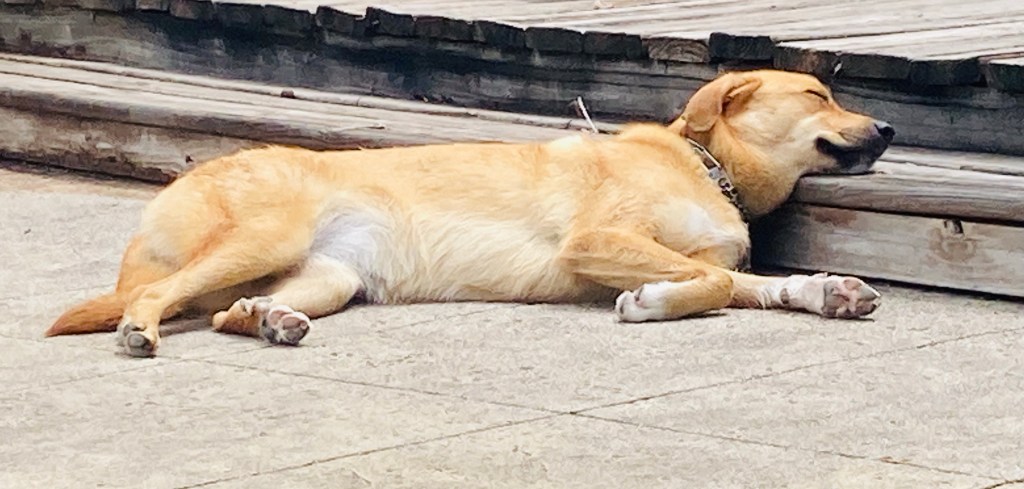
We dropped this gal off at doggy camp for a few weeks of high distraction training / boarding vacation early this morning and then got dropped off at the airport ourselves.

I should be worrying about flying with germs floating in the air. The flight from Austin to Chicago was one hundred percent full. The gates at Midway where we are waiting to board the flight to Providence are packed tighter than sardine cans while most of the rest of the airport is relatively empty. Almost everyone is in masks though you occasionally see more than one nose poking above and beyond. But instead I’m worrying about Ouiser. Did she get enough playtime today? Who gave her a belly rub? Hope they remember to scratch her chin in the morning. And most of all, what is going through her doggy brain. Either that she’s been deserted or we’re about to walk in and get her.

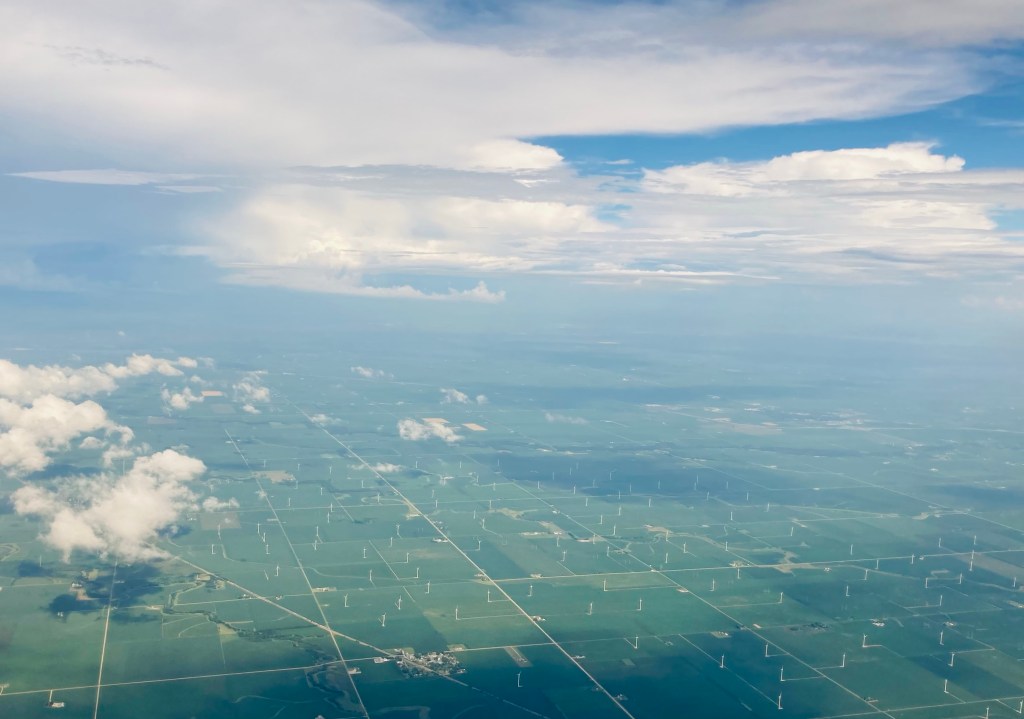
This is the first time the kids or I have been on an airplane since March 16 2020 when we landed in Austin after a marathon set of flights from Temuco to Santiago to Toronto to Austin. I still stare out of airplane windows like a five year old. Here are a couple of photos coming into Chicago.

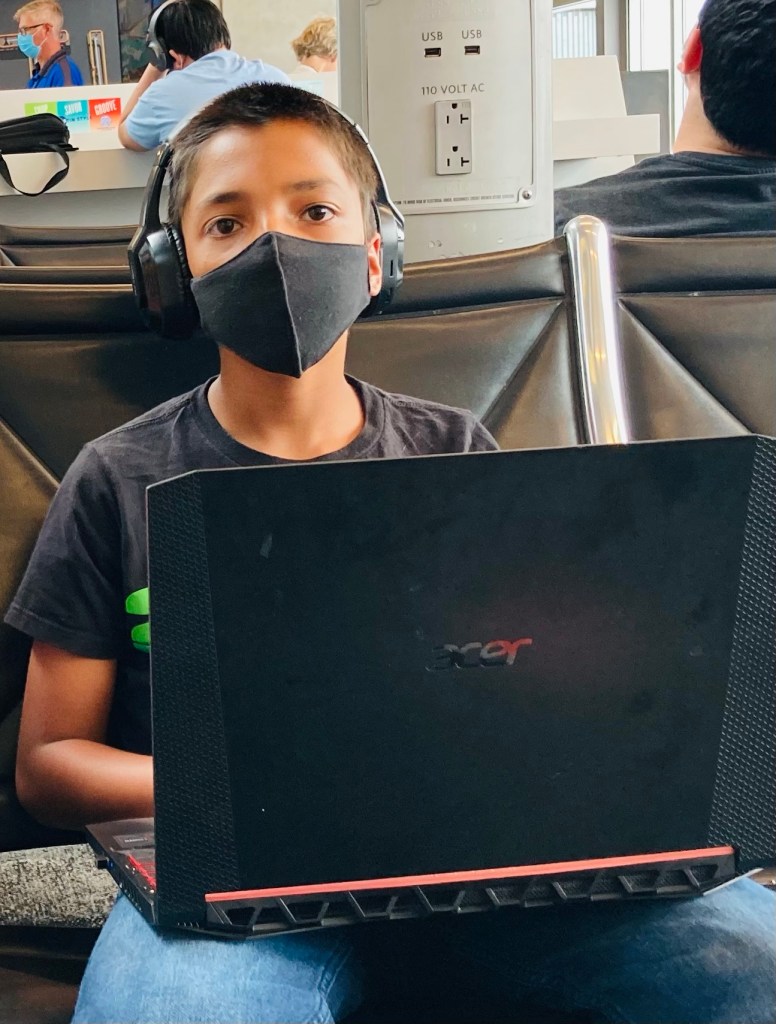
The kids fell back into travel mode but they have more devices this time around. Vivian is constantly on her phone, snapping or listening to music while Evan is carting his large gaming laptop around and playing Minecraft in airports.

We got delayed in Chicago but we just boarded our flight to Providence. We’ll be at Alu’s by midnight insha allah.

And Vivian Graduates

Vivian graduated a few days after Evan. Hers was marginally more momentous. She finished middle school. Her high school could not be more different than her old school. And she is the only one among her friend who is headed there.

Here’s a video that Jo took on her iPhone from the 8th row of the church where Vivian spoke at graduation. The audio quality sucks. Vivian did a good job. She didn’t share her speech with us beforehand so we didn’t know what to expect. Thankfully her favorite writing teacher did take a look at it and made some minor changes. Like using “excited” instead of “horny”.

Vivian’s school had planned a nice ice cream social outside on the lawns after graduation. Friends, faculty, and parents mingled one last time. It is sweet to see the goodwill and friendships that surrounded Vivian and her friends here. And like I did and still do for HPS, they feel a very strong sense of connectedness with the school and the community here.

Evan Graduates

Evan graduated at the end of the school year.

Many of Evan’s friends who have shared classrooms and lunch tables and recess all these years are now headed in different directions. But his middle school building is just across a parking lot where, in August, he will rejoin about two thirds of his mates. Not much will change. In fact he expressed his cynicism about this graduation business. “I don’t know why we are celebrating. I mean, you dropped me off at school every morning. Of course I graduated”.

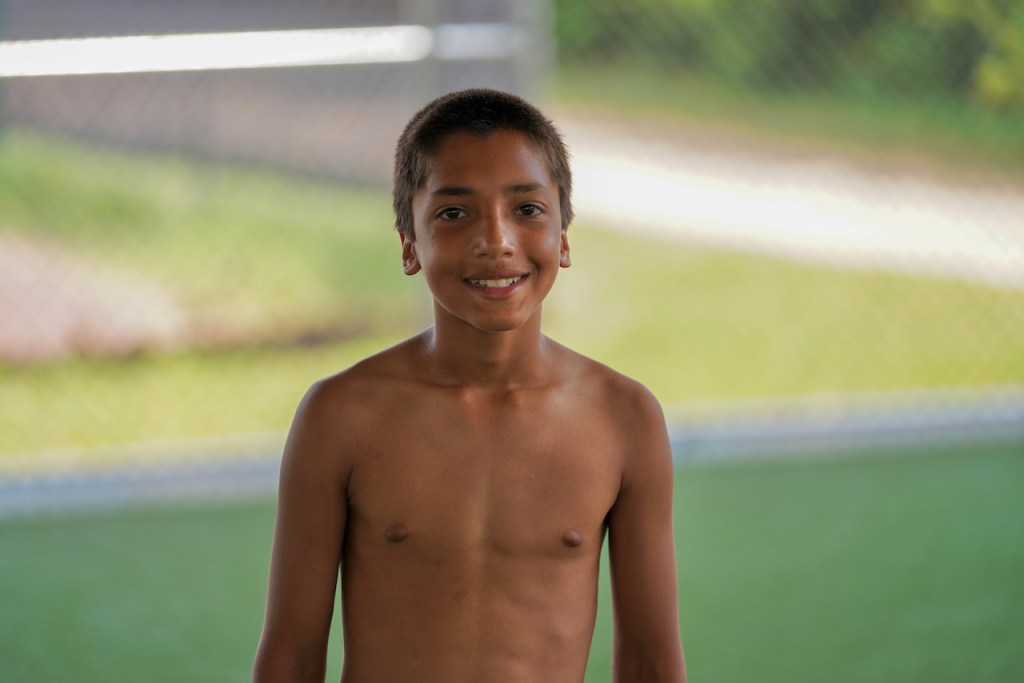
Then he got a buzz cut that he and I have been campaigning for, and we dropped him off at summer camp. Two weeks of no devices and no air conditioning and staying dressed in his swim trunks most days. He was very brown and visibly taller when we picked him up. Also, he had lost his voice. He loses his voice every year at summer camp. This year though, he proudly and hoarsely whispered, he had lost it by the end of the very first afternoon.

There is reason to celebrate for growing up another year during a rather unusual year. Congratulations, kiddo.

Goodbye, My Friend

A couple of nights ago, Navaneet died in his sleep in California. It was not unexpected. When I dropped him off at Austin airport six months ago, we fully expected not to see each other again.

His beloved wife Praveeta died unexpectedly almost four years ago. At that time Navaneet’s prognosis didn’t look very good either. He had cancer and a few months before that doctors had given him a few months. He was on borrowed time. A year after that Madhunad and I visited him in Baja Norte in Mexico. We called ourselves El Grupo de Amigos. We started each the day with an amazing lazy breakfast and ended it sitting and contemplating the starry sky over the mountains in his backyard. In between, the conversation and laughter came easily and we toured local vineyards and restaurants all day. That became a hallmark of the hours of phone calls and the thousands of whatsapp messages that followed since then.

Navaneet shone like a beacon of life. Vader would have clearly said that the force was strong with this one. Navaneet’s second innings, to borrow a term from cricket, was inspiring. El Grupo continued our phone calls. Not once would you have ever guessed that one of us was dying faster than the other two. We were like a trio of school children. Our conversations were filled with zest and wonder and laughter, and sometimes tasteless humor.

El Grupo got back for a reunion in the middle of Covid when Navaneet blew into Austin from California like a breath of fresh mint in an ice cold mojito. We roamed the cafes and bars of South Congress and raised a ruckus. These photos are from the very last time El Grupo was together.

This spring, Navaneet began to finally slow down. The conversations with El Grupo on the phone continued to flow like good wine and bad dad jokes. After Easter, Navaneet opted for hospice care at home. He recounted his last visit with his doctor gleefully when he joked that because he had his second jab, he wasn’t going to die from Covid. The doctor apparently could not comprehend how someone who was days away from death could be so full of life.

A month ago, El Grupo put our collective heads together to discuss Navaneet’s impending death. Rather than have a memorial after he was gone, Madhunad suggested that we should get friends and family together to celebrate Navaneet’s life now. Navaneet readily agreed that it would be more fun for him if he were still alive. So we organized a zoom call with his friends from all over the world. Navaneet loved it and so did everyone else.

And now he is finally really gone but his laughter and love for life lives on.

The Soccer Life

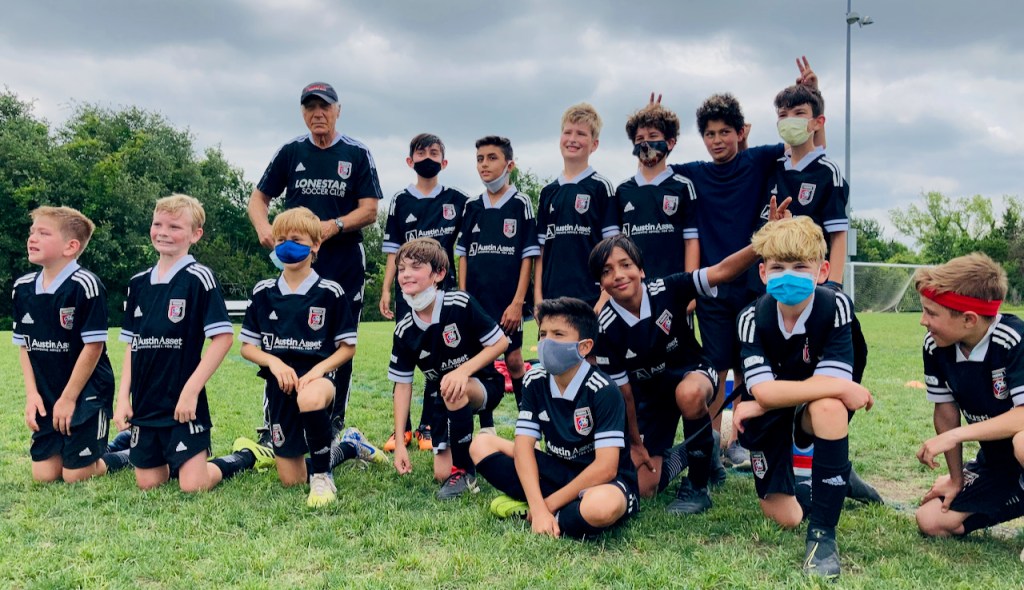
Since the start of the last school year till Sunday, soccer has been a pillar of normality for Evan (and me). Practice on Monday and Wednesday evenings with his best friends, and blow-out victories on weekend matches became a part of the weekly schedule. The club managed their Covid protocol well and we never felt or were given a reason to worry.

Evan grew as a player and a team mate and felt he was recognized as a cornerstone of his team – calmly stopping most offensive attacks long before they got to his goalkeeper. Weekend after weekend they usually shut out their opponents and scored at least five goals. After a lead of six or seven, our coach usually instituted a policy of three unbroken passes before taking a goal shot which slowed their scoring down. But by the end of this season, the problem was winning. There was too much of it. They hadn’t lost a game. The last time Evan played club soccer was the 2018-19 year (he missed the 2019-20 year due to travel). Between the last two years that Evan played, he lost one game – the finals of the tournament at the end of the 2018-19 year. There is much to learn from losing a soccer match: congratulate your opponents, admit to yourself that they played a better game, then get back up, learn from it, and move on. I felt one loss over two years really wasn’t enough.

So a few parents and I convinced the club to extend our season by playing against harder teams from higher level leagues. They obliged and the team played four very good teams over the last two weekends. These boys were bigger, faster, had better ball control, and played a more strategic game. Our team rose to the challenge and beat two of these teams. They also had their first two losses of the season handed to them. The last one stung a bit. After being up 2-1, they lost the match 2-5, with the last goal being scored as the whistle blew. Oh the indignity.

After the game I hung back and walked behind the boys on the longish walk from the pitch to the car park. One poor kid was openly sobbing. Another was just holding it together. But most were doing great – pranking each other and laughing and joking. Then I heard it. “I bet they bribed the referee”. “They had to have”. “He made horrible calls”. “He was really bad or blind”. “I can’t believe he called that hand ball on us”. “I can’t believe he didn’t call that hand ball on them”.

It went on. From one kid it spread like a cancer to a few others. When we got to the car and we started driving back, I asked Evan how he was. “It was a great game. I really had to run for a change. I’m hungry – what should we eat?”

I breathed a sigh of relief. He finally had a couple of losses. And Evan hadn’t resorted to fables or conspiracy theories to convince himself that he had actually won when he had plainly lost. It was the cherry on top of a fantastic year of soccer. But what the devil are we going to do with our weekends now? Besides making fun of losers….

Gotcha

Last week we celebrated Ouiser, Skittles and Zeus adopting us one year ago. Skittles disappeared over a month ago. We suspect she was picked up by someone. She is cute and friendly and was without a collar during a pandemic. I’m pretty sure she is leading a fantastic life somewhere. But dammit you lousy cat burglar.

Evan still sleeps in uncomfortable positions for hours when Zeus lays on top of him. To move would disturb Zeus. And Ouiser greets us all every morning and everytime we walk in through the front door like we are the best thing since bacon treats. A year into our expanded family experiment we couldn’t be more content.

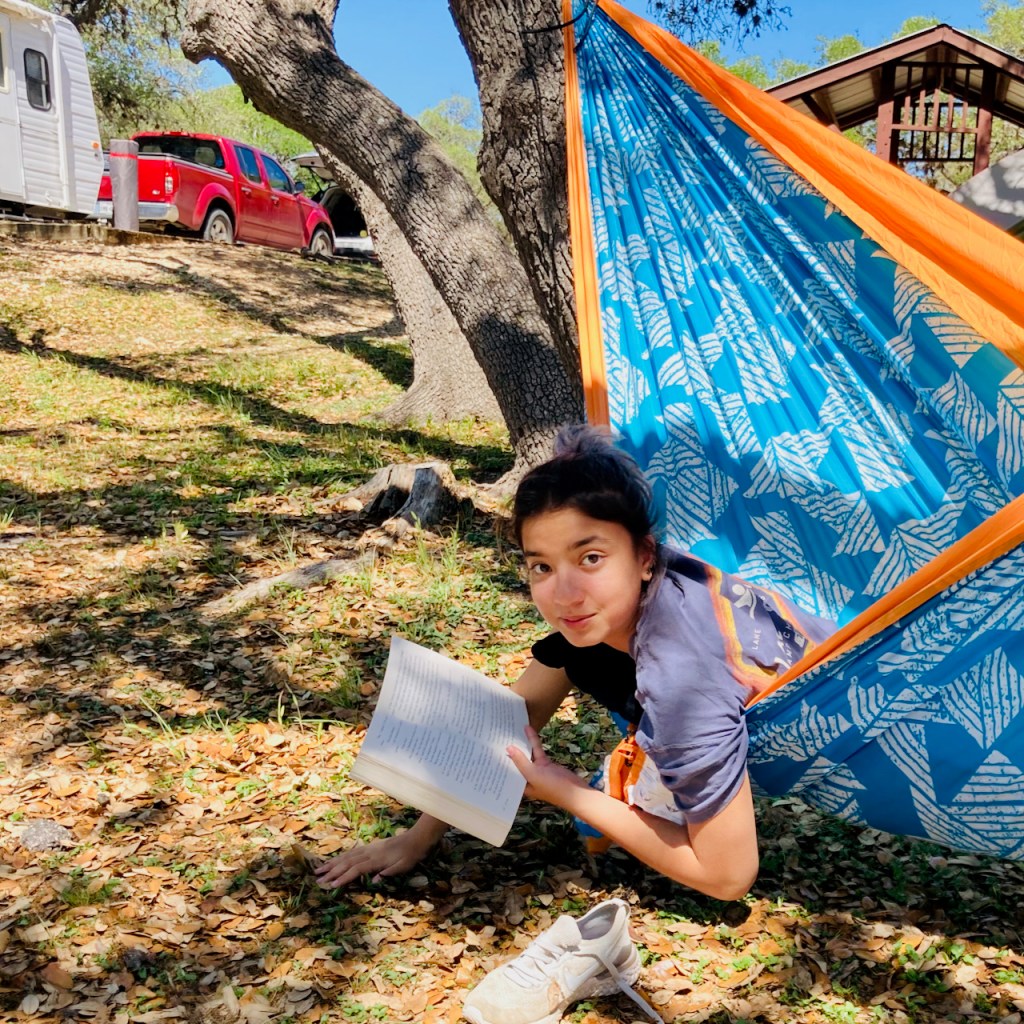
Here are some photos of Ouiser (and Vivian) from our recent camping trip to Canyon Lake for Michelle’s 50th birthday and of Zeus who wasn’t invited to camp and of Skittles before she was kittynapped.